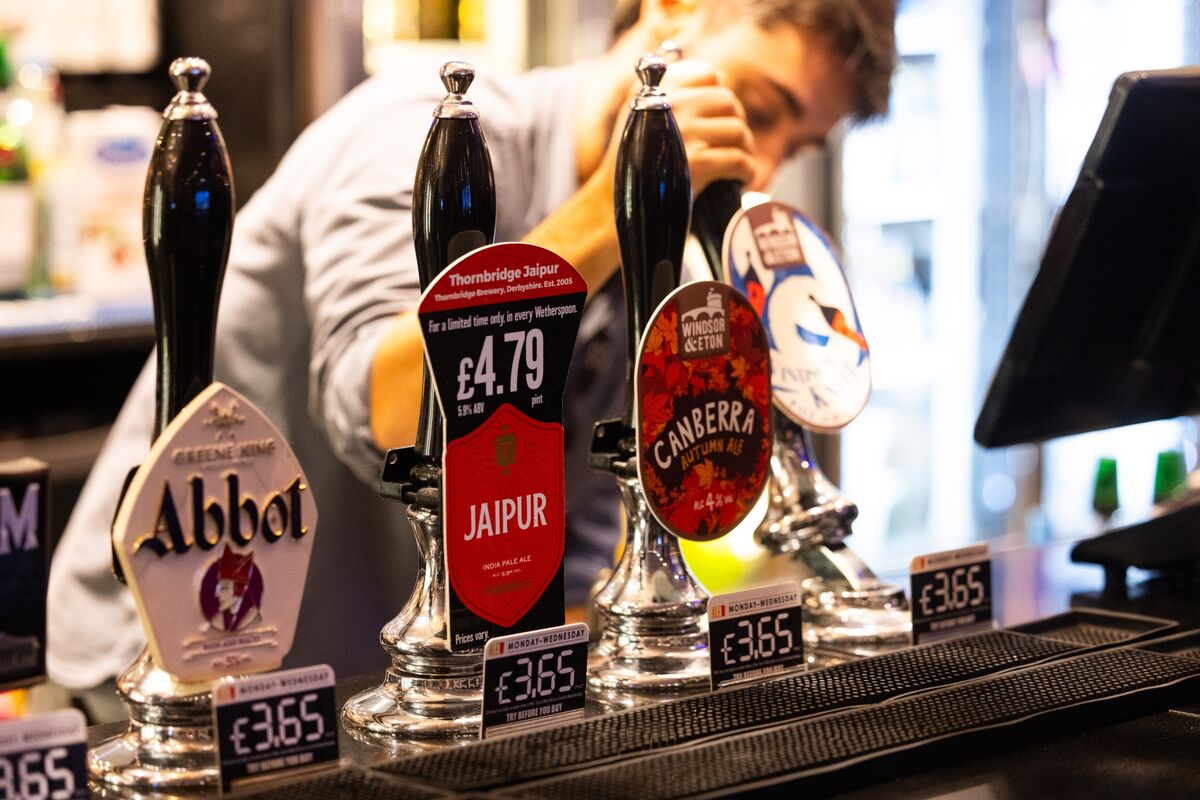
J D Wetherspoon issued its second profit warning this year, citing weaker consumer finances and rising costs. Shares plunged as much as 11% intraday (its biggest one-day fall in a year), worsening a 16% year-to-date decline; the update signals continued downside risk to earnings and investor sentiment for the pub operator.
A revenue squeeze in low-margin, high-footfall leisure businesses cascades through three channels: consumer substitution to lower-cost off-premise purchase, margin erosion from an inability to fully pass through input inflation, and balance-sheet stress for operators with significant property or lease leverage. Suppliers that rely on on-trade volumes will see a rapid reallocation of volume into supermarkets and discounters, compressing distributor margins even as absolute cases sold may hold, creating a two-tier margin outcome across the supply chain within 1–3 quarters.
Competitive dynamics favor businesses with flexible cost base and multi-channel exposure: operators that own a higher share of freehold real estate (providing optionality to repurpose or sell), those with strong food/meal revenue (higher ticket, less discretionary), and grocery retailers who capture trade-down flows. Conversely, highly-levered peers, specialised on-trade suppliers, and landlords with concentrated pub portfolios face elevated vacancy, covenant and working-capital risk over the next 6–18 months.
Catalysts that would reverse the downside include a material drop in wholesale energy and commodity prices (60–90 day lag to margins), a visible recovery in real incomes following CPI disinflation and either rate cuts or clearer guidance on policy easing, or an operational response that meaningfully reduces fixed-cost run-rate (site closures, staff scheduling). Near-term tail risks include accelerated closures leading to cascade lease defaults and contagion into high-yield debt markets; monitor CDS spreads and covenant headroom as leading indicators over weeks-to-months. The current market pricing likely overweights headline sentiment and underweights optionality in property and food-led pivot strategies — a setup ripe for targeted, hedged trades rather than blunt long-only exposure.
AI-powered research, real-time alerts, and portfolio analytics for institutional investors.
Overall Sentiment
strongly negative
Sentiment Score
-0.65
