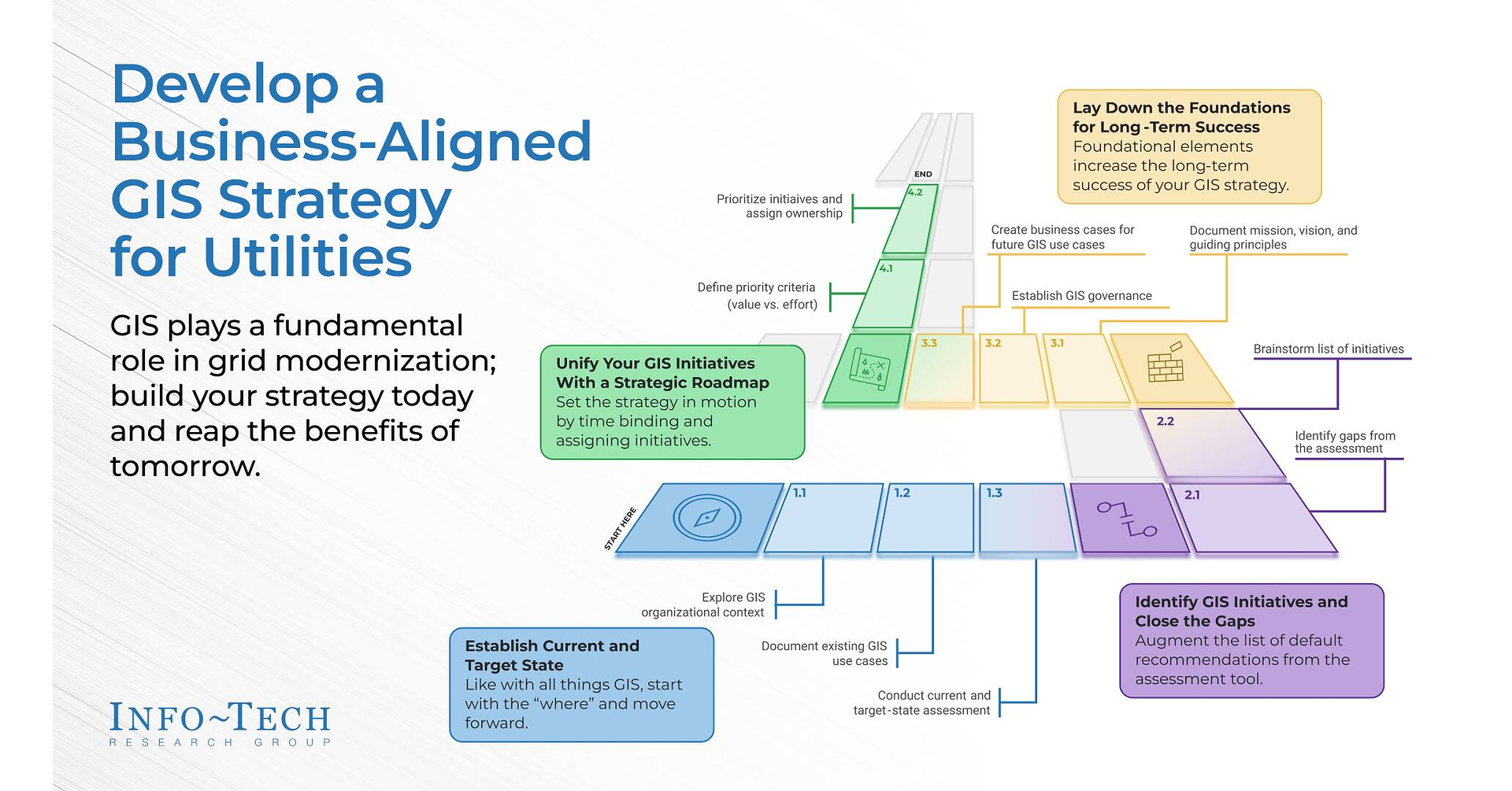
Info-Tech Research Group urges utilities to align GIS capabilities with business priorities to accelerate grid modernization, asset visibility, and enterprise decision-making. The firm highlights common barriers—siloed geospatial data, unclear ownership, skills gaps, inconsistent standards, and governance that limits collaboration—and proposes a four-phase roadmap to assess maturity, close capability gaps, set foundations, and build a prioritized strategic plan. The article is largely advisory/whitepaper-style with no direct company financial figures, suggesting minimal immediate market impact.
This is not a near-term earnings catalyst for utilities; it is a governance/process signal that procurement is moving from point tools toward integrated data architecture. The monetizable spend is likely to show up first in systems integration, OT/IT middleware, field mobility, and data-cleanup work rather than in stand-alone GIS software, which means the economic benefit accrues to implementation-heavy vendors with utility references, not necessarily to the application layer. For listed names, the best secondary beneficiaries are likely utility-tech and industrial software providers with geospatial/asset-management hooks; the weakest read-through is to regulated utilities that still treat this as an efficiency project rather than a capex priority.
The market is likely overestimating the immediacy of the revenue impact. Utility budgeting cycles are slow, so the first meaningful evidence should come over the next 1-3 quarters via rate-case filings, IT/OT budget commentary, and backlog conversion at vendors; the structural payoff is 6-18 months out if GIS becomes the source of truth for outage response, vegetation management, and asset inspection workflows. If that happens, the real upside is not just lower opex but fewer regulatory penalties and better reliability metrics, which can support multiple expansion for execution-proof utilities and software enablers.
Contrarian view: the consensus may be too focused on the software layer and too dismissive of services. The hard part is data governance and change management, so vendors with consulting, integration, and workflow implementation should capture more value than pure mapping platforms. Falsifiers are simple: no increase in digital-grid spend in upcoming utility budgets, no mention of GIS/data integration in earnings calls, or rate regulators pushing back on incremental software costs.
AI-powered research, real-time alerts, and portfolio analytics for institutional investors.
Request DemoOverall Sentiment
neutral
Sentiment Score
0.05
Ticker Sentiment
