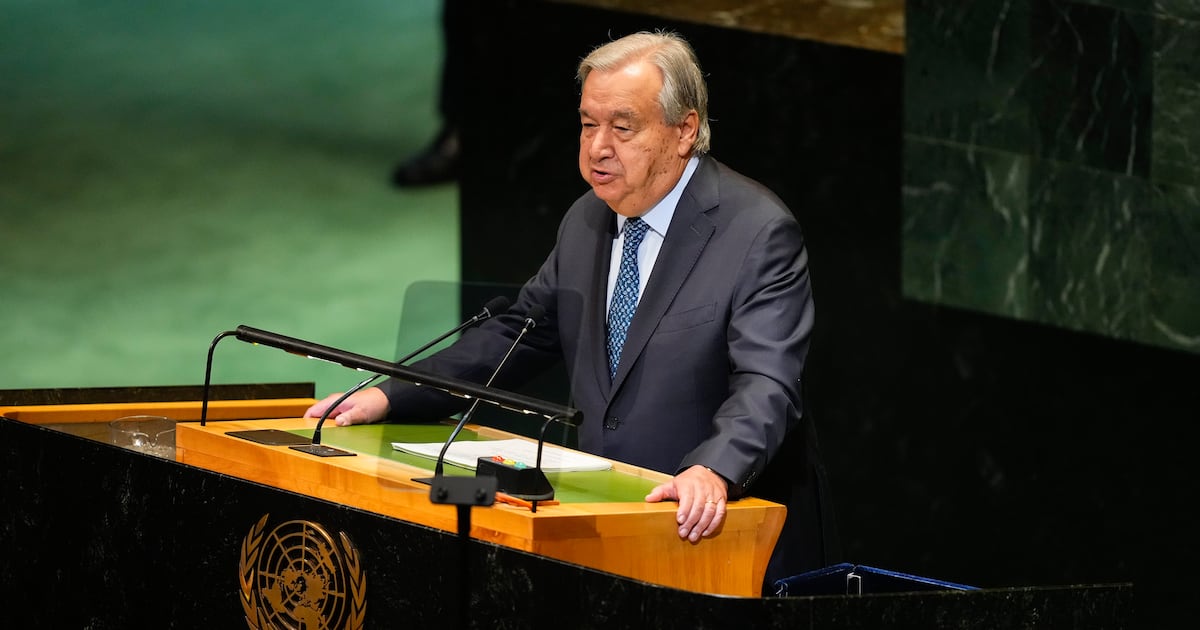
The UN is beginning public hearings for four candidates to succeed Secretary-General Antonio Guterres, with the final choice set to take office on January 1, 2027. The race is shaped by financial pressure, unpaid member-state contributions, and debate over whether the next chief should be a woman and/or come from Latin America. While the outcome matters for global governance, the article is procedural and is unlikely to have an immediate market impact.
The marketable asset here is not the UN job itself but the policy signaling around multilateral funding discipline. If the frontrunner is seen as a technocrat focused on cost control and “delivering less with less,” that raises the odds of incremental spending restraint across UN-adjacent ecosystems: contractors, peacekeeping logistics, development implementers, and NGOs that rely on layered grant pass-throughs. The second-order beneficiary is anyone positioned to replace public-sector delivery with private or quasi-private execution, especially in procurement-heavy geographies where UN procurement is a meaningful demand anchor.
The real binary is not gender or region; it is whether the next secretary general becomes a coalition-builder who can extract arrears from large contributors, or a reformer who attempts to shrink the institution’s footprint. A reform mandate would be mildly deflationary for UN vendor revenues over 12–24 months, but could improve renewal risk for the institution itself by reducing budget leakage and raising operating leverage. Conversely, a weak compromise candidate likely preserves the current “slow bleed” dynamic: fiscal pressure persists, credibility erodes, and the gap gets filled by bilateral aid, sovereign wealth initiatives, and regional organizations.
The underappreciated catalyst is Washington’s ability to shape not just the candidate but the policy frame. If the U.S. openly rejects regional rotation norms, the process becomes a proxy for broader multilateral retrenchment, which could spill into NGO funding, peacekeeping reimbursement, and development-bank coordination. In that scenario, the biggest losers are firms and funds exposed to long-duration public-sector service contracts with embedded political risk, while defense-adjacent and private intelligence/security providers gain relative bargaining power.
Consensus seems to assume the hearings are mostly theater. That misses the real signal: the public vetting raises the cost of a weak, purely diplomatic nominee and increases the probability of a “management-first” secretary general. Over the next 30–90 days, expect positioning around reform rhetoric rather than final selection, with the eventual winner less important than whether member states believe the UN will enforce budget discipline.
AI-powered research, real-time alerts, and portfolio analytics for institutional investors.
Request DemoOverall Sentiment
neutral
Sentiment Score
-0.05
