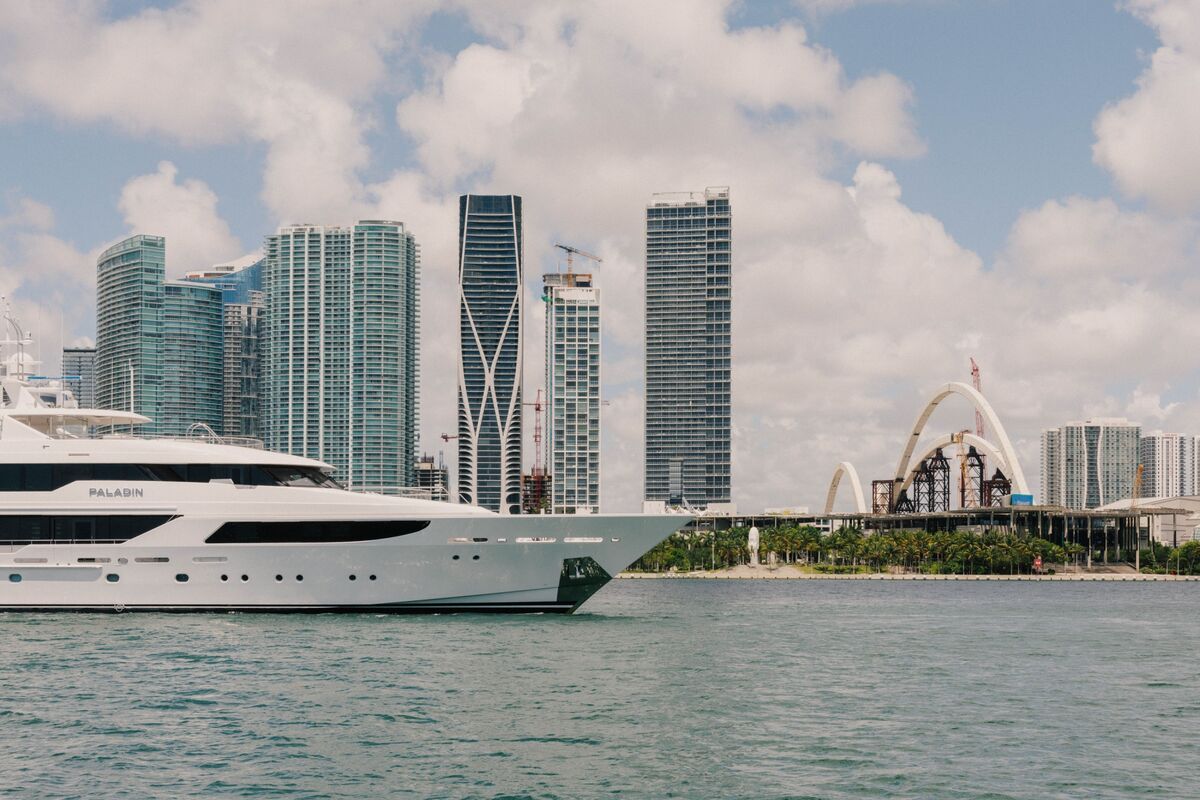
Miami Beach police have removed about 140 abandoned vessels since October, highlighting a growing marine cleanup issue in Biscayne Bay near some of the most expensive waterfront real estate in the U.S. The article contrasts billionaire superyachts with boats abandoned by owners who could no longer afford them, underscoring strain in the local boating ecosystem. The impact is localized and reputational rather than a direct market-moving event.
This is less a tourism headline than a signal that Miami’s waterfront is becoming a bifurcated asset class: ultra-wealthy discretionary consumption at the top end and distressed ownership at the bottom. The immediate beneficiaries are marine service providers, salvage/remediation contractors, marina operators with strict slip allocation, and local enforcement-adjacent vendors; the hidden loser is any low-end boating ecosystem that depends on stable middle-class participation. Over time, the cleanup burden can also tighten effective water access, which is a subtle positive for premium marina pricing and a negative for volume-driven operators.
The second-order impact is on coastal real estate and lifestyle brands that trade on exclusivity. A persistent visible “marine graveyard” undermines the premium halo around luxury waterfront inventory by injecting nuisance, legal risk, and municipal cleanup costs into the same geography that is supposed to command scarcity rents. If this becomes a recurring enforcement cycle over the next 6-18 months, it can strengthen pricing power for professionally managed marinas and weaken the flywheel for informal boat ownership, repairs, and storage.
The market risk is not that the wealthy stop spending; it’s that lower-end discretionary demand gets squeezed harder by insurance, financing, and maintenance costs, making marine ownership increasingly polarized. A reversal would require easier credit, lower fuel/insurance costs, or a broadening consumer wealth effect that revives used-boat turnover over the next 2-3 quarters. Absent that, the operating leverage sits with firms that monetize the top decile of spend and with municipalities/service providers that can convert disorder into fee-based remediation.
Contrarian view: the presence of abandoned boats may actually be evidence of demand destruction in the mass market, not strength at the top end. That means the bullish read on luxury waterfront real estate should be tempered: the true beneficiary may be adjacent service infrastructure rather than prime residential assets, because the latter already trade at perfection and have limited upside if nuisance costs rise. The cleaner expression is to own businesses that get paid to enforce, tow, repair, store, and resell rather than the glamour layer that depends on the headline.
AI-powered research, real-time alerts, and portfolio analytics for institutional investors.
Request DemoOverall Sentiment
mildly negative
Sentiment Score
-0.15
