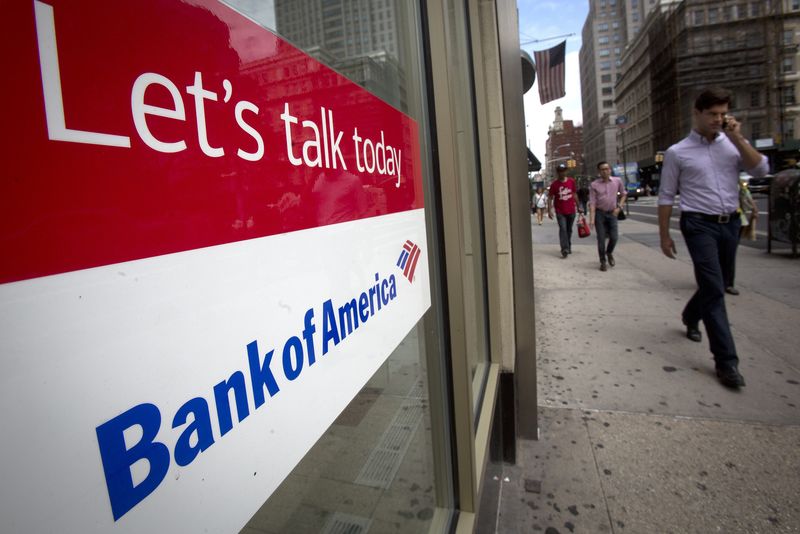
Piper Sandler reiterated a Neutral on Bank of America while shares trade at a P/E of 13.6 and InvestingPro flags the stock as undervalued. Management is targeting 5–7% net interest income growth for fiscal 2026, analysts forecast ~12% revenue growth for fiscal 2026 and 11 analysts have revised earnings up ahead of the April 15 report. HSBC upgraded BAC to Buy, but investors remain concerned about cost control and geopolitics (Sell Side Indicator fell to 55.7% in March) and Goldman warned of earnings risk if oil prices jump after Strait of Hormuz disruptions.
Banks are entering a period where headline net interest income tailwinds are largely reflected in prices, so the next leg of outperformance requires operational leverage: sustaining fee growth (markets, cards) while keeping noninterest expense flat or falling as a percent of revenue. Practically, that means a 3–6 month horizon where small cost overruns (an incremental 2–4% rise in noninterest expense) can wipe out the implied NII gains and create earnings downside of roughly 8–12% relative to current consensus.
Geopolitical-driven oil shocks create asymmetric effects across the franchise spectrum: volatility spikes lift trading revenues and bid-ask spreads for sell-side banks in the near term (weeks to 3 months), but they also raise credit risk for energy-exposed corporates and card borrowers, pressuring loan-loss provisioning with a 6–12 month lag. This bifurcation makes a simple “rate = win” thesis fragile — trading wins can be transient while credit drifts later.
Investor positioning is crowded on rate-sensitivity; the practical arbitrage is between high-operational-leverage names that can convert trading/NII into EPS and those with heavier fixed-cost bases or concentrated credit exposures. Watch seasonality of treasury flows and options skew: a sustained increase in skew/vol will materially help FICC desks but may coincide with wider loan spreads and higher LLPs for the retail book.
The immediate catalyst window is the next earnings cycle and any sustained change in oil/volatility — both operate on different clocks (days-weeks vs months), so trades should be constructed to harvest near-term convexity while protecting for slower credit deterioration.
AI-powered research, real-time alerts, and portfolio analytics for institutional investors.
Request DemoOverall Sentiment
mildly positive
Sentiment Score
0.25
Ticker Sentiment
