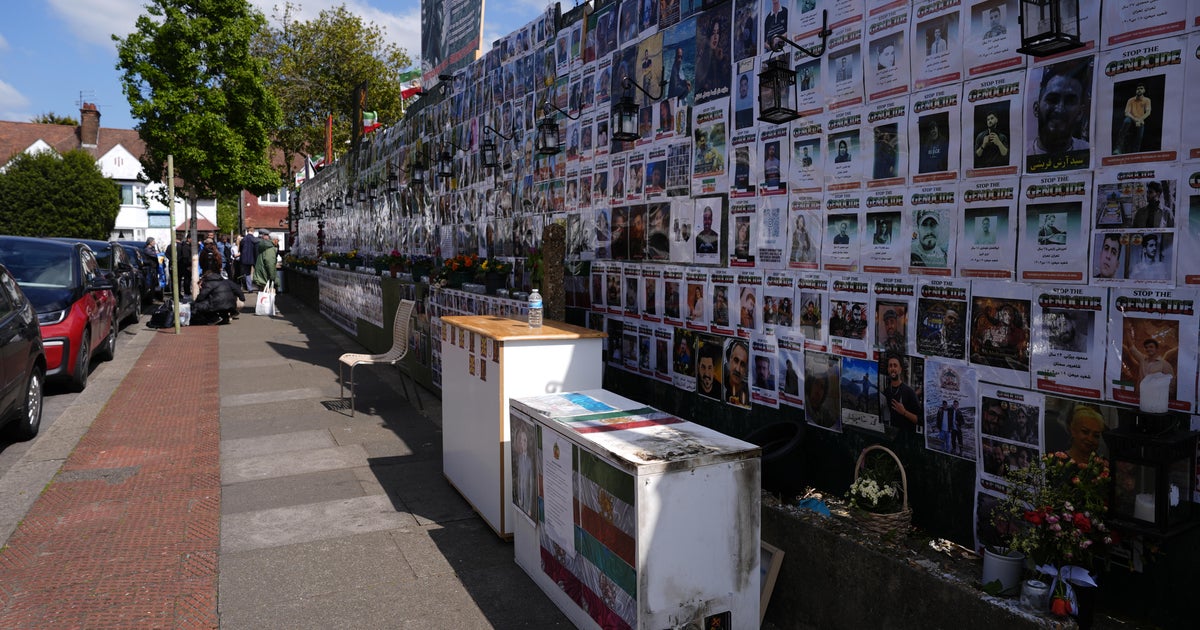
Counter-terror police are investigating a suspected arson attack on a memorial wall in Golders Green, north London, though police say the incident is not being treated as terror-related and no one has been arrested. The latest attack follows a series of anti-Jewish incidents in the area, including last month’s vehicle arson and recent claimed attacks on a Persian-language media office and a synagogue. The article highlights elevated community security concerns, but it is unlikely to have a direct market impact.
This is less a one-off criminal incident than evidence of a durable low-probability, high-visibility security regime in a specific London micro-market. The second-order effect is that insurers, security vendors, and local property owners all face a ratchet higher in recurring protection costs, even if physical damage remains limited; the market typically underprices these “friction” costs until they become embedded in renewal cycles. The most immediate beneficiary is private security demand, while the losers are institutions with symbolic exposure clustered in the same neighborhoods, which will likely need to spend more on patrols, hardening, and reputation management over the next 3-12 months.
The more interesting macro angle is policy drift: repeated incidents tied to geopolitical grievance create pressure on UK authorities to tighten surveillance, expand preventive policing, and increase prosecutions, which tends to lift spend for technology-enabled monitoring, perimeter security, and rapid-response services. That is a small but persistent tailwind for defense-adjacent domestic contractors and security integrators, especially those with recurring-revenue models. The near-term catalyst is another incident or credible threat escalation; absent that, the issue fades from headlines but not from budgets.
The contrarian view is that consensus may overestimate market impact from the headline risk while underestimating the operational burden on a handful of local assets. This is not a broad “UK risk-off” event; it is a concentrated loss-avoidance trade in security and insurance rather than a macro trade in the pound or UK equities. If authorities show sustained containment over the next 4-8 weeks, some of the implied risk premium will mean-revert, but the baseline for vigilance is still higher than before and likely stays there through year-end.
For portfolio construction, the relevant edge is to fade the idea that these incidents are purely episodic; they are more likely to translate into sticky Opex than into one-time capex. That makes the tradeable exposure less about direct beneficiaries in the article and more about recurring spend categories with pricing power. Watch for procurement cycles and policy announcements, because those are the real catalysts that turn fear into earnings.
AI-powered research, real-time alerts, and portfolio analytics for institutional investors.
Request DemoOverall Sentiment
moderately negative
Sentiment Score
-0.30
