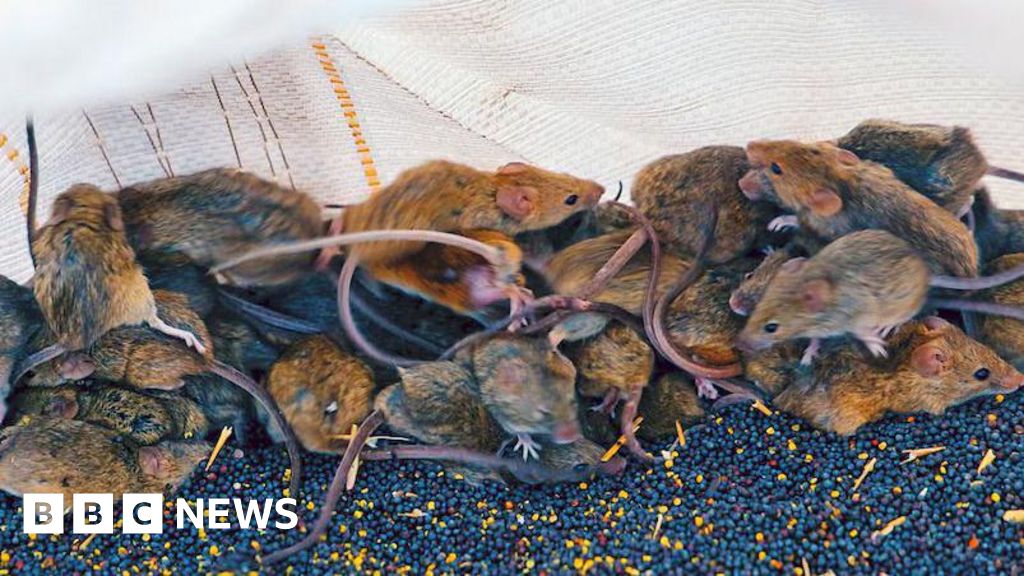
Australia’s grain farmers are facing a severe mouse plague, with some reporting thousands of mice per hectare and crop losses requiring costly replanting and baiting. The problem is compounding already elevated diesel and fertilizer costs linked to the Iran war, while stronger bait has only recently been approved by regulators. With winter, rain and colder temperatures expected to help, near-term pressure remains high but the article suggests some easing ahead.
The immediate market read is not agriculture output loss per se, but margin compression across the farm-input stack. A plague of this scale raises the probability of seed loss, replanting, and elevated bait usage at exactly the point in the cycle when growers are already fighting input inflation, which means cash conversion for regional growers can deteriorate sharply before any crop P&L shows up. That tends to favor upstream input vendors with pricing power and distribution reach, while hurting smaller growers and equipment/service names tied to local farm capex and discretionary spend.
The second-order effect is on export quality and timing rather than just volume. If planting gets patchy or delayed, the market usually discovers the problem later through lower protein consistency, weaker grade, and more variable shipment timing — all of which can pressure Australian wheat and barley differentials even if headline tonnage is only modestly impaired. That is more relevant for millers, noodle producers, and feed buyers than for generic global grain prices, especially if weather later normalizes and masks the damage at the aggregate level.
Catalysts are tight over the next 2-6 weeks: the stronger bait, cooler weather, and rain could reduce visible pressure quickly, but that does not reverse the hidden loss of planted acreage and re-seeding costs already incurred. The real risk is a false sense of resolution if burrows fall before emergence is complete; the crop can still fail after the pest count declines. Over 1-3 months, the key variable is whether winter conditions break the breeding cycle before a second wave hits newly emerged plants.
The consensus is probably underestimating how much of this becomes a cash-flow and credit event for small operators, not just a crop event. If lenders start treating replant risk and operating-cost inflation as persistent rather than transitory, you can get forced selling in rural banking-adjacent exposures and a delayed capex freeze across the district. Conversely, the move may be overdone for broad grain prices if weather genuinely suppresses mice quickly; the cleaner trade is on local margins and input demand, not a blanket bearish view on global cereals.
AI-powered research, real-time alerts, and portfolio analytics for institutional investors.
Request TrialOverall Sentiment
strongly negative
Sentiment Score
-0.55
