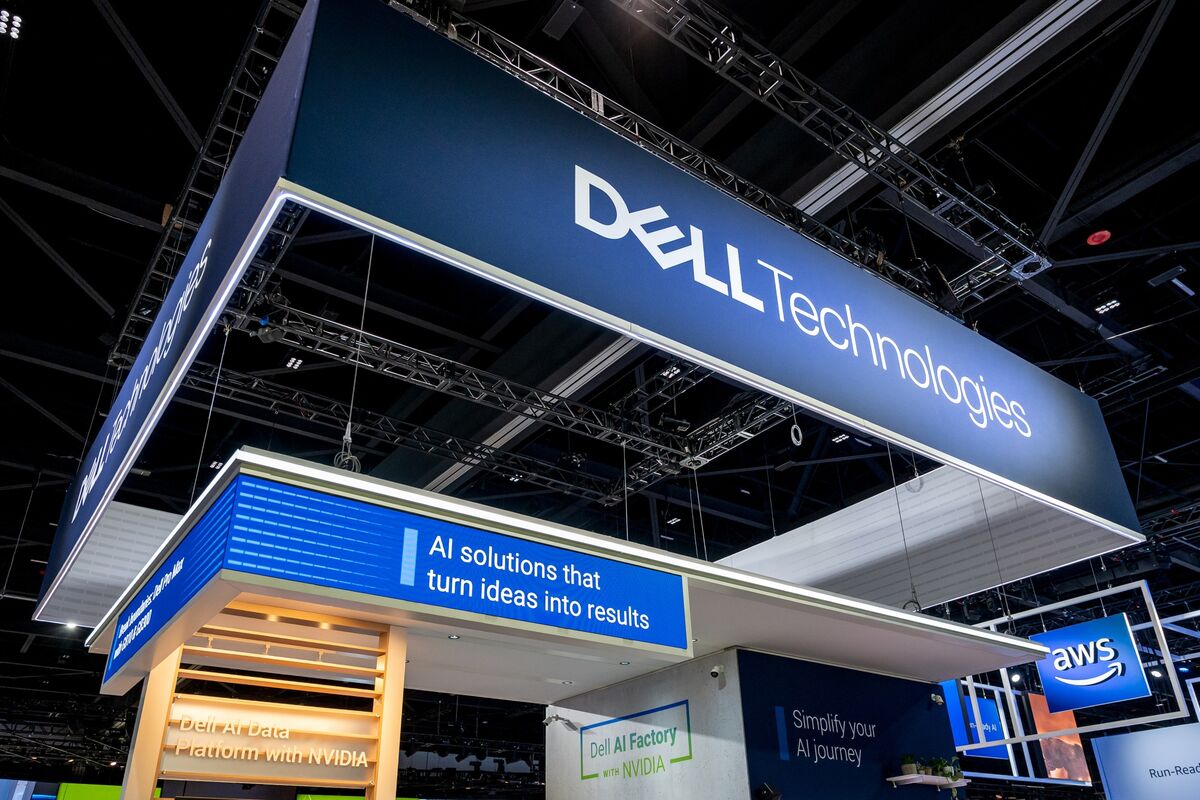
Dell raised fiscal 2027 revenue guidance to about $167 billion, well above the prior $140 billion outlook and the $142.1 billion analyst consensus. The company said $60 billion of that total will come from AI server sales, underscoring very strong demand tied to artificial intelligence infrastructure. The higher outlook is a clear positive for Dell’s fundamentals and could support the stock.
This is not just a single-name beat; it is evidence that enterprise AI infrastructure spend is still in an early, compounding phase. The scale of the implied AI server revenue run-rate suggests the bottleneck is shifting from demand creation to manufacturing, integration, and power delivery, which should keep pricing power with the ecosystem participants who can ship at volume. The first-order winner is DELL, but the second-order beneficiaries are the component suppliers and contract manufacturers that sit closest to the build-out curve, especially where qualification cycles create temporary scarcity premiums.
The market may be underestimating how much this guidance improves Dell's negotiating leverage with hyperscalers and large enterprises. Once customers anchor on Dell as a multi-year supply partner, the business gets a more durable backlog profile and better visibility into adjacent attach opportunities in storage, networking, and services, which can lift margin mix even if server ASPs normalize. The flip side is that the headline growth rate is likely to compress once the current procurement wave clears, so the stock may trade more on execution cadence than on absolute demand after the next 1-2 quarters.
The main risk is not demand disappearing, but delays: power constraints, GPU allocation, and customer deployment friction can push revenue recognition out by months, creating volatility around guide updates. If the supply chain loosens faster than expected, competitive pricing could rise and dilute the implied economics, making the current enthusiasm fragile. Another contrarian point is that very large guidance raises the bar for every subsequent print; in this setup, merely meeting expectations may be insufficient once the market has capitalized a structurally higher growth path.
AI-powered research, real-time alerts, and portfolio analytics for institutional investors.
Overall Sentiment
strongly positive
Sentiment Score
0.78
Ticker Sentiment
