



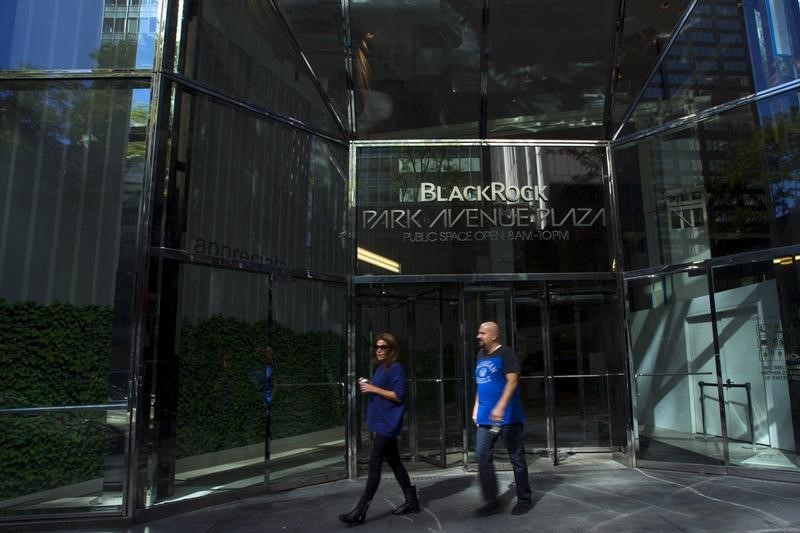
Evercore ISI raised its price target on BlackRock to $1,220 from $1,180 while maintaining an Outperform rating, citing investor reaction to Q1 2026 results and management's growth outlook. BlackRock posted 8% organic base fee growth, EPS of $12.53 versus $11.48 expected, and revenue of $6.7 billion versus $6.43 billion consensus. The firm sees multiple growth drivers, including ETFs, customized wealth solutions, private credit, infrastructure, and private-markets-enabled retirement mandates.
The real signal here is not just that large-cap AI spending remains intact, but that the spend is becoming increasingly concentrated around a small set of incumbent platform winners. That favors the most exposed custom-silicon and inference-supply names near term, while reducing the odds that generic server, networking, or memory spending captures the same marginal dollar of capex. The second-order effect is that hyperscaler AI budgets are shifting from “test-and-learn” to multi-year deployment commitments, which should compress revenue visibility for the ecosystem and support premium multiples for the few vendors embedded in those roadmaps.
Meta’s continued willingness to lock in large-scale AI infrastructure is also a read-through on competitive intensity: the company is prioritizing model training and inference capacity even if near-term monetization lags. That tends to raise the bar for peers, forcing them to either spend similarly or risk product and ad-ranking disadvantages, which is bullish for the broader compute supply chain but bearish for companies with weaker AI capex leverage. The market may still be underestimating how much of the benefit accrues to suppliers with custom integration, not just to the headline GPU beneficiaries.
For BlackRock, the important second-order takeaway is that the asset-gathering machine is being validated by flows into structurally higher-fee sleeves, not just market beta. If that mix shift persists, the earnings power is less sensitive to near-term markets than the stock’s premium valuation implies. The contrarian risk is that consensus is extrapolating organic growth durability at a point where fee compression, client rebalancing, or a risk-off rotation could slow net inflows within 1-2 quarters.
The near-term setup is therefore asymmetric: AI supply-chain names can keep rerating on contract visibility over the next several months, while BLK looks more like a high-quality compounder that can underperform if rates fall and investors rotate back toward lower-fee passive exposure. The key catalyst window is the next 1-2 earnings prints for confirmation that these growth vectors are translating into backlog, not just sentiment.
AI-powered research, real-time alerts, and portfolio analytics for institutional investors.
Request TrialOverall Sentiment
mildly positive
Sentiment Score
0.35
Ticker Sentiment
