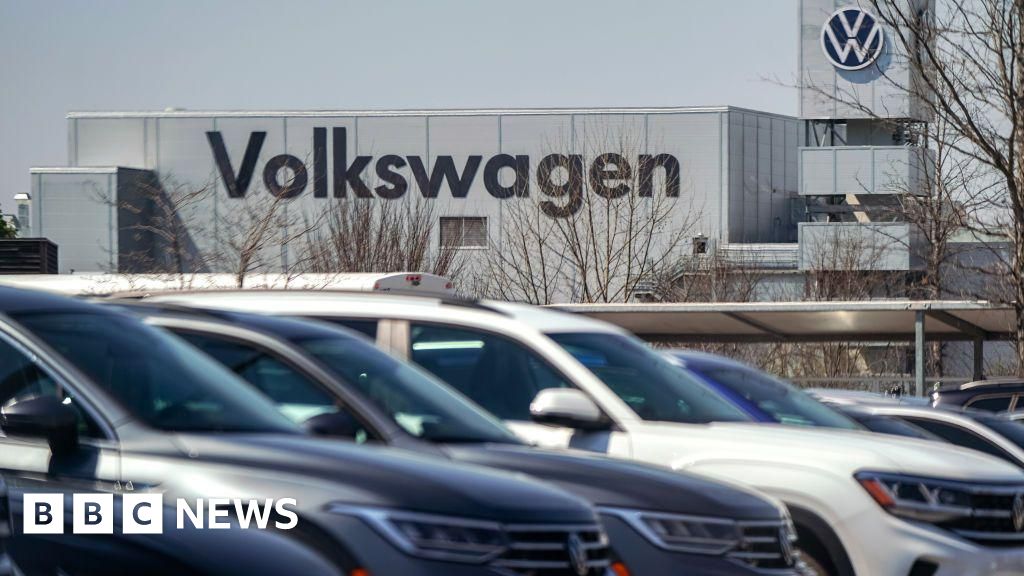
Volkswagen will cut around 50,000 jobs in Germany by 2030 after post-tax profit fell ~44% in 2025 to €6.9bn from €12.4bn. The company cited US 25% import tariffs, stronger competition from Chinese brands and high EV restructuring costs, and had already agreed to cut >35,000 roles to save roughly €15bn. VW forecasts a 2026 core profit margin of 4.0%–5.5% (vs 4.6% this year) and flagged the need for further rigorous cost reductions.
The immediate competitive tilt favors low-cost, high-volume EV entrants that can exploit pricing flexibility in Europe; incumbents that cannot quickly reprice or cut fixed overhead will cede share. Second-order winners include Asian OEMs and local assembly contractors who can scale exports into European channels, while tier-1 suppliers with high fixed-cost footprints are most exposed to order volatility and margin compression.
On the supply-chain side, expect a two-track outcome: prudent OEMs will delay or downscale new EV platforms to preserve cash, reducing near-term demand for battery cells and specialty semiconductors; simultaneously, larger suppliers with clean balance sheets become logical consolidation targets as weaker rivals struggle to refinance. Credit and residual-value dynamics at captive finance arms are the fastest channel for contagion—tightening there hits retail demand and used-vehicle pricing within quarters.
Catalysts that could reverse the trend are policy moves (tariff rollback or targeted subsidies), a sharp rebound in end-market demand in Asia, or an aggressive pricing pivot by incumbents that restores share without bankrupting suppliers. Monitor weekly order intake, dealer days’ supply, and ABS/captive funding spreads as leading indicators — changes there will precede any durable recovery in margins by several quarters and will create tactical entry points for both equities and credit positions.
AI-powered research, real-time alerts, and portfolio analytics for institutional investors.
Overall Sentiment
strongly negative
Sentiment Score
-0.65
