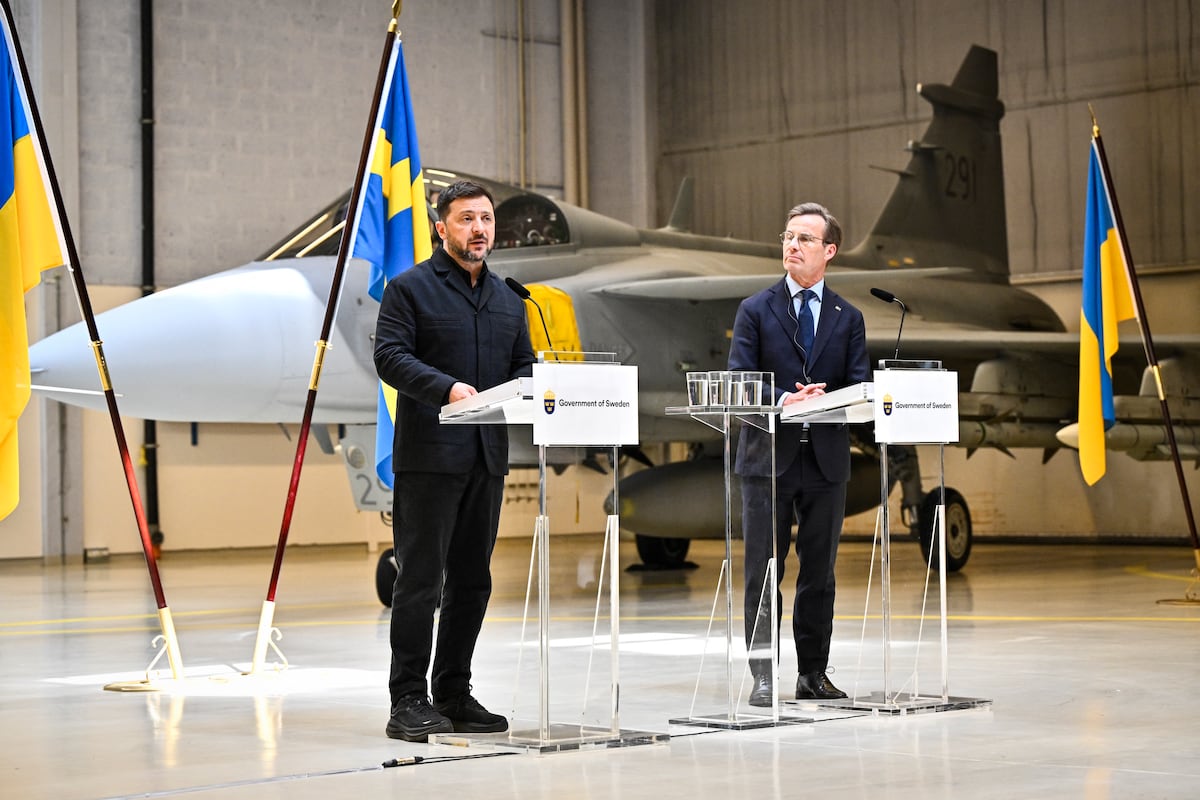
Ukraine said it will buy 20 new Saab Gripen fighter jets, while Sweden will donate 16 older C/D jets next year, advancing a broader plan for up to 150 aircraft. Ukraine said it has earmarked €2.5 billion from a €90 billion EU loan package for the purchase, with deliveries of the newer Gripen E expected from 2030. The announcement lifted Saab shares 4.4% as investors responded to a meaningful defense order and improved long-term demand visibility.
This is less a one-off contract headline than a validation event for a multi-year platform story. A combat-proven reference customer in an active theater materially improves Saab’s export credibility versus peers whose sales cycles rely more heavily on peacetime procurement logic; that can widen the funnel for Gripen E in Central/Eastern Europe and parts of Asia where runway resilience, operating cost, and dispersed basing matter more than raw stealth performance. The second-order winner is Sweden’s defense supply chain: avionics, sensors, munitions, and maintenance partners should see demand pull-through well before the first new-build jets arrive.
The market will likely over-focus on the near-term share price pop and underweight the staggered cash flow profile. The older jet transfer is a bridge, but the strategic value is that it reduces Ukraine’s capability gap while preserving optionality for the larger future order book; that lowers execution risk for Saab’s production ramp and could support a re-rating if management can show a cleaner backlog-to-revenue conversion path over the next 12–24 months. The key constraint is industrial capacity: if Saab cannot credibly expand throughput, the story remains emotionally bullish but financially deferred.
Consensus also may be missing the competitive read-through. Every Gripen win in a cost-constrained European procurement environment is a relative negative for heavier, pricier platforms competing for finite post-Ukraine budgets, especially where governments want more airframes per euro and faster fielding. The biggest reversal risk is political rather than military: if the funding architecture for Ukraine deteriorates or EU loan mechanics stall, the 2030+ delivery thesis loses momentum and the current enthusiasm could fade back into valuation gravity within weeks to months.
AI-powered research, real-time alerts, and portfolio analytics for institutional investors.
Request TrialOverall Sentiment
moderately positive
Sentiment Score
0.62
