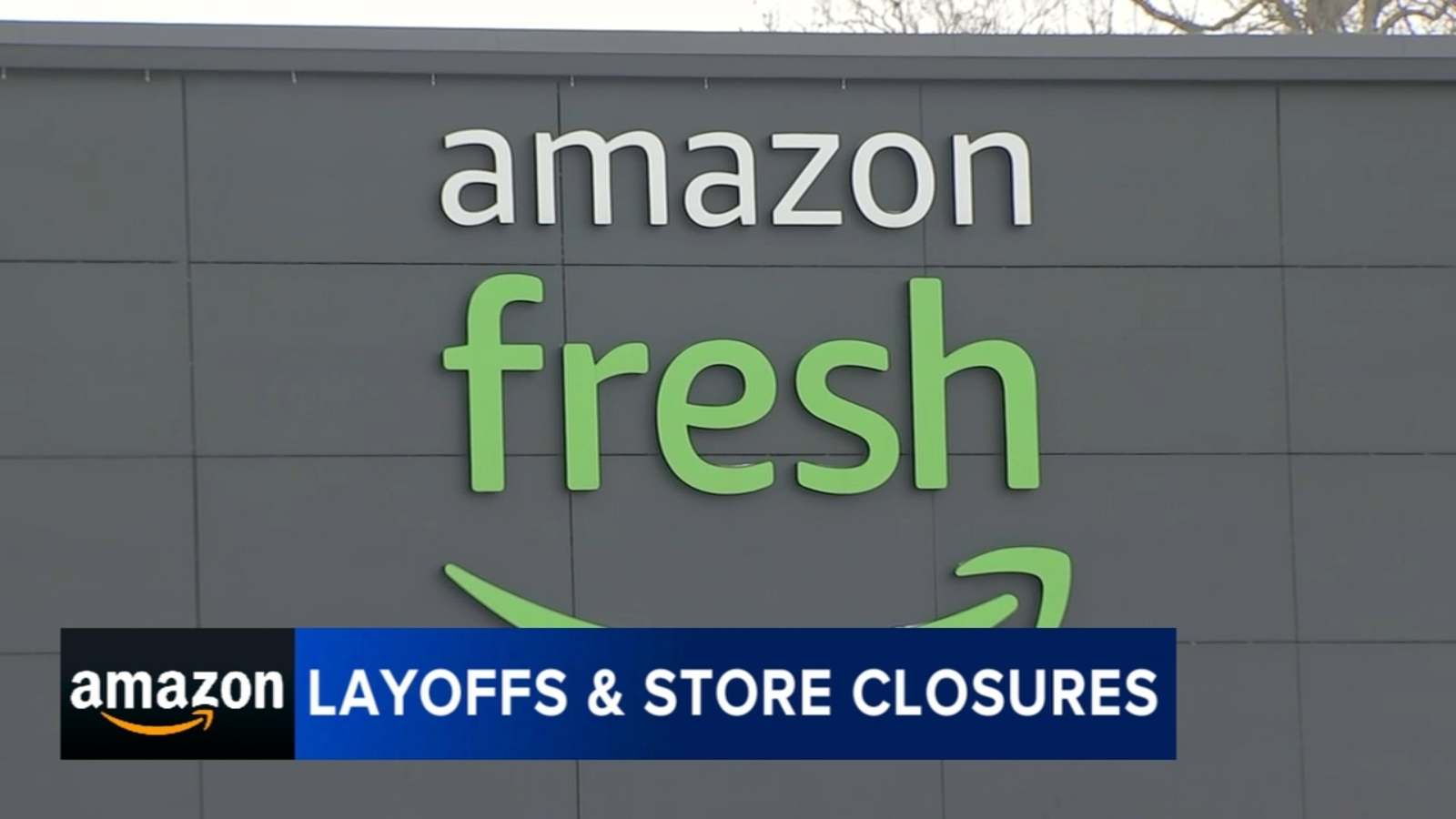
Amazon is closing 72 Amazon Fresh and Amazon Go grocery stores, including the Broomall, PA location, and announced elimination of 16,000 corporate roles in the latest round of cuts—bringing total corporate layoffs to 30,000 (about 9% of its corporate workforce) after last fall's 14,000 reductions. The company cited advances in artificial intelligence as a driver, plans to convert some closed Fresh stores into Whole Foods locations, and the move coincides with broader sector labor adjustments such as UPS trimming 30,000 jobs via attrition, signaling operational restructuring and cost-saving efforts with localized retail disruption.
Market structure: Physical-grocery closures (72 stores) and 30k corporate cuts shrink AMZN’s physical retail footprint and near-term staffing costs, benefiting dominant grocers with scale (KR, WMT, COST) that can capture displaced foot traffic and pricing power. UPS faces volume risk as Amazon unwinds partnerships; expect 3–6% near-term pressure on UPS revenue growth if Amazon shifts volume internally or to lower-cost carriers. Cross-asset: modestly disinflationary slack from layoffs could be supportive for long-duration Treasuries (2–10bp rally potential near-term) and weigh on USD if replicated across peers; food-commodity impact will be negligible.
Risk assessment: Tail risks include aggressive regulatory scrutiny of mass layoffs or labor actions, unexpected lease termination liabilities for AMZN (could add hundreds of millions of charges), or a broader tech sell-off if AI-cost rationalizations disappoint. Time horizons matter: immediate (days) — headline-driven volatility; short-term (1–3 months) — retail share shifts and comps; long-term (6–18 months) — AI-driven productivity gains could restore AMZN margins. Hidden dependencies: conversions to Whole Foods may cannibalize local grocers and mask true loss of Amazon Fresh economics.
Trade implications: Favor long, defensive grocery exposure (KR, WMT) for 6–12 months to capture share gains; implement small, capital-light hedges on AMZN and UPS (see specifics below). Use options to limit downside: 3-month AMZN put spreads for headline risk and 6-month UPS puts to express operational de-risking. Rotate 2–4% of equity weight from e-commerce enablers into staples and selected grocery names over the next 4–8 weeks.
Contrarian angles: The market may over-penalize AMZN for physical closures even though AWS and advertising remain cash engines — a >5% pullback in AMZN over 2 weeks merits tactical accumulation. Historical parallel: past big-box rationalizations (e.g., WMT 2016–18 store remixes) produced short-term hit but long-term margin upside for disciplined operators. Unintended consequence: larger grocers could raise prices, improving their margins faster than consensus expects.
AI-powered research, real-time alerts, and portfolio analytics for institutional investors.
Request DemoOverall Sentiment
moderately negative
Sentiment Score
-0.50
Ticker Sentiment
