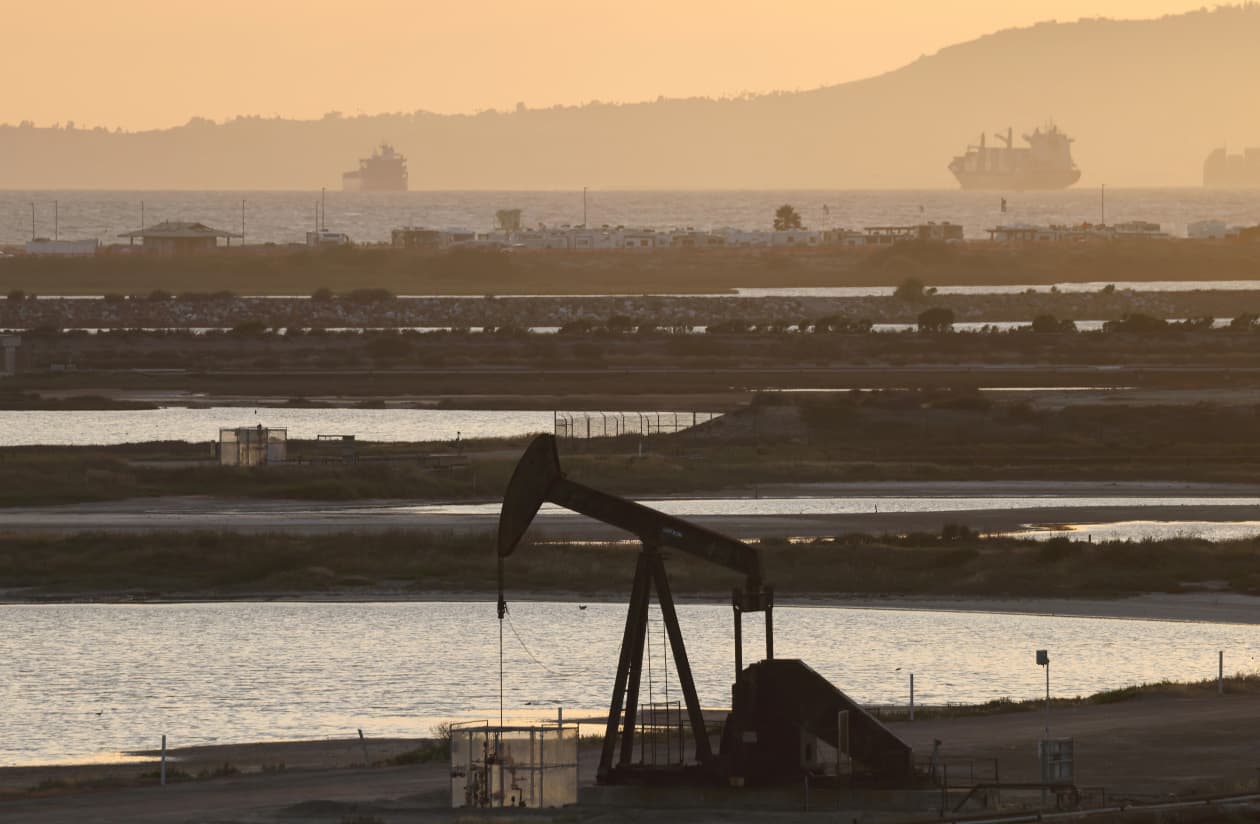
Oil futures surged back above $100 a barrel, with WTI up more than 2% to $96.70 and Brent rising 2.5% to $101.60 after President Trump canceled his envoys’ trip to Islamabad for peace talks with Iran. The move reflects renewed geopolitical risk premium in crude markets and could support energy prices broadly. The rally is likely to keep oil-linked assets and inflation expectations under pressure in the near term.
The immediate second-order effect is not just higher upstream cash flow; it is a renewed tax on everything that relies on discretionary transport or feedstock-heavy margins. Refiner crack spreads can initially hold if product inventories are tight, but sustained crude strength typically compresses downstream margins with a lag of several weeks as wholesale fuel costs reprice faster than retail. The market is also reintroducing geopolitical risk premium, which tends to disproportionately benefit the most liquid energy hedges even if the underlying supply shock never fully materializes.
The more interesting winner is not necessarily the majors, but balance-sheet-strong U.S. producers and service names with operating leverage and limited hedge books. If crude stays elevated for a quarter, free cash flow revisions can outpace spot price moves because buybacks and variable dividends are often modeled on strip assumptions, forcing estimate revisions and potential multiple expansion. On the loser side, airlines, chemicals, and parcel/logistics names face margin pressure with a 1-2 month lag, and the market often underprices how quickly fuel surcharges fail to offset the first wave of input-cost inflation.
Catalyst risk cuts both ways: a diplomatic headline can unwind the premium in days, but the larger risk is that the market starts pricing in a broader supply-risk regime over months, lifting volatility even if spot retraces. The consensus may be overestimating the persistence of a clean directional move and underestimating the value of long volatility: crude can fall on any de-escalation, yet stay structurally supported by every new geopolitical flare-up. That asymmetry argues for hedges that monetize volatility rather than simply chasing spot exposure.
AI-powered research, real-time alerts, and portfolio analytics for institutional investors.
Overall Sentiment
neutral
Sentiment Score
0.12
