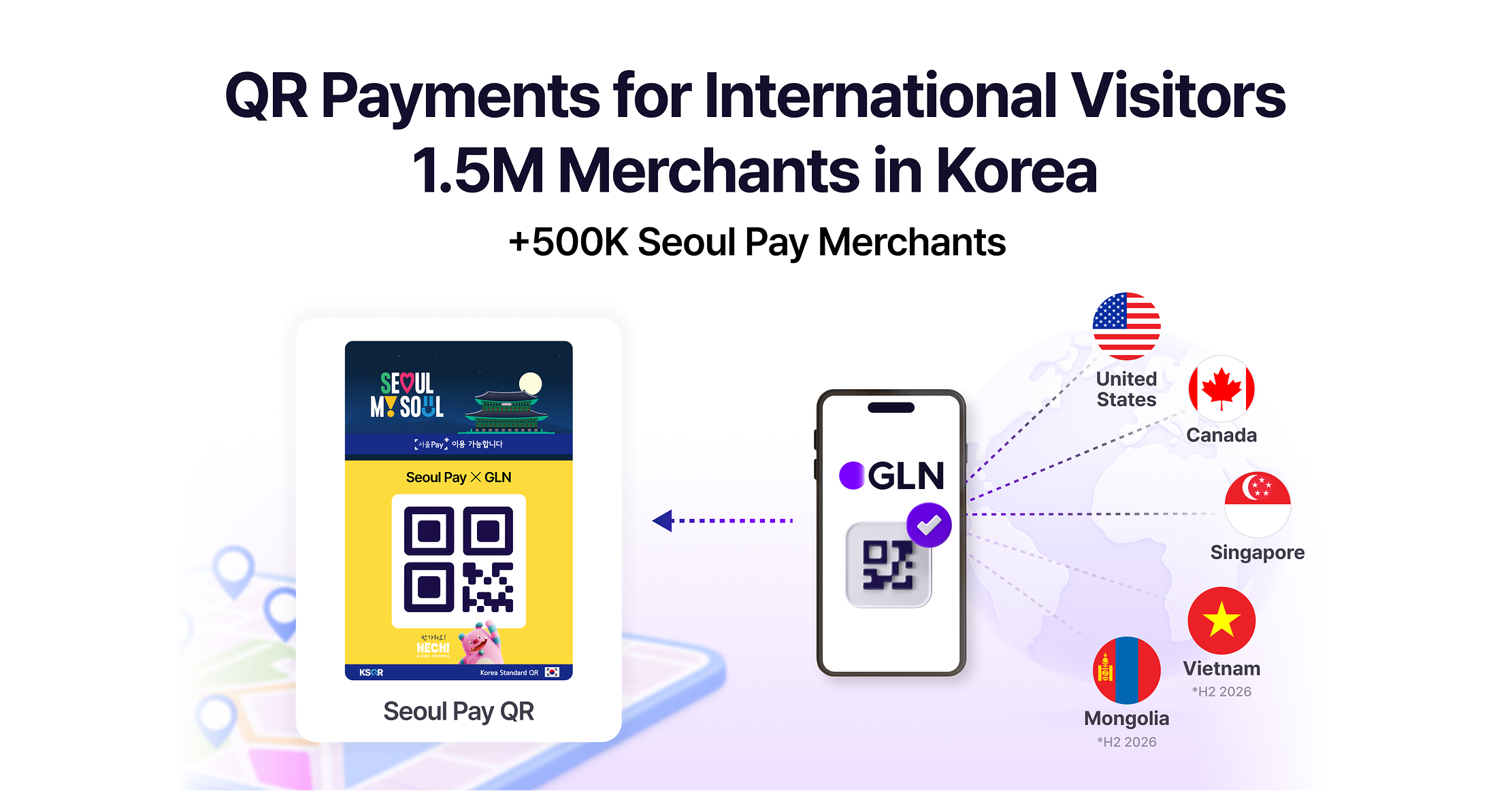
GLN (filiale de Hana Bank) a étendu son réseau d’acceptation des paiements par QR code en Corée via Seoul Pay/Coocon, passant d’environ 1,0 million à 1,5 million de commerçants (+500 000). Les données de GLN indiquent que le volume et la valeur des transactions des touristes étrangers via le réseau ont augmenté d’environ +1 000% au S1 2026 vs S2 2025, avec une adoption qui s’élargit au-delà de Myeong-dong (ex. Seongsu). Le service sera étendu plus tard en 2026 aux visiteurs des États-Unis, Canada, Singapour, Vietnam et Mongolie, avec un objectif d’extension à plus de 10 pays d’ici 2027.
This is more a network-density story than a near-term earnings story. The real economic value comes if QR acceptance becomes the default rail for incremental tourist spend, because that shifts transactions away from high-fee card and FX channels and into a lower-friction, data-rich payment loop. But the open-standard architecture also means the long-term moat is thin: once merchants and banks accept the same QR spine, monetization migrates to whoever owns the wallet relationship and settlement economics, not necessarily the aggregator.
The first-order winners are merchant categories with the highest tourist conversion and highest ticket frequency: duty free, beauty, convenience, and quick-service retail. Second-order beneficiaries are local SMEs that can lower acceptance costs and potentially see higher basket sizes from cashless foreign visitors; the less obvious losers are cash changers, some card interchange revenue, and any payment processor relying on tourist-heavy swipe volume. For public markets, this is a modest negative for global card rails only at the margin, because Korea is not large enough to move V/MA fundamentals unless the same model scales across more countries.
The key catalyst over the next 1-3 months is whether the usage lift persists outside core tourist districts and into repeat-trip corridors; if it does not, the reported growth is mostly a low-base effect. Over 6-18 months, the real question is whether GLN can own enough merchant/consumer touchpoints to monetize settlement and cross-border funding, or whether open interoperability commoditizes the stack and caps take rates. The contrarian read is that the market may be underestimating how fast payment behavior tips once acceptance density clears a threshold, but overestimating how much that translates into profits.
AI-powered research, real-time alerts, and portfolio analytics for institutional investors.
Request DemoOverall Sentiment
mildly positive
Sentiment Score
0.35
