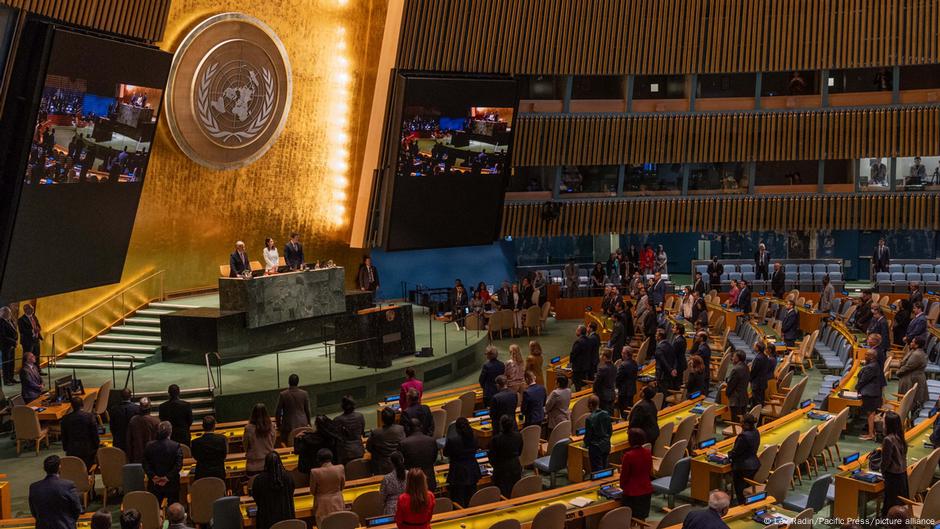
The UN General Assembly adopted a France and Saudi-backed resolution advocating for a two-state solution without Hamas, urging the group to release hostages and end its rule in Gaza, a move Israel swiftly rejected as a "political circus." This development, coupled with upcoming French recognition of Palestine and escalating diplomatic tensions between Israel and Spain, underscores growing international pressure on Israel and potential shifts in regional alliances. Separately, the U.S. imposed its largest sanctions yet on Yemen's Houthi rebels, targeting their financing and operations, further highlighting the complex and volatile geopolitical landscape in the Middle East with implications for regional stability, energy markets, and investment flows.
Geopolitical tensions in the Middle East are escalating on multiple fronts, signaling a period of heightened market volatility and diplomatic fragmentation. The UN General Assembly's overwhelming approval of a resolution for a two-state solution, which demands Hamas disarm and cede control, has been met with a stark rejection from Israel, which labeled the move a 'political circus detached from reality.' This diplomatic clash is amplified by key European allies; France is advancing plans to formally recognize a Palestinian state by September 22, and Spain has imposed an arms embargo on Israel, leading to a severe diplomatic dispute. In contrast, the US is reaffirming its support for Israel by sending Secretary of State Marco Rubio to oppose what it terms 'unilateral recognition.' This divergence between the US and Europe isolates Israel and complicates any path to de-escalation. Concurrently, regional stability is further threatened as evidenced by the UAE summoning Israel's ambassador following a strike in Qatar, straining the Abraham Accords. Separately, the US has imposed its most significant sanctions to date on Yemen's Houthi rebels, targeting their financial and operational networks, which could have implications for maritime security and supply chains. The 'strongly negative' sentiment and significant market impact score underscore a precarious environment where political risk, not economic fundamentals, is the primary driver.
AI-powered research, real-time alerts, and portfolio analytics for institutional investors.
Overall Sentiment
strongly negative
Sentiment Score
-0.60
