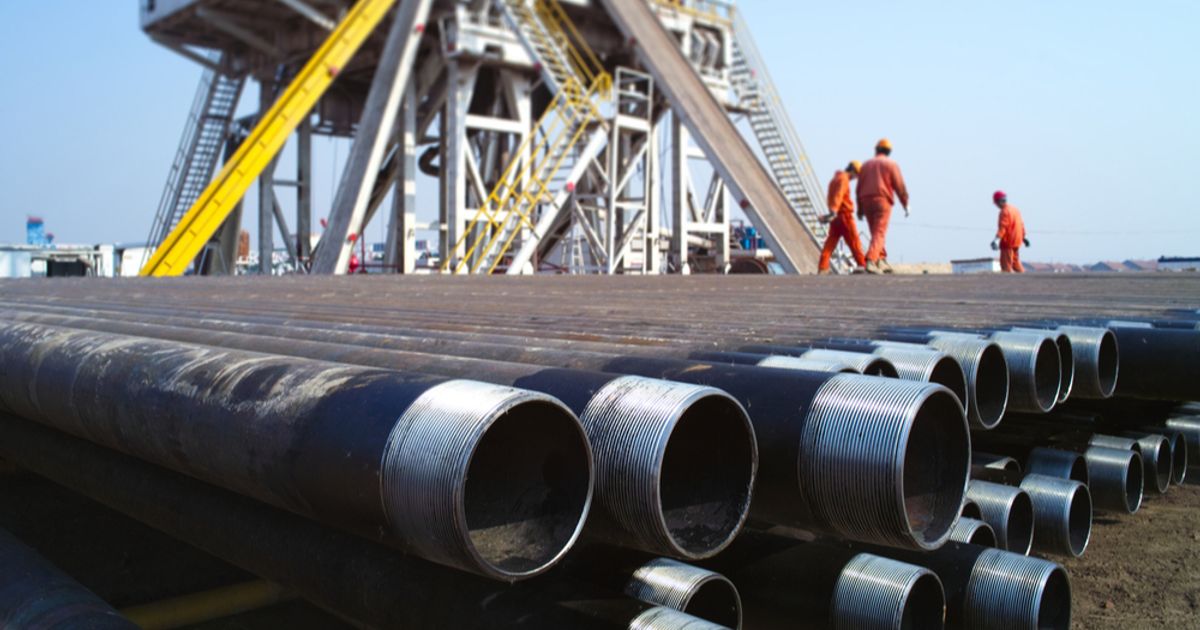
Pulsar Helium rose 4.8% to 83.2p after Minnesota passed legislation that gives a clearer, helium-specific permitting path for its Topaz project. The company has completed its Jetstream exploration and appraisal program and is seeking quotes for up to four new production wells, supplementing two existing production-ready wells. The rule change improves visibility on the route to production, though commercial output still depends on rulemaking, environmental review and permitting.
This is less about one permitting headline and more about de-risking the path from discovery to financeability. For a pre-revenue helium developer, a state-level framework that narrows regulatory ambiguity can compress the discount rate the market applies to the asset, because the bottleneck shifts from “can this ever be built?” to “how fast can management execute and fund it?” The second-order winner is not just the issuer but the broader Minnesota helium cluster: clearer rules improve the odds that adjacent prospects, service contractors, and midstream infrastructure proposals can attract capital on better terms.
The real economic value here is optionality on a constrained commodity market, not immediate cash flow. Helium projects tend to be valued on probability-adjusted future supply rather than near-term production, so this kind of legal clarity can move the stock well ahead of first gas if investors start underwriting a lower failure rate. That said, the next leg is likely to be choppy: environmental review, permit timing, and any implementation rulemaking can easily stretch the timeline by multiple quarters, which means the “production story” is still a 6-18 month catalyst chain, not a one-week trade.
Contrarian risk: the market may be overpricing smooth permitting just because the legislation is favorable in principle. Production-well planning and drilling quotes do not equal sanctioned capex or financed development, and small-cap resource names often rerate on regulatory headlines only to give it back when the timeline elongates. Also, because helium pricing is opaque and supply-driven, even a successful Minnesota buildout may not translate into linear upside if global supply normalizes or if offtake terms are weaker than implied by the equity move.
The best second-order setup is a sentiment-driven long into confirmation events, but not a blind chase after the headline. The path is more attractive if the company can show funded wells, drilling commencement, or a production schedule with concrete milestones; absent that, the move is vulnerable to fade as traders realize this is a legal step, not an operating one. For competitors, the framework may be mildly negative for other North American helium developers without similar regulatory clarity, because capital may rotate toward the most de-risked jurisdiction first.
AI-powered research, real-time alerts, and portfolio analytics for institutional investors.
Request TrialOverall Sentiment
mildly positive
Sentiment Score
0.45
