
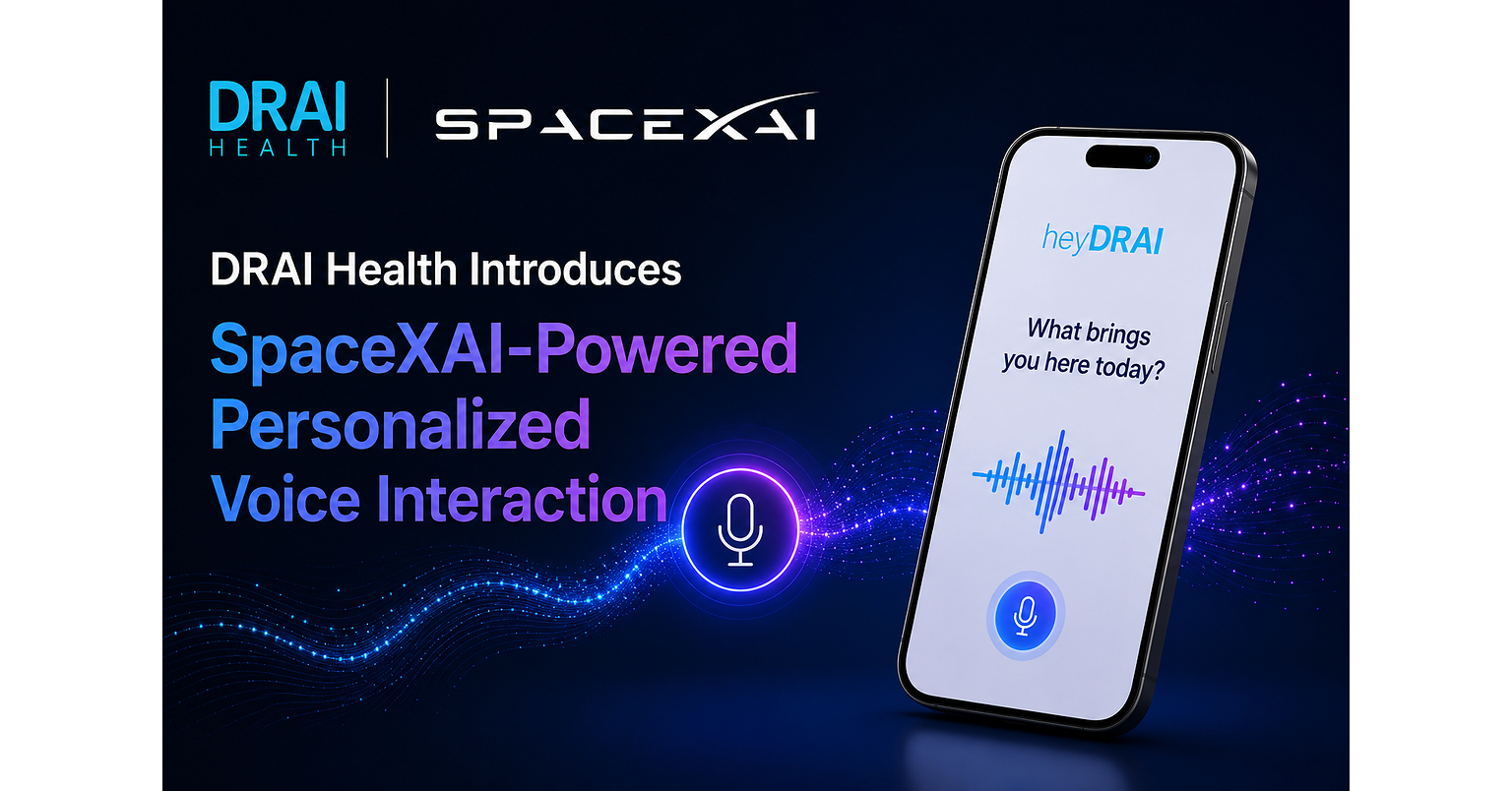
DRAI Health launched a personalized voice interaction capability in its heyDRAI AI healthcare platform, using “SpaceXAI” to deliver context-aware, tone-adaptive, more human-like voice-guided consultations. The product adds selectable voice styles (e.g., calm, clinical, energetic) with retained voice profiles across interactions, positioning it as an upgrade from static text-to-speech. While the release is constructive for user experience and accessibility, the article provides no financial metrics, suggesting limited near-term market impact.
This reads more like product de-risking than a near-term revenue inflection. In healthcare software, the moat is rarely the voice layer itself; the real economic lever is whether conversational UX raises completion rates, lowers abandonment, and improves retention enough to shorten CAC payback. If that shows up, the benefit accrues disproportionately to the vendor with the best distribution and workflow integration, while point-solution competitors and call-center-heavy BPO models face gradual substitution pressure.
The immediate risk is that the market prices the word "AI" before there is any evidence of monetization. Over the next 1-3 months, the key catalyst is whether management can quantify engagement lift, enterprise pilot conversion, or reduced support costs; absent that, this should fade to a story-stock multiple rather than a fundamental rerate. The main falsifier is a quarter or two of flat user metrics, no enterprise wins, or any compliance/clinical-accuracy issue that forces tighter guardrails and slows rollout.
Contrarian view: consensus may be underestimating voice as an accessibility unlock for elderly, low-literacy, and chronic-care users, which could broaden the addressable market over 6-18 months if multilingual and clinical workflows are added. But the market is probably overestimating the durability of a UI feature; the durable winners will be those who own provider workflows, data feedback loops, and reimbursement-adjacent channels, not the prettiest demo. For HIT, the setup looks more like a tactical sentiment trade than a long-duration compounder unless the next filing shows measurable operating leverage from the feature launch.
AI-powered research, real-time alerts, and portfolio analytics for institutional investors.
Request TrialOverall Sentiment
mildly positive
Sentiment Score
0.25
Ticker Sentiment
