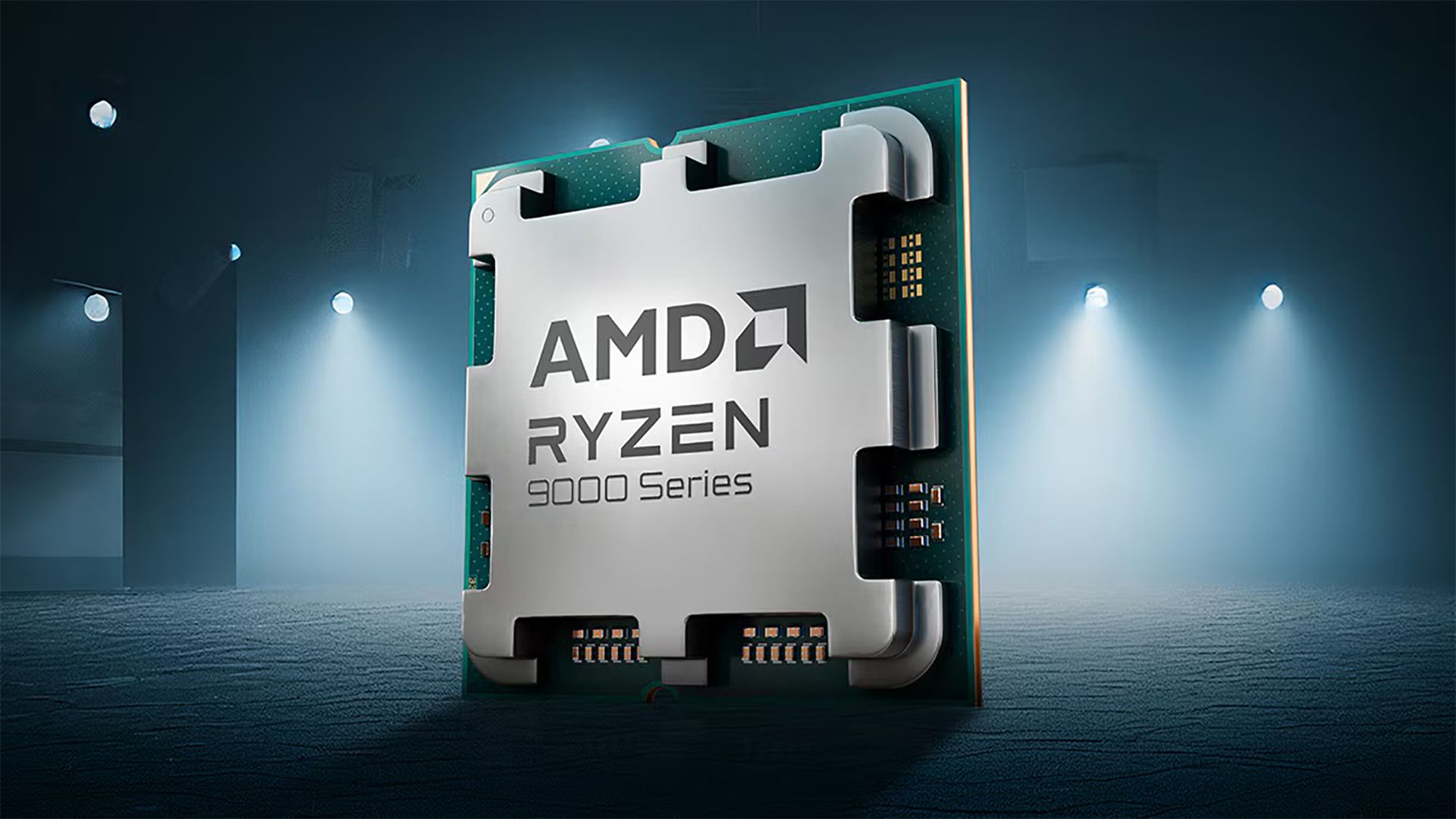
Leaked benchmark listings for AMD's forthcoming Ryzen 9 9950X3D2 show a 16-core/32-thread CPU with an unprecedented 192 MB of L3 cache stacked across both CCDs, a 5.6 GHz boost clock, and early scores of PassMark multi 71,585 / single 4,716 and Geekbench single 3,456 (highest on its database) and multi 21,062. The PassMark listing also cites a 170W power figure versus previous 200W rumors; the reports are early and possibly fabricated, but the dual-3D V-Cache design could provide modest gaming and performance advantages and may be tied to CES 2026 timing, warranting attention from investors tracking AMD's product competitiveness and near-term sentiment.
Market structure: AMD (AMD) is the clear near-term beneficiary — a 16-core Ryzen 9 with 192MB L3 and a 5.6GHz boost materially tightens AMD’s gaming value proposition versus Intel (INTC) Raptor/Meteor-class parts and could support ASPs at the high end. Suppliers tied to advanced packaging and foundry throughput (TSMC—TSM, ASML) are secondary beneficiaries if volume ramps; OEM motherboard vendors may capture incremental margins but face BIOS/validation costs. Initial limited shipments to reviewers imply constrained supply in the first 1–3 months, supporting potential short-term price premiums for high-end SKUs.
Risk assessment: Tail risks include yield/thermal surprises from dual-stacked V-cache causing launch delays, or an AMD supply shortfall that boosts competitor unit share — each could move AMD shares ±15–25% fast. In the next 0–90 days, headline risk (fabricated benchmarks, power-TDP confusion) dominates; 3–12 months hinge on CES demos, reviewer benchmarks, and AMD/TSMC capacity commentary. Hidden dependencies: BIOS motherboard support, game-optimizations for large L3, and TSMC packaging capacity are gating factors that could mute real-world performance gains.
Trade implications: Tactical direct play is a small, defined-risk bullish exposure to AMD ahead of CES 2026: allocate 1–3% of capital to Jan 2026 call spreads (ATM to +10%) to capture positive reveal while capping premium. Pair trade: long AMD 2% vs short INTC 1% (size ratio ~2:1) for 3–6 months to express secular share shift in gaming/desktops. Overweight semiconductor equipment/foundry suppliers (TSM, ASML) by 2–4% for a 6–18 month horizon; consider protective hedges (puts) if AMD guidance disappoints.
Contrarian angles: Market consensus focuses on marginal gaming FPS gains — it underestimates margin expansion from a lower-than-expected TDP (170W vs 200W) and potential mobile OEM wins, which could lift server/gaming hybrid demand over 6–24 months. Conversely, the reaction may be overdone if benchmarks are fabricated or if BIOS/stacking yields limit supply; prefer option structures to exploit asymmetric payoff rather than large outright equity positions. Historical parallel: Zen/Zen2 CPU cycles showed supply-limited outperformance followed by mean reversion once Intel countered; watch CES + 2 earnings calls as the inflection window.
AI-powered research, real-time alerts, and portfolio analytics for institutional investors.
Request DemoOverall Sentiment
mildly positive
Sentiment Score
0.28
Ticker Sentiment
