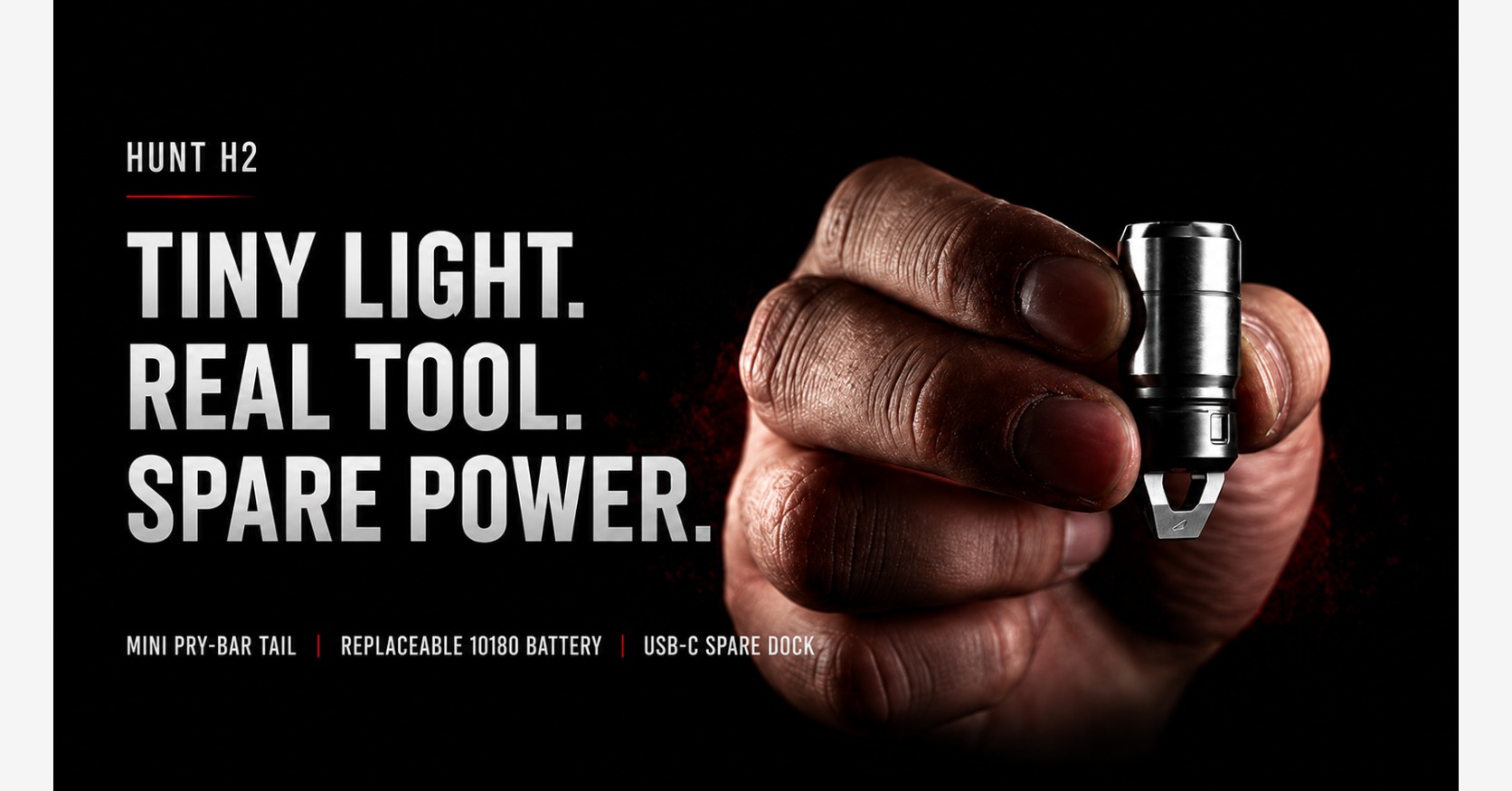
Septem Studio launched the HUNT H2 keychain EDC flashlight on Kickstarter, highlighting a replaceable 10180 battery plus a separate USB-C charging dock so users can swap a spare instead of waiting to recharge. The kit includes two 10180 cells (one active, one backup), offers titanium or aluminium bodies, and supports Cold White or Warm High-CRI illumination with an IPX8 waterproof rating. This is a product-focused campaign with limited implied financial impact beyond consumer interest.
This reads more like a demand-signal for niche premium consumer hardware than an investable event. The second-order takeaway is that buyers will still pay for compact, design-forward utility products, but the addressable market is too small to matter for broad retail or hardware earnings; the more relevant read-through is to marketplace competition where differentiated specs can still support price premiums against generic private-label listings.
The key risk is that Kickstarter validation often overstates repeatability. Launch-day enthusiasm can look strong while post-campaign conversion, refund rates, and fulfillment economics deteriorate, especially once shipping, warranty, and battery compliance costs hit. Over the next 1-3 months, the catalyst is campaign traction and review velocity; over 6-18 months, the question is whether the product becomes a scalable SKU or just another one-off novelty with weak inventory turns.
Contrarian view: the market may be overrating the signal value of this kind of launch. A premium micro-tool can do well on aesthetics and utility framing, but that does not imply durable earnings power unless customer acquisition remains cheap and repeat purchase behavior emerges. The real falsifier is not the headline launch itself but whether the post-launch order curve, cancellation rate, and average selling price hold once the campaign moves from curiosity to execution.
AI-powered research, real-time alerts, and portfolio analytics for institutional investors.
Overall Sentiment
mildly positive
Sentiment Score
0.12
