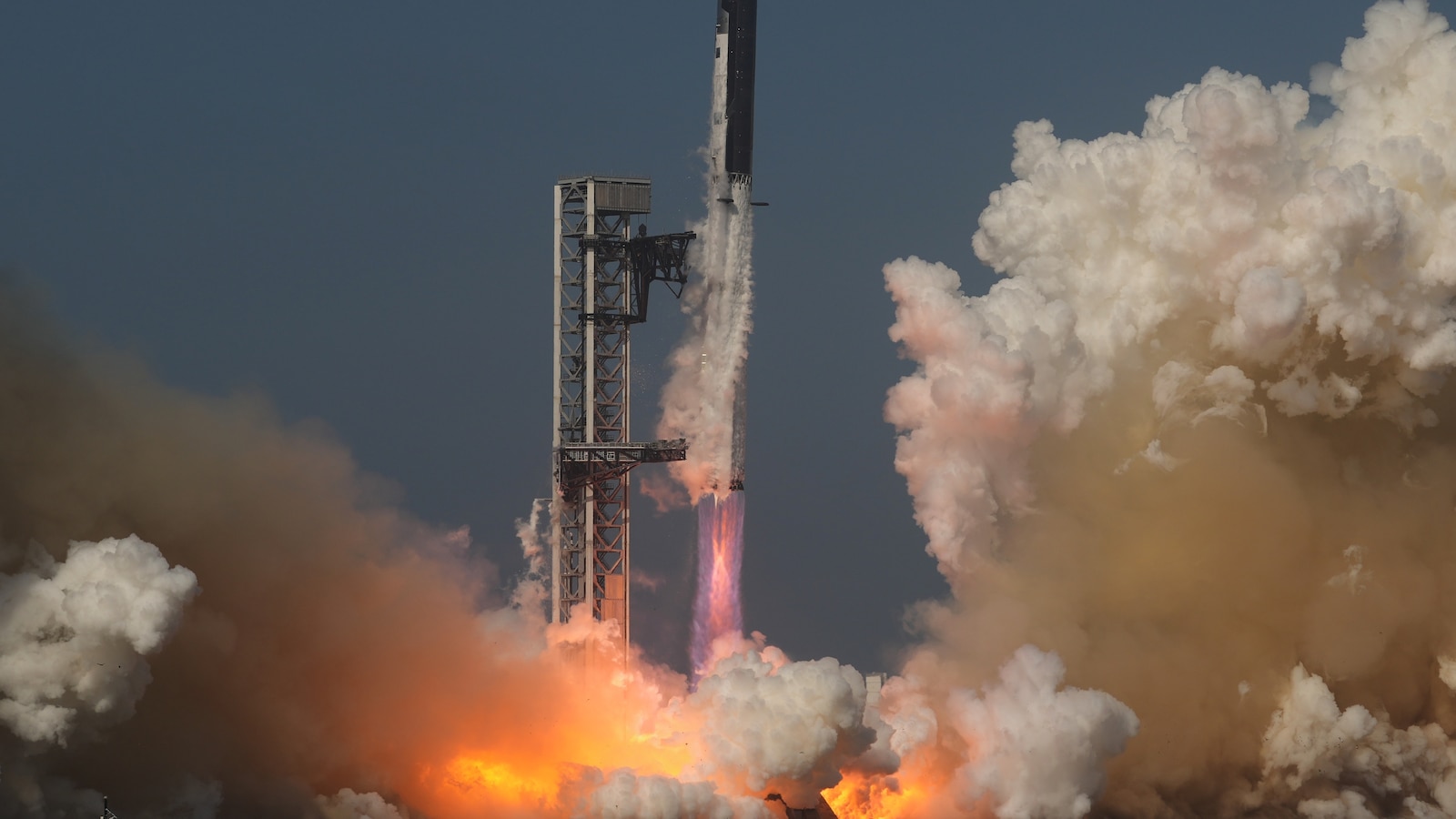
SpaceX’s Starship launches are on hold pending an FAA investigation after last week’s test flight ended in a booster mishap. The first-stage booster failed during return and came down hard instead of a controlled splashdown, though there were no reports of injury or property damage. The spacecraft itself completed the mission as planned, but the grounding adds near-term execution and regulatory risk to the Starship program.
The immediate market impact is less about SpaceX itself and more about the implied slip in the commercial launch bottleneck. A grounded Starship delays the most aggressive path to lower-cost lift, which preserves pricing power for incumbent launch providers and slows the cadence of payload deployment for defense, broadband, and lunar-adjacent programs. The second-order winner is anyone with existing manifest capacity and mature reliability—buyers will pay up for certainty when a “cheap lift” platform is temporarily off the table. Over the next few weeks, the key risk is not headline damage but schedule compression: a short FAA review can still push consequential milestones by one to two quarters if reflight fixes require hardware changes rather than software tweaks. That matters because Starship is not just a launch vehicle; it is a strategic enabler for future contract awards, so any evidence that the booster recovery architecture is less stable than expected increases the probability of design iteration and slows learning-curve economics. The longer this stretches, the more it reinforces a “prove it first” mentality among government customers and primes. The contrarian read is that this is probably a pause, not a thesis break. SpaceX’s historical pattern is rapid iteration after mishaps, and the market may overestimate how much this changes the medium-term cost curve unless the failure is traced to a structural propulsion or recovery issue. If the review clears with modest remedial action, the setup favors a rebound in launch-adjacent names because investors will rotate back to the more obvious beneficiary of higher launch demand while keeping a discount on speculative next-gen timelines.
AI-powered research, real-time alerts, and portfolio analytics for institutional investors.
Overall Sentiment
mildly negative
Sentiment Score
-0.20
