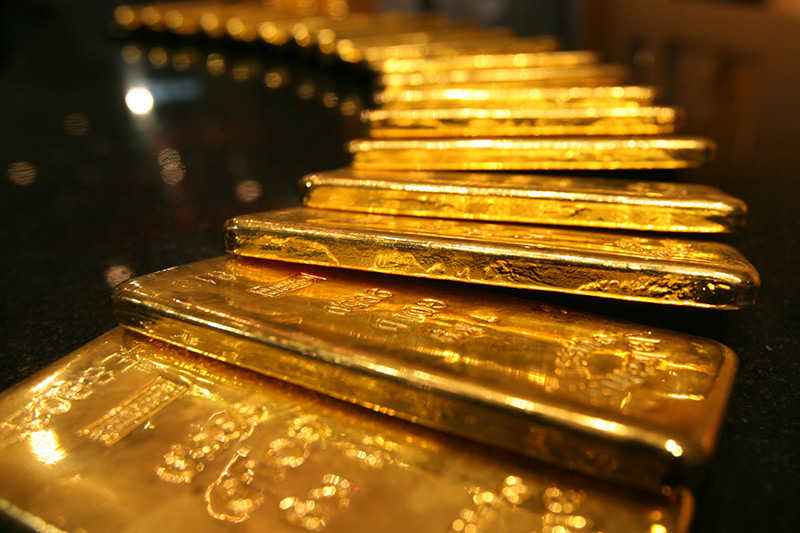
Zijin Mining reported Q1 net income of 20 billion yuan ($2.8 billion) and highlighted lower unit costs in its mined copper and gold businesses. Gold gross profit doubled year over year to 782 yuan per gram, while copper gross profit rose to 56,600 yuan per tonne; lithium output also reached 16,000 tonnes and the company set a 2026-2028 dividend policy targeting cumulative payouts of at least 35% of profits. The update is constructive for fundamentals and cash returns, though it is largely a company-specific operating report rather than a broad market catalyst.
The key signal is not just that the miner is printing strong current earnings, but that it is demonstrating credible cost discipline across three distinct commodity lines at once. That matters because diversified miners rarely get simultaneous margin expansion in gold, copper, and lithium unless the operating mix is improving faster than the market expects; this supports a rerating of quality within Chinese resource names, especially those with internal processing and refining leverage.
The most important second-order effect is on global copper and gold peers: if this operator can keep per-unit costs falling while still scaling lithium from a low base, it raises the bar for competitors that are still relying on spot price momentum rather than self-help. In copper, the margin expansion is more investable than the headline commodity move because it suggests the company is not merely beta to metals, but compounding through unit economics—likely pressuring higher-cost producers and trading houses with weaker downstream integration.
The lithium piece is the contrarian angle. The economics look excellent on paper, but the strategic risk is that high first-quarter profitability may accelerate incremental supply into a market that still has a history of overshooting on the downside; that makes this more of a 6–18 month execution story than a clean secular growth call. If management keeps pushing volume toward the 2026 target, the market may eventually discount today’s exceptional margins by capitalizing a lower normalized price deck, not a sustained supernormal return.
The dividend policy is a meaningful capital-allocation signal, but it is not an immediate catalyst by itself; the real impact is that it could narrow the valuation gap versus global miners if investors believe cash returns are becoming more predictable. The risk is that the market treats this as a peak-profit announcement in a commodity cycle, in which case near-term upside in the stock is capped unless subsequent quarters confirm that costs continue to grind lower rather than simply benefiting from one-off operating leverage.
AI-powered research, real-time alerts, and portfolio analytics for institutional investors.
Request TrialOverall Sentiment
mildly positive
Sentiment Score
0.45
