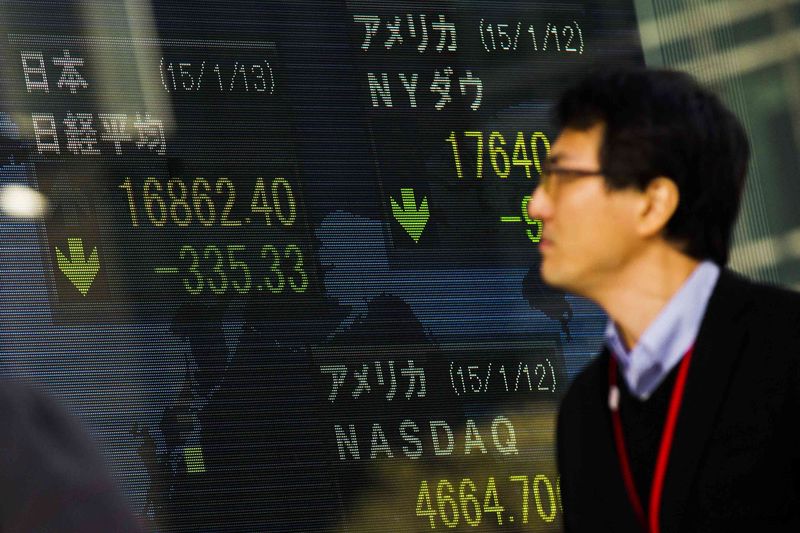
South Korean stocks led a broad Asia selloff as AI-linked semiconductor shares tumbled on concerns hyperscale AI infrastructure spending may become more disciplined. The KOSPI plunged as much as 7% with Samsung Electronics and SK Hynix extending losses, while Micron and SanDisk both fell more than 10% overnight and related supply-chain names (e.g., Kioxia -14%+) were hit. Investors largely sidelined resilient regional economic data and awaited fresh U.S. economic releases and potential remarks from President Trump, but the AI-tech sentiment shock appears to be driving sector-wide risk-off flows.
This looks less like a fundamental demand break and more like a factor unwind in the highest-duration pocket of the market. The first place to bleed is the group whose earnings are most levered to incremental AI capex and memory pricing: suppliers with already-stretched multiples and low visibility into order timing. That means the P&L hit is likely bigger for memory, packaging, and AI hardware names than for platform companies, because the market is repricing the second derivative of spending, not near-term revenue.
The second-order effect is that procurement diversification matters more than the headline. If large buyers can qualify alternate memory sources, it weakens the pricing power of the incumbent supply base and reduces the probability of a sustained shortage regime. Over 1-3 months, that can compress ASP expectations and gross margin assumptions for the Korean memory complex; over 6-18 months, it raises the risk that the AI supply chain becomes more fungible, which is bearish for concentrated producers but bullish for downstream buyers with bargaining power.
Contrarian view: the market may be overcalling this as a capex peak. Hyperscaler budgets are annual and politically hard to cut, so a single session selloff can reverse quickly if next earnings or guidance lines up with unchanged AI infrastructure spending. This is a flow-driven tape more than a data-driven thesis. Falsifiers are simple: any reaffirmation of AI capex budgets from META/other hyperscalers, or memory guidance from MU/SNDK/SSNLF that shows pricing and demand intact, should force cover of short exposure.
AI-powered research, real-time alerts, and portfolio analytics for institutional investors.
Overall Sentiment
moderately negative
Sentiment Score
-0.55
Ticker Sentiment
