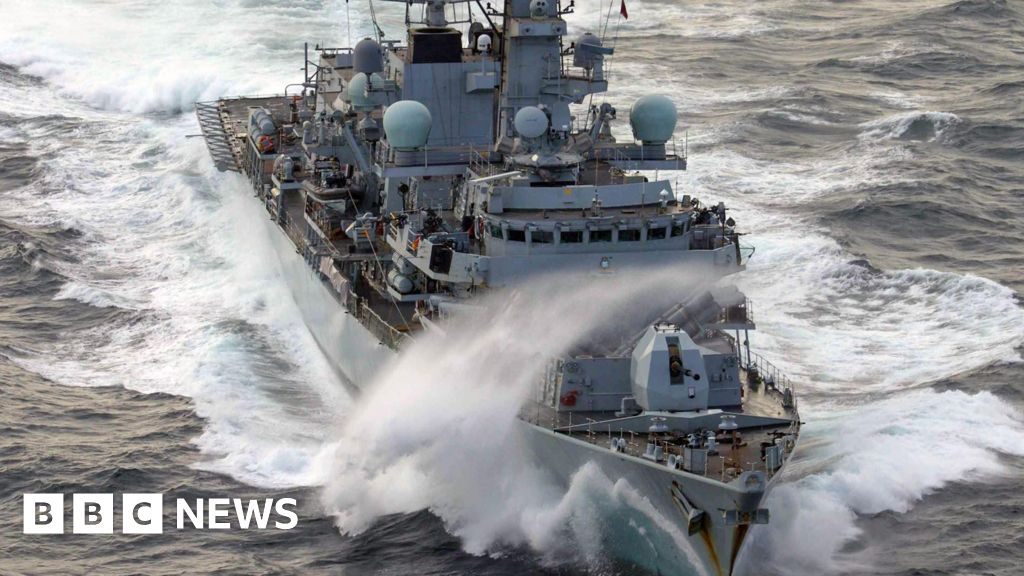
Three Russian submarines conducted a covert surveillance operation over UK undersea cables and pipelines north of the UK; UK officials reported no damage. The UK tracked an Akula diversion and two Gugi spy submarines, deployed HMS St Albans, RFA Tidespring, Merlin helicopters, and international partners (Norway), and used sonar buoys to monitor activity. The UK depends on ~60 cable landings carrying >90% of daily internet traffic and the 724-mile Langeled pipeline; ~77% of UK gas imports come from Norway, so these reconnaissance operations raise sector-level risks for energy security, undersea infrastructure and cybersecurity.
The market is underpricing a durable shift from cyber-only contingency planning to persistent, physical-hardening of undersea infrastructure. Expect procurement cycles (sensors, sonars, autonomous surface/subsea vehicles, rapid-repair vessels and specialized cable-laying capacity) to drive incremental government & private capex measured in hundreds of millions to low billions per major Western nation over a 12–36 month window, with most spend backloaded into year 2 as specs and procurement rounds conclude.
Energy markets will price a higher tail-risk premium for pipeline-dependent flows, increasing the relative value of flexible LNG supply and short-notice shipping capacity. That repricing manifests quickly in spot market volatility (days–weeks) and then in contract behavior: more short-term/spot purchases and capacity reservation clauses within 3–12 months, tightening margins for consumers but widening margins for midstream firms that can offer flexibility.
Telecom and cloud operators that can offer rapid route diversity and physical redundancy will capture outsized commercial leverage during contracting cycles. Expect material one-time revenue and recurring ARPU uplifts for data-center operators and subsea cable contractors as corporate customers pay for diverse landing points and dedicated fiber, while traditional telco incumbents without diversified footprints could face margin erosion.
Catalysts that would reverse these flows include credible diplomatic de-escalation or rapid, low-cost technical mitigations (satcom/overland fiber substitution) that materially reduce the marginal value of subsea hardening. The true tail risks remain low-probability but high-impact: a localized physical cut producing cascading cloud/data outages or energy delivery disruptions would accelerate all the above moves within days and re-rate multiple sectors simultaneously.
AI-powered research, real-time alerts, and portfolio analytics for institutional investors.
Request DemoOverall Sentiment
moderately negative
Sentiment Score
-0.35
