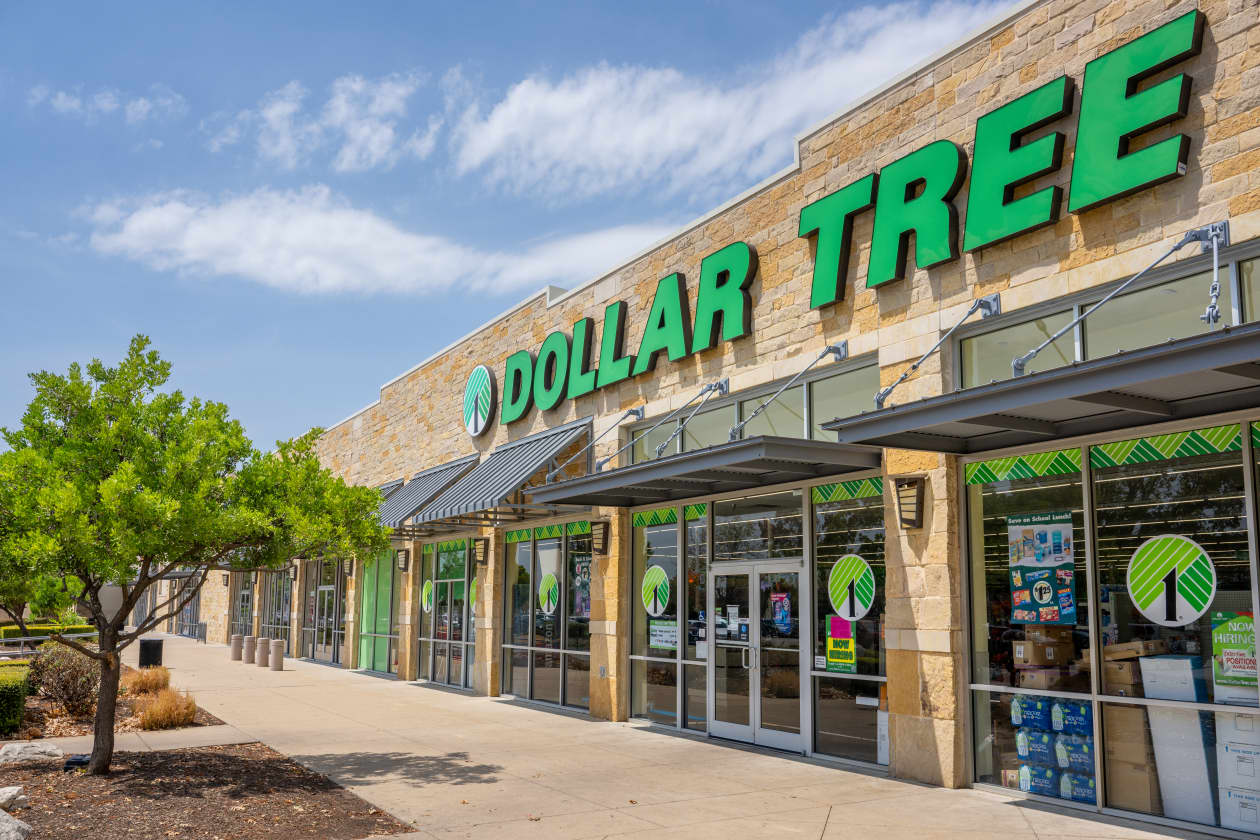
Dollar Tree reported fiscal Q4 quarterly profit and same-store sales that beat expectations and outpaced rival Dollar General, with growth driven by higher average transaction value while store traffic declined. Full-year outlooks were in line with analyst projections and shares rose on the results, but the decline in traffic tempers the quality of the sales gain.
Retailers that sustain top-line via mix and price rather than restoring visit frequency face a sharper earnings sensitivity to disinflation than the market prices in. A 200–400bp decline in headline CPI over 6–12 months can mechanically remove recent transaction-level gains and compress discretionary-category margins by 100–200bp as higher-margin SKU lifts normalize, producing a 5–10% downside to near-term EBITDA for firms more dependent on price/mix.
From a competitive standpoint, operators winning on traffic will disproportionately capture wallet share in categories with high repeat purchase rates (household consumables, pet food). That creates a two-layer margin divergence: one between retailers and another between national brands and private labels; expect private-label penetration to accelerate 200–400bps in 12–18 months in stores that sustain higher footfall, pressuring branded suppliers and rerouting promotional funding.
Operationally, dependence on per-transaction gains raises inventory and shrink risk — fewer visits but larger baskets concentrate SKUs sold per trip, increasing out-of-stock sensitivity and reversing gross margin improvements if logistics fail to keep up. Over 3–9 months watch vendor cadence (PO frequency, lead times) and distribution center throughput; missed replenishment will convert nominal ticket gains into real share loss.
Catalysts that will re-rate the group are macro (CPI trajectory, wage growth), retailer-specific cadence (holiday comps, promotional cadence), and legal/competitive moves on assortment. Near-term market moves will be driven by quarterly cadence; durable re-rating requires 2–4 quarters of consistent traffic recovery or structural margin improvement tied to private-label execution.
AI-powered research, real-time alerts, and portfolio analytics for institutional investors.
Overall Sentiment
mixed
Sentiment Score
0.12
Ticker Sentiment
