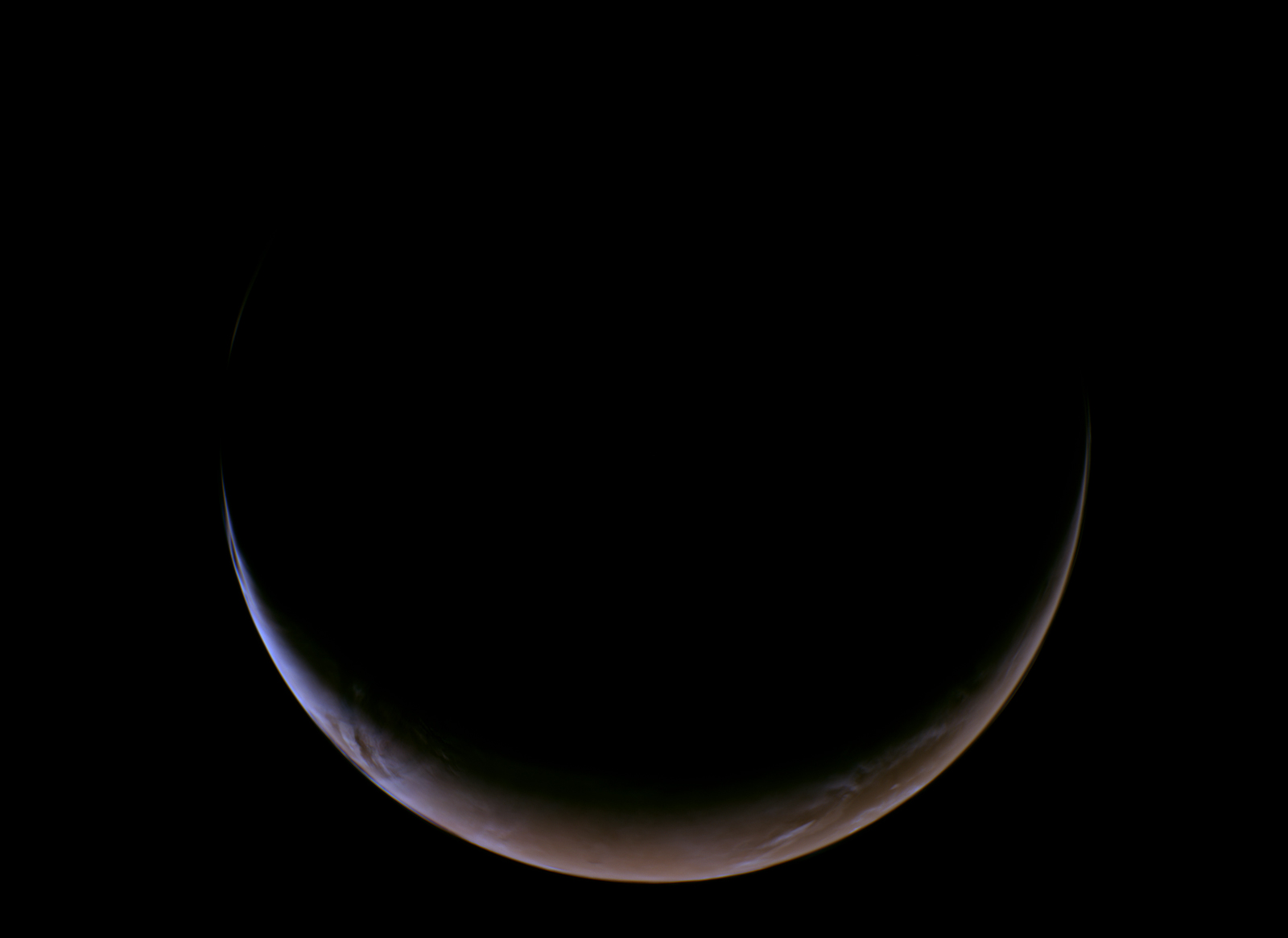
NASA’s Psyche spacecraft completed a Mars flyby on May 15, passing within 2,864 miles (4,609 kilometers) of the planet and gaining a 1,000 mile-per-hour speed boost plus about a 1-degree orbital plane shift. The gravity assist put the mission on course for asteroid Psyche, with arrival still targeted for summer 2029. The update is primarily mission progress and calibration work, with no material market-moving implications.
This is not a direct fundamentals event for LUNR, but it is a useful read-through for the small, underappreciated niche of cislunar navigation, DSN-adjacent services, and precision operations. The market often treats deep-space comms and autonomous trajectory work as a government-only capability, but every successful high-profile flyby reinforces budget support for mission cadence, which tends to pull forward subcontracting demand for small-space systems integrators and mission ops providers over a multi-year horizon.
The second-order winner is not the flagship NASA mission contractor; it is the ecosystem around flight software, optical navigation, and ground operations. If NASA increases cadence or complexity of Discovery-class missions, the spend mix tends to favor repeatable mission ops, simulation, and instrumentation support rather than one-off hardware wins. That matters for LUNR only if investors start assigning value to broader lunar/deep-space infrastructure optionality; otherwise this remains a low-beta sympathy theme with little immediate earnings translation.
The contrarian point is that successful execution here is bearish for the idea that deep-space missions require large, bespoke teams every time. Each clean autonomous event and calibration pass lowers perceived technical risk, which can compress the scarcity premium on small-space prime contractors and shift budget toward cheaper, software-heavy vendors. In other words, the near-term headline is positive for the space theme, but the medium-term implication may be margin pressure as capabilities become more commoditized.
Catalyst timing is long-dated: no meaningful P&L impact until NASA budget cycles or new task orders emerge over the next 6-24 months. Near term, the only tradable reaction is sentiment around space infrastructure names, and that tends to fade quickly absent a contract award or launch milestone. For LUNR specifically, this is more of a validation narrative than a direct revenue catalyst.
AI-powered research, real-time alerts, and portfolio analytics for institutional investors.
Request DemoOverall Sentiment
neutral
Sentiment Score
0.10
Ticker Sentiment
