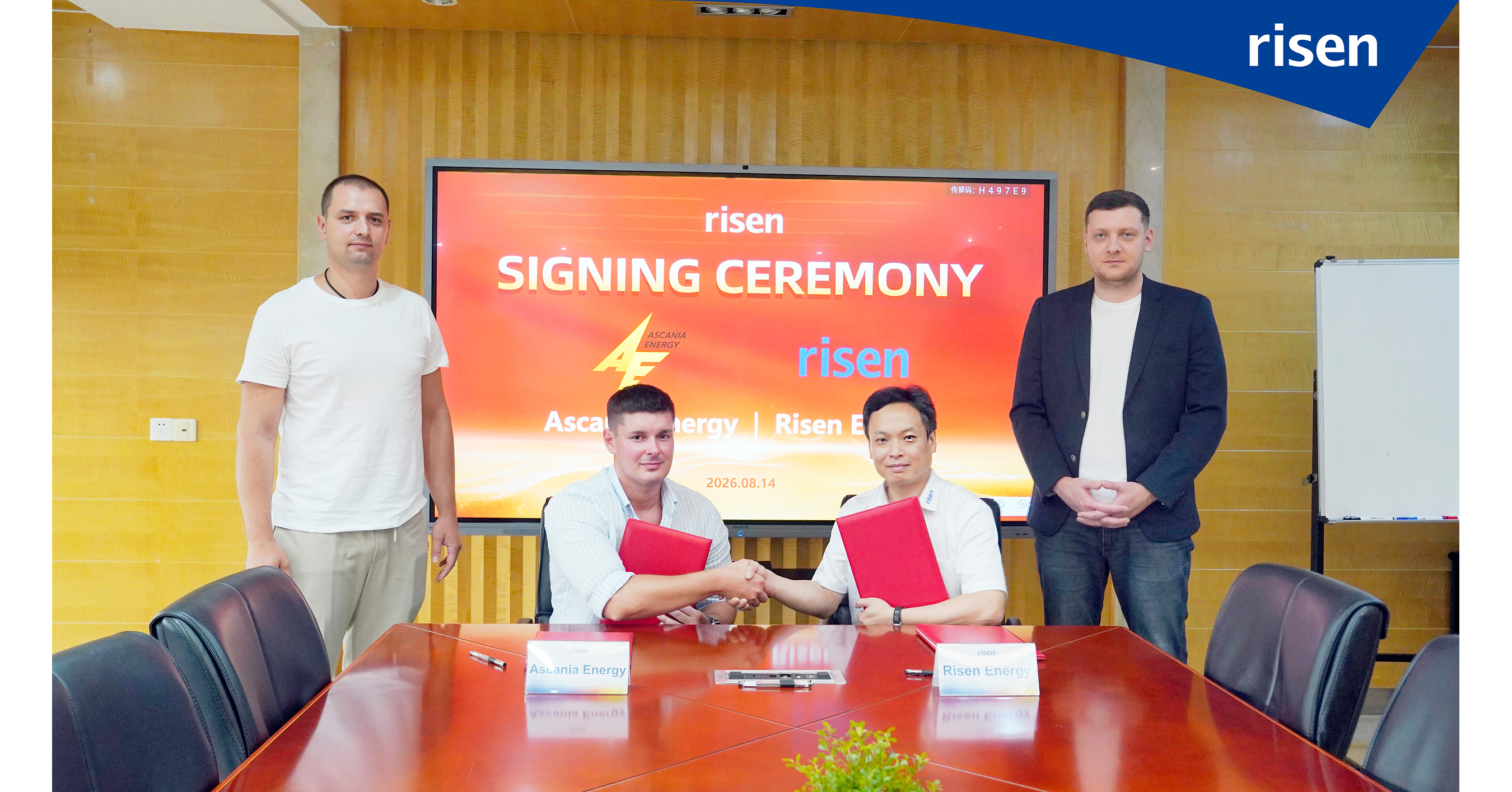
Risen Energy and Ascania Energy signed two Ukraine MoUs covering up to 100 MW of solar capacity and 200 MWh of utility-scale battery storage. The partnership targets faster buildout of new, decentralized generation and flexible solar-plus-storage to improve reliability amid grid constraints, with Ascania covering development/EPC/system integration and Risen providing PV and storage hardware. Risen noted Q2 2026 cumulative PV shipments of 121.4 GW and battery storage deliveries exceeding 10 GWh, supporting follow-on deployment efforts in Ukraine.
This is more a signal about where war-risk capital gets allocated than a direct earnings event. The economically interesting read-through is a shift toward modular, distributed power where storage, controls, and local EPC execution matter more than cheap panel supply; that favors utility-scale integrators and battery-system vendors over commodity module manufacturers. In public equities, the cleaner beneficiaries are names with backlog exposure to grid-resilience projects and service revenue, not pure-play solar manufacturers.
The tradeable second-order effect is that reconstruction demand in Ukraine can create a small but persistent premium for equipment that tolerates weak grids and harsh operating conditions, especially liquid-cooled storage, switchgear, and microgrid software. That said, the path from MoU to revenue is long: financing, permitting, security, and insurance can stretch 6-18 months, so the immediate market reaction is likely to be mostly sentiment-driven. UUUU is only a weak indirect watch item unless the energy-security discussion broadens from renewables into nuclear fuel or long-duration backup.
Contrarian view: the market may be overestimating near-term order flow and underestimating project death by a thousand cuts. In a conflict zone, the binding constraint is not technology but bankability; without donor-backed guarantees or sovereign risk cover, these announcements can stall before FID. The thesis is falsified if no tender awards or funded backlog show up over the next 1-2 quarters, or if security conditions worsen enough to delay deployment cycles further.
AI-powered research, real-time alerts, and portfolio analytics for institutional investors.
Overall Sentiment
mildly positive
Sentiment Score
0.18
Ticker Sentiment
