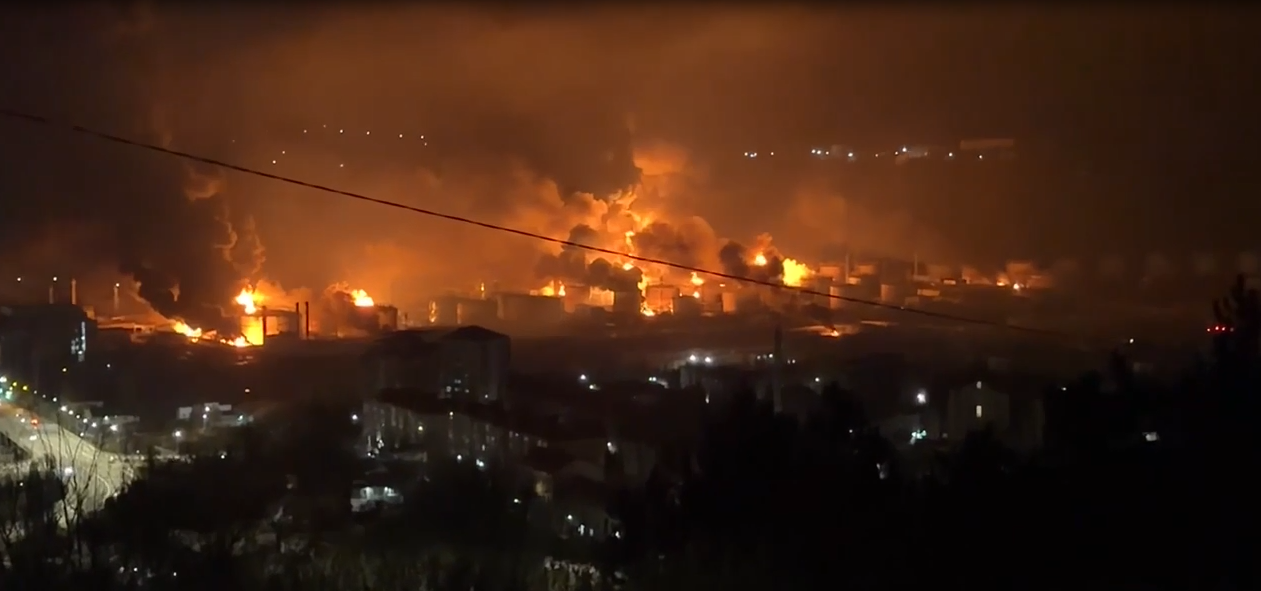
Ukraine struck the Tuapse oil refinery in Russia's Krasnodar Krai for the second time in a week, triggering a major fire and reportedly burning at least two storage tanks. Russia's regional governor said one person was killed and another injured, while Ukraine also said it hit the Hvardiiske oil depot in Crimea and two landing ships. The attack highlights ongoing disruption to Russian energy infrastructure and could add to risk premiums in oil markets.
Repeated hits on a large Russian refining hub matter less for the immediate barrels lost than for the compounding stress on logistics, power, and product availability. The first-order effect is higher regional diesel and fuel oil export disruption, but the second-order effect is more important: every successful repeat strike raises the cost of insurance, trucking, rail re-routing, and emergency maintenance across the Black Sea refining corridor, which can create persistent slack even when physical damage is repaired.
This is a margin-positive setup for non-Russian refiners with export access, especially in the Middle East, India, and parts of Europe that can arbitrage tighter product spreads. The more durable trade is in refined products rather than crude: if Russian runs are intermittently constrained, diesel cracks typically tighten faster than Brent because the market substitutes barrels for transport and power generation first. That also supports tanker utilization and product tanker rates if rerouting and longer sailing distances become entrenched over the next 4-12 weeks.
The main contrarian risk is that the market may already be pricing a generic geopolitical premium into oil, while underpricing the probability that Russia’s response is asymmetric rather than purely supply-side. A meaningful escalation in Black Sea or Gulf infrastructure risk could temporarily widen spreads, but if the strikes only shave export reliability without materially reducing national output, the macro impact may fade while vol remains elevated. In that scenario, equity leadership likely shifts from crude-sensitive producers to refiners, shippers, and defense names with clean balance sheets and pricing power.
The key catalyst window is the next 1-3 weeks: confirmation of sustained downtime, secondary damage to storage/loading, or further strikes on parallel facilities would turn this from a headline event into a genuine product-market tightening story. If repairs are rapid and throughput normalizes, the trade should be faded; if not, the market will likely reprice refined products before it reprices crude, creating a cleaner relative-value opportunity than an outright long oil beta.
AI-powered research, real-time alerts, and portfolio analytics for institutional investors.
Request DemoOverall Sentiment
mildly negative
Sentiment Score
-0.35
