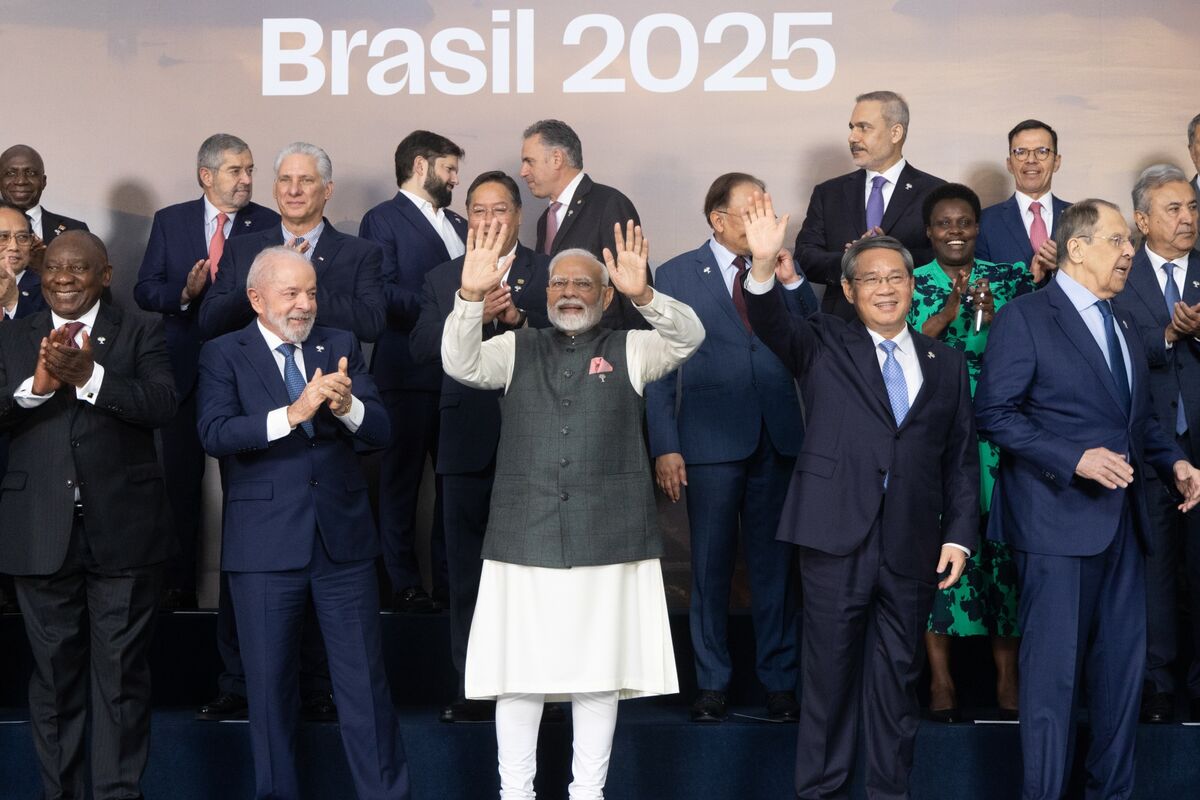
President Trump's recent criticisms of India are jeopardizing decades of careful US-India diplomatic relations, a development that risks pushing New Delhi closer to Beijing despite their traditional rivalry. This potential geopolitical realignment could significantly impact global power balances and regional stability.
The current geopolitical landscape is marked by a potential shift in strategic alliances, as highlighted by former President Trump's critical stance on India. This rhetoric poses a significant risk to decades of carefully cultivated US-India diplomatic relations. The primary consequence of this friction is the potential for a strategic realignment, which could drive India towards a closer relationship with its traditional rival, China. While the article notes signs of a thaw between Beijing and New Delhi, the situation introduces a moderately negative geopolitical uncertainty into the region. Despite the cautious tone and negative sentiment score (-0.5), the immediate market impact is assessed as low (0.1), suggesting that investors are viewing this as a long-term structural risk rather than an immediate market catalyst. The core issue revolves around the delicate balance of power in Asia, where a strained US-India partnership could create a vacuum that China may exploit, fundamentally altering regional dynamics.
AI-powered research, real-time alerts, and portfolio analytics for institutional investors.
Request DemoOverall Sentiment
moderately negative
Sentiment Score
-0.50
