
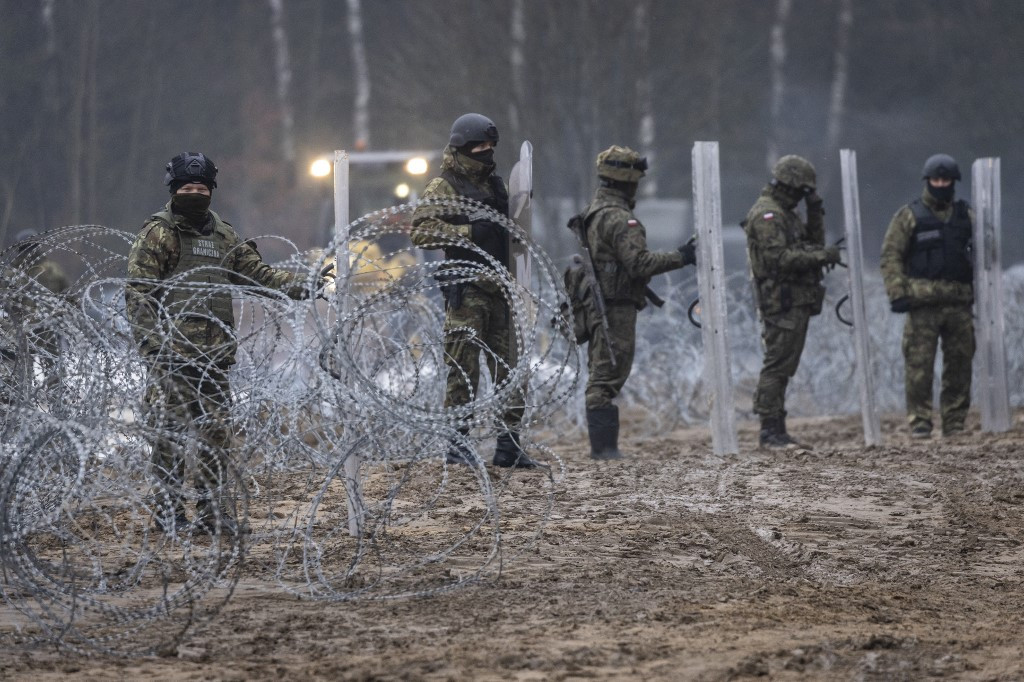
Ukraine is reinforcing its entire 1,085-kilometer border with Belarus, adding fortifications along the northern frontier as officials warn of potential escalation from the north. The article also highlights broader regional defense preparations, including Baltic states installing anti-tank barriers and NATO reportedly planning rapid reinforcement of the Baltics. The developments are geopolitically significant and could support defense-related spending and risk-off sentiment, but they do not describe an immediate market shock.
The marketable implication is not a direct P&L read-through for the named equity universe, but a higher probability of a prolonged Eastern Europe security premium that keeps defense procurement, border infrastructure, and engineering capacity elevated across 2026–27. That tends to favor contractors with earthworks, barriers, surveillance, and rapid-deployment logistics exposure more than pure weapons primes, because the spend is incremental, fast-tracked, and politically easy to defend. In practice, this kind of fortification cycle often has a long tail: once installed, it creates recurring maintenance, retrofit, and sensor-integration demand rather than a one-time capex event.
Second-order effects matter more than the headline. If NATO’s eastern flank continues hardening, Baltic and Nordic governments may reallocate from discretionary infrastructure toward dual-use military logistics, which can pressure local civil construction margins while benefiting niche suppliers of concrete, steel fabrications, perimeter security, and communications gear. The risk is less a near-term kinetic event than a rolling budget reprioritization over the next 6–18 months, with procurement acceleration likely after any border incident or major exercise that validates the threat scenario.
Contrarianly, the consensus may be overestimating the likelihood of a Belarus-origin ground push while underestimating the economic inefficiency of overbuilding static defenses. If the perceived threat does not materialize, some of this spend becomes politically visible but operationally low-ROI, and the trade can fade as budgets tighten. The more interesting setup is to own the enablers that sell picks-and-shovels to fortress-building states, while avoiding names that need a true escalation event to rerate.
AI-powered research, real-time alerts, and portfolio analytics for institutional investors.
Request TrialOverall Sentiment
mildly negative
Sentiment Score
-0.15
Ticker Sentiment
