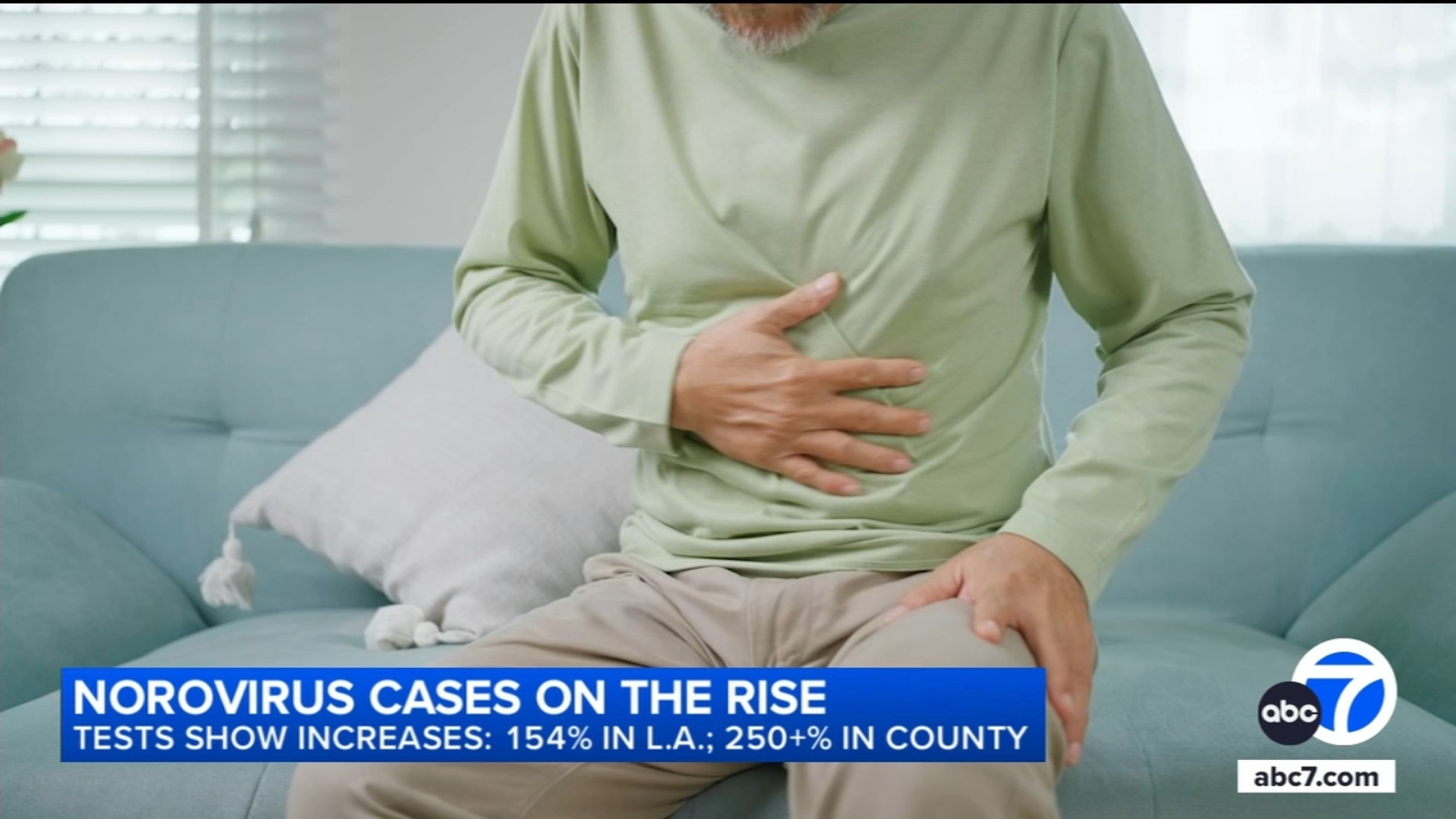
Los Angeles County wastewater sampling shows a sharp rise in norovirus concentrations, with detections up 154% in the city and over 250% in the county across a recent three‑week period. Public Health expects activity to increase during the November–April season; the spike may drive short‑term absenteeism and higher healthcare demand and pose localized downside risk to hospitality and food services, but is unlikely to move broad markets.
Market structure: Rapid wastewater signals (LA +154% city, +250% county in 3 weeks) point to a near-term rise in community gastroenteritis that favors consumer-cleaning names (Clorox CLX), retail pharmacy distributors (CVS, WBA) and short-term demand for OTC anti-nausea/antidiarrheal SKUs. Travel & hospitality (CRUISE: RCL, CCL; Airlines: AAL, DAL) and high-density foodservice operators face measurable shortfalls in bookings/foot traffic—expect localized revenue impacts of 3–10% during 2–6 week outbreak windows. Diagnostics/labs (LH, DGX) see modest test-volume uplifts but not structural margin shifts.
Risk assessment: Tail risks include large cruise-ship or institutional outbreaks that trigger class-action suits, forced quarantines, or regulatory inspections—low probability but high impact for cruise & long-term care operators within 2–8 weeks. Immediate risk (days–weeks) is absenteeism and temporary operational slowdowns; medium term (months) is reputational losses for restaurants if multiple clusters occur; long term (quarters) unlikely to change macro but could compress FY margins for select operators by several percentage points. Watch wastewater trends doubling over 2 weeks, ED gastro visits +20% week-over-week, or municipal advisories as catalysts.
Trade implications: Tactical longs: small, defensive exposure to CLX (2–3% target weight) and CVS (1–2%) for winter demand; tactical shorts/hedges: buy 1–2% portfolio protective puts on RCL or CCL (30–90 day expiries) or short hotel/restaurant ETFs if local wastewater spikes exceed +100% in major metros. Pair trade: long CLX, short RCL sized equally to capture cleaning demand vs travel weakness; options: buy OTM puts (delta ~0.25) expiring Jan–Mar 2026 on RCL/CCL for asymmetric downside protection.
Contrarian angles: Consensus will underweight disruption severity—norovirus is highly contagious but short duration, so a large-scale sector derating would be overdone; avoid broad panic selling in diversified travel ETFs unless multiple metros show sustained wastewater increases >100% for 3+ weeks. Historical parallels (seasonal influenza spikes) suggest 4–8 week revenue impact then mean reversion; unintended consequence: heavy cleaning demand can temporarily boost CLX sales but also accelerate private-label competition and inventory restocking that compresses 1–2 quarters of gross margin.
AI-powered research, real-time alerts, and portfolio analytics for institutional investors.
Request DemoOverall Sentiment
mildly negative
Sentiment Score
-0.25
