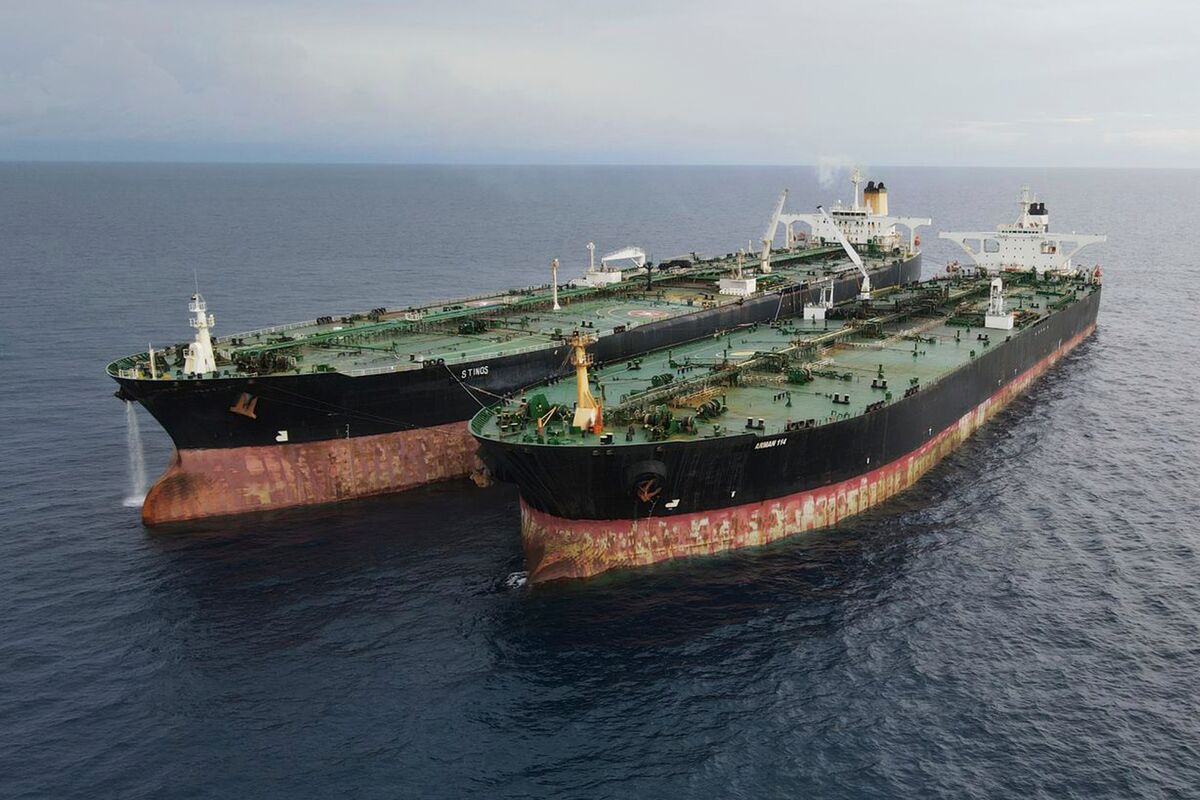
Indonesia's Attorney General’s Office is auctioning the Arman 114, a US‑sanctioned Iran‑flagged very-large crude carrier seized in 2023 along with its cargo, for a minimum of $70 million according to government documents. The vessel, held at Batu Ampar port in Batam after allegations it transferred oil to another tanker and spilled some, will be sold to recover assets and enforce sanctions, with limited broader market impact beyond local asset and cargo disposition.
Market structure: The event benefits distressed-asset buyers, local port/service providers and salvage contractors while increasing reputational/legal costs for operators engaged in opaque trades; expect localized bid dispersion for sanctioned tankers with price discounts of 10–30% versus comparable non-sanctioned units. Global VLCC supply/demand is barely affected (<0.5% fleet change) so freight-rate impact should be muted unless seizures become a sustained trend. Cross-asset: immediate pressure is on niche maritime credit (asset-backed loans) and specialty insurers — expect bond spreads on small shipping credits to widen 50–200bp and P&I/reinsurance pricing to drift higher over 3–12 months.
Risk assessment: Tail risks include escalation (retaliatory seizures or wider sanctions enforcement) that could spike tanker insurance premia +20–40% and force rerouting, or legal liability claims if cargo contamination emerges with multi-hundred-million-dollar damages. Immediate window (days) is legal/auction process risk; short-term (weeks–months) is buyer diligence/registration risk; long-term (quarters) is regime change in enforcement that shifts cost structure for shipowners and charterers. Hidden dependency: buyer identity and flag/registry change determine whether the vessel re-enters commercial pool or is scrapped — this single data point materially changes supply math.
Trade implications: Tactical long exposure to pure-play VLCC owners (DHT, ticker DHT) on a 6–12 month horizon if seizures remain idiosyncratic — upside from reduced effective supply and higher freight; hedge with put protection. Consider small long positions in large diversified tanker owners (EURN) and underweight product tanker names (STNG) via pair trades to capture relative VLCC scarcity. Buy 3–9 month calls on specialty reinsurers/insurers (MMC) sized to capture a 5–15% premium repricing if enforcement accelerates.
Contrarian angles: The market understates the supply-side tightening that results when buyers scrap seized sanctioned vessels — one scrapped VLCC (~300k DWT) removes ~0.2% of world tanker capacity and can lift freight tails. Reaction is currently underdone in equities and credit; insurance repricing is likely delayed (6–12 months) so options and CDS markets may misprice that path. Historical parallel: 2012–14 sanctions on Iran produced a multi-year rise in freight volatility and higher insurance costs; similar dynamics could re-emerge if seizures trend above 3–4 annually.
AI-powered research, real-time alerts, and portfolio analytics for institutional investors.
Request DemoOverall Sentiment
neutral
Sentiment Score
0.00
