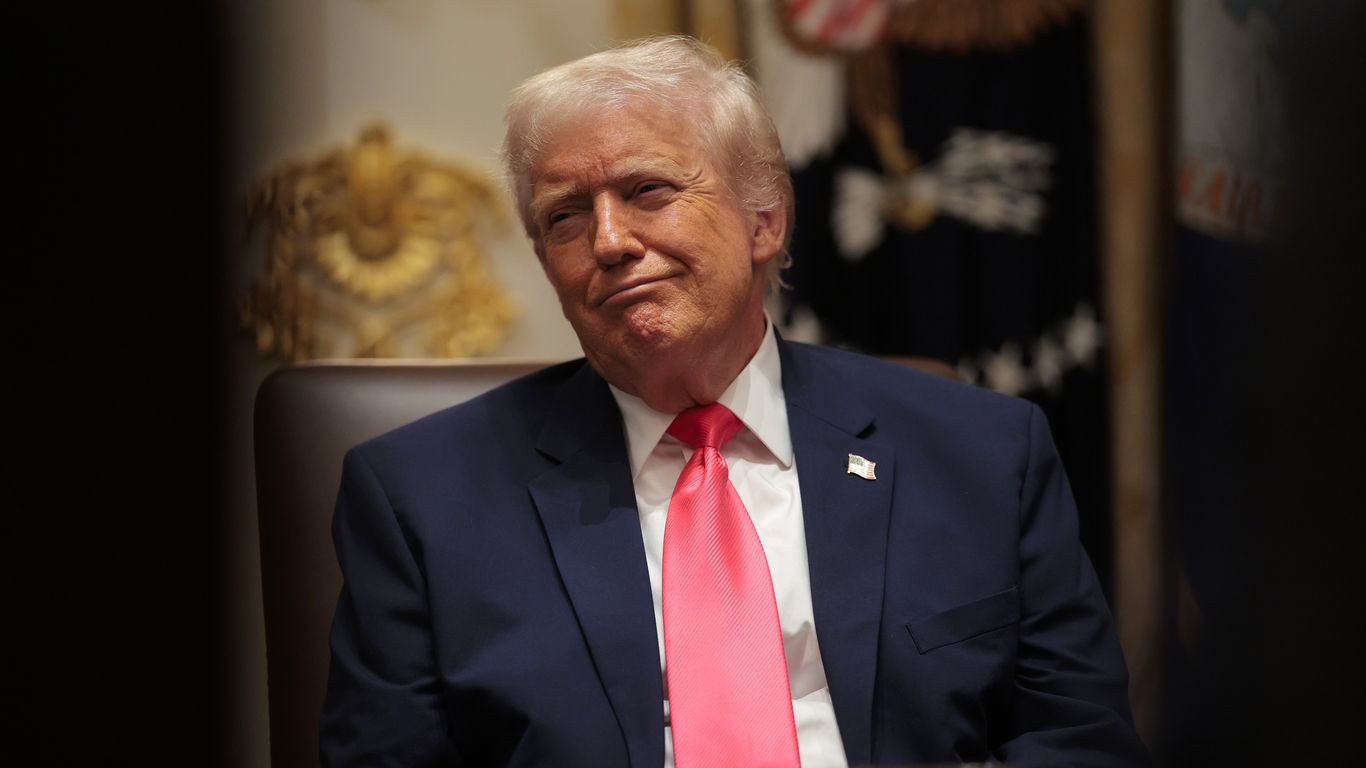
President Trump granted clemency to Rep. Henry Cuellar (D-Texas) and his wife, who were indicted last year accused of accepting nearly $600,000 in bribes from an Azerbaijani government-controlled oil company and a Mexican bank. The pardon is the latest in a pattern in which the president has pardoned or commuted sentences for roughly a dozen current and former lawmakers — including George Santos, Rod Blagojevich and others — a political development that highlights governance and rule-of-law risks but carries minimal direct market implications.
Market structure: Presidential use of pardons raises the effective political-risk discount for large, well-connected corporates and incumbents while increasing legal/regulatory uncertainty for smaller, compliance-heavy firms. Winners are large-cap, low-beta names and entrenched financials (e.g., BAC, JPM, AAPL, GOOG) where reduced DOJ aggression could cut legal provisions and lift EPS by an estimated 1–3% annually; losers are boutique litigation/restructuring firms, small-cap financials and issuers with active DOJ exposure. Pricing power shifts subtly toward incumbents as regulatory enforcement becomes more discretionary, compressing risk premia for large caps and widening cost of capital for politically exposed small caps.
Risk assessment: Tail risks include a political backlash that triggers state-level enforcement or bipartisan regulatory crackdowns (low-probability, high-impact), a reputational flight causing >5% re-rating of exposed equities, or market volatility spikes (+25–50% VIX) around major hearings. Time horizon: immediate (days) for news-driven volatility, short-term (weeks–months) for position rotations and option-hedge decay, long-term (quarters–years) for structural shifts in enforcement and capital allocation. Hidden dependencies: state attorneys general stepping in, surge in class-action filings, and campaign-finance legislative responses that could quickly reintroduce regulatory risk to specific sectors.
Trade implications: Favor a modest overweight to large-cap tech and top-tier banks while keeping portable tail hedges. Use relative trades (large-cap financials vs regional banks) and option structures to monetize lower enforcement expectations while limiting downside if political dynamics reverse. Catalysts to watch: DOJ leadership appointments, midterm outcomes, and major congressional investigations over the next 30–90 days; these will likely reprice the trades.
Contrarian angles: Consensus may underprice the probability of a reputational or regulatory backlash that benefits defensive/real-asset plays (TLT, GLD) and defense names (LMT, RTX). Historical parallel: post-political-clemency backlash (e.g., Ford/Nixon era) shows markets can quickly punish perceived rule-of-law erosion — prepare to flip long-risk positions if bipartisan enforcement bills or state-level prosecutions accelerate within 60–120 days. Unintended consequence: shorter enforcement cycles could increase M&A tailwinds for politically connected acquirers; watch takeover volumes as a directional signal.
AI-powered research, real-time alerts, and portfolio analytics for institutional investors.
Request DemoOverall Sentiment
neutral
Sentiment Score
0.00
