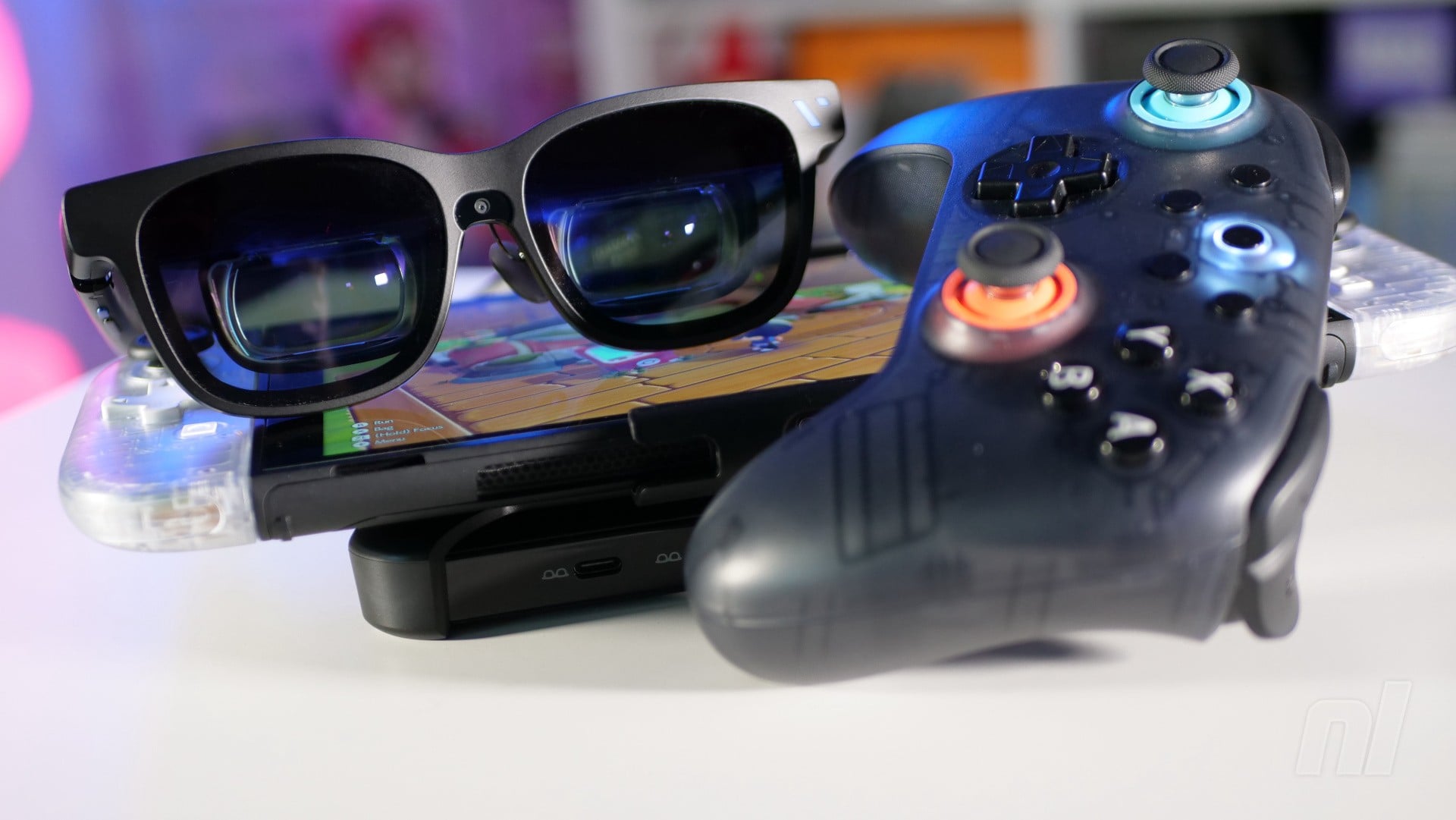
Viture's new Beast XR Glasses launch with support for Switch 2, higher 'up to' 1200p resolution, and a $549 price point, with a required $187 accessory bundle pushing total cost above $700. The review is broadly positive on image quality, comfort, and immersion, but flags heavy weight, setup complexity, and questionable value versus the Switch 2's built-in screen. Market impact should be limited, as this is a niche consumer hardware product review rather than a material business update.
SONY is the quiet beneficiary here, but not because XR glasses are a near-term profit pool; the strategic value is that they showcase a low-friction consumer use case for Sony’s microdisplay, sensor, and imaging stack outside the core TV/camera categories. The second-order effect is distribution: if these devices keep improving, they can expand Sony’s attached demand for panels, optics, and potentially software ecosystems without Sony having to own the end device economics.
The bigger market signal is not "XR is big" but that the category is moving from novelty to repeat-use accessory in specific workflows: travel, bedroom media, remote desktop, and handheld-console offload. That shifts the addressable market away from hardcore VR adopters toward higher-income multitaskers, a customer set that is much more tolerant of premium pricing but still demands comfort and clarity. If that transition holds, the winners are component suppliers with differentiated optical or display IP; the losers are standalone headset vendors still fighting friction, weight, and social acceptability.
The near-term risk is that this remains a high-NPS niche with weak unit velocity because the total system cost and setup burden are still too high relative to buying a better monitor or TV. The catalyst to watch over the next 6-12 months is whether firmware upgrades and ecosystem bundling actually reduce perceived compromise enough to drive repeat purchases, especially among commuters and frequent flyers. If uptake stays concentrated among enthusiasts, the market will likely overestimate the revenue pool and underestimate how slowly accessories monetize.
The contrarian view is that the sentiment may be too dismissive on size and too bullish on form factor. This is not a mainstream consumer electronics category yet, but it does have a plausible path to becoming a "premium peripheral" market with attractive gross margins if the hardware platform standardizes and software compatibility improves. In that scenario, value accrues less to the branded glasses vendors and more to the underlying display, optical, and component suppliers that can sell into multiple OEMs.
AI-powered research, real-time alerts, and portfolio analytics for institutional investors.
Request DemoOverall Sentiment
mildly positive
Sentiment Score
0.20
Ticker Sentiment
