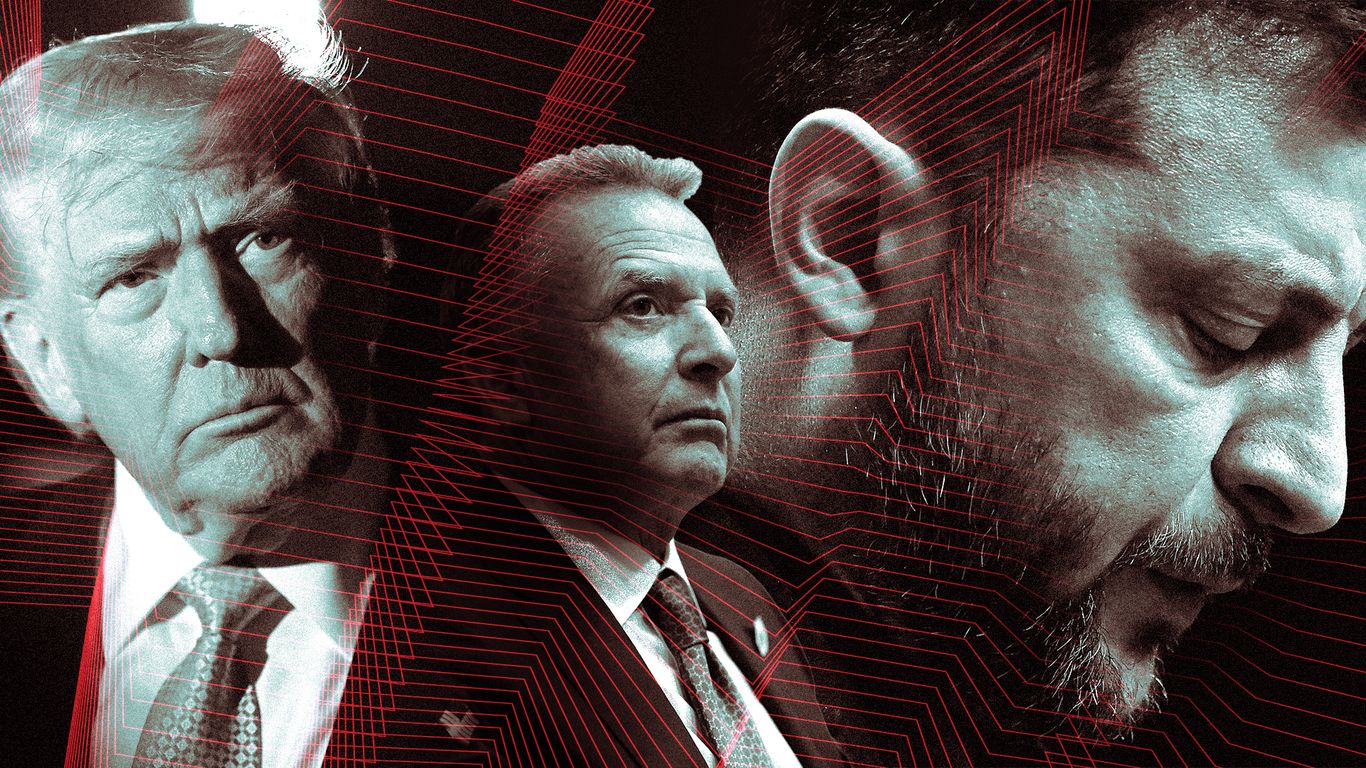
Senior Trump advisers Jared Kushner and Steve Witkoff, with presidential sign-off, drafted a contentious 28-point peace framework for Ukraine after meetings that included Russian sovereign fund head Kirill Dmitriev; the plan was briefed to President Zelensky by phone and formally presented by Army Secretary Dan Driscoll, provoking Ukrainian objections and widespread media reporting on Nov. 18. Trump pushed an aggressive Thanksgiving signature timeline, prompting a partial administration walk-back and tense Geneva talks (Rubio, Witkoff, Kushner, Driscoll) in which the U.S. recharacterized the package as a negotiable framework; negotiations remain unsettled and pose political and geopolitical risks to U.S.-Ukraine relations and regional stability.
Market structure: Expect asymmetric winners — domestic aerospace & defense (LMT, RTX, NOC; ETF: ITA) should see persistent order-visibility if negotiations stall, while Ukrainian reconstruction play and European commercial travel/insurers face downside if aid is disrupted. Pricing power shifts toward prime defense primes (+10-25% outperformance vs. broader capex-sensitive names in 3–6 months under elevated risk premia); oil/gas upside is conditional and binary around escalation headlines.
Risk assessment: Tail risks include an accidental escalation or a U.S. legislative cutoff of Ukraine aid (low probability, high impact), and a political backlash that forces quick policy reversal; both would spike vola and safe-haven flows. Time buckets: immediate (days) — headline-driven vols and FX swings; short-term (30–90 days) — congressional votes and Geneva outcomes reprice defense vs. commodity exposure; long-term (6–18 months) — structural NATO/EU defense spend reallocation if framework endures.
Trade implications: Favor convex bullish exposure to defense while holding macro hedges: buy-call spreads on LMT/RTX (3–6 month expiries) and maintain modest duration and gold hedges (TLT/GLD). Avoid one-way commodity punts absent clear sanction-relief signals; instead use option structures to express binary outcomes (buy OTM calls/pulls with defined risk).
Contrarian angles: Consensus assumes either quick peace or sustained war; both underweight the congressional constraint vector — markets may be pricing excessive serenity if lawmakers block framework, creating a buy-the-dip window for defense stocks. Historical parallel: 2014 Crimea cycle showed defense names outperformed within 30–180 days after political noise; unintended consequence — a short-lived rally in Russian asset hopes could reverse violently if Congress reasserts sanctions.
AI-powered research, real-time alerts, and portfolio analytics for institutional investors.
Request DemoOverall Sentiment
moderately negative
Sentiment Score
-0.35
