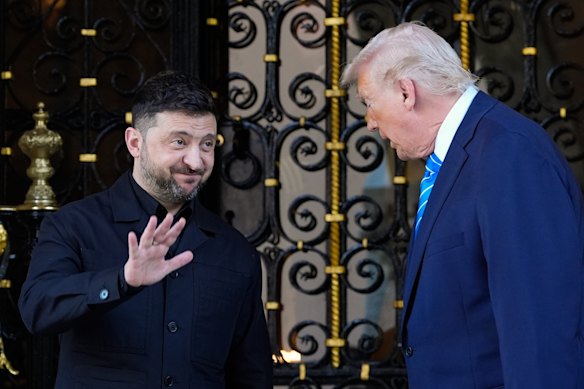
At Mar-a-Lago, Donald Trump told Ukrainian President Volodymyr Zelensky that “Russia wants to see Ukraine succeed,” a remark and broader pro‑Putin posture that Zelensky privately pushed back on while insisting any peace plan include a 60‑day ceasefire and a referendum and refusing to cede the Donbas. Although Trump reportedly affirmed US security guarantees, analysts warn his rhetoric and willingness to accept Russian claims (including an unverified Kremlin accusation of a drone strike) risk removing pressure on Moscow, undermining a viable settlement and sustaining geopolitical and security risk that could weigh on markets sensitive to escalating or prolonged conflict.
Market structure: Trump’s public softening toward Putin (real or perceived) increases the probability of a prolonged, low-intensity conflict rather than a quick negotiated settlement. That mechanically benefits defense contractors (US prime contractors, MROs, systems integrators) and keeps an energy risk premium on European gas/oil — expect a 5–15% fair-value upside to Brent over 3–6 months if supply disruptions or price shocks reoccur. Risk-on cyclicals and Russian-exposed EM exporters are the clear losers; travel and European consumer discretionary face asymmetric downside from higher energy-driven inflation.
Risk assessment: Tail risks include a rapid escalation (full mobilization/sanctions shock) or sudden ceasefire that collapses the energy risk premium; probability low-to-moderate (10–25%) over 6 months but impact high (±20%+ in commodities). Near-term (days–weeks) expect headline-driven volatility spikes; medium-term (3–12 months) the key driver is Western military aid cadence and sanctions enforcement (track monthly US/EU aid packages). Hidden dependencies: EU winter gas inventories, US election messaging cadence, and private backchannels (Kushner/Witkoff) that can shift pricing quickly.
Trade implications: Positioning should overweight US defense (LMT, RTX, GD or ETF ITA) and tactical energy exposure (XOM/CVX or Brent call spreads) while using volatility instruments to hedge geopolitical headline risk. Use options for asymmetric payoff: 3–6 month call spreads on Brent/CL and 2–4 month put spreads on European large-caps (FEZ) if Russia-related headlines spike. Fixed income: overweight 2–5yr Treasuries (TLT or short-duration bond ladder) as tactical hedge if risk-off spikes, but cap exposure if inflation surprises to the upside.
Contrarian angles: Consensus may underprice prolonged Western military support and procurement cycles — that supports multiyear upside for primes even if headlines imply rapprochement. Conversely, markets can overshoot oil on headline risk; low-cost call spreads (max loss <1% portfolio) capture upside without full carry. Historical parallels: 2014–16 Ukraine shocks produced multi-year defense spending lift and episodic oil spikes; don’t assume a single meeting or soundbite changes structural flows.
AI-powered research, real-time alerts, and portfolio analytics for institutional investors.
Request DemoOverall Sentiment
strongly negative
Sentiment Score
-0.50
