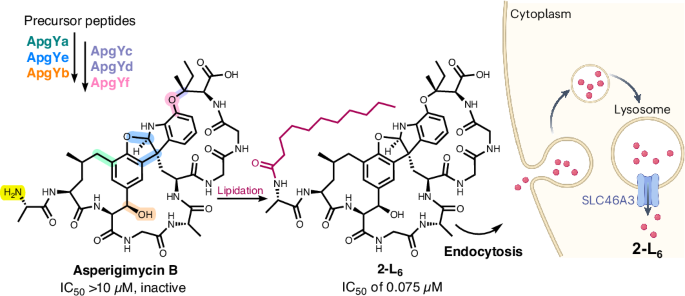
Researchers have identified asperigimycins, a novel class of fungal ribosomally synthesized peptides, demonstrating significant therapeutic potential. Through chemical modification, an inactive asperigimycin derivative (2-L6) achieved nanomolar anticancer potency comparable to clinically approved antileukemia drugs, with its cellular uptake mediated by the SLC46A3 transporter. This discovery underscores the promise of engineering asperigimycins as a new class of therapeutic leads for cancer treatment, potentially opening avenues for novel drug development.
A significant preclinical breakthrough has been reported with the discovery of asperigimycins, a novel class of fungal peptides with potent anticancer properties. The research demonstrates that a chemically modified derivative, 2-L6, achieved nanomolar potency comparable to existing, clinically approved leukemia drugs, representing a critical benchmark for therapeutic potential. The identification of the SLC46A3 transporter as the specific cellular uptake mechanism provides a clear biological rationale and a potential biomarker for future development, which can de-risk subsequent research phases. Importantly, a provisional patent application has been filed, signaling the start of intellectual property protection and a potential pathway to commercialization through licensing or a new venture. While this is an early-stage discovery with a long and uncertain development timeline, it validates the strategy of exploring fungal peptides as a source for novel oncology therapeutics and highlights a specific, promising new compound class.
AI-powered research, real-time alerts, and portfolio analytics for institutional investors.
Overall Sentiment
strongly positive
Sentiment Score
0.85
