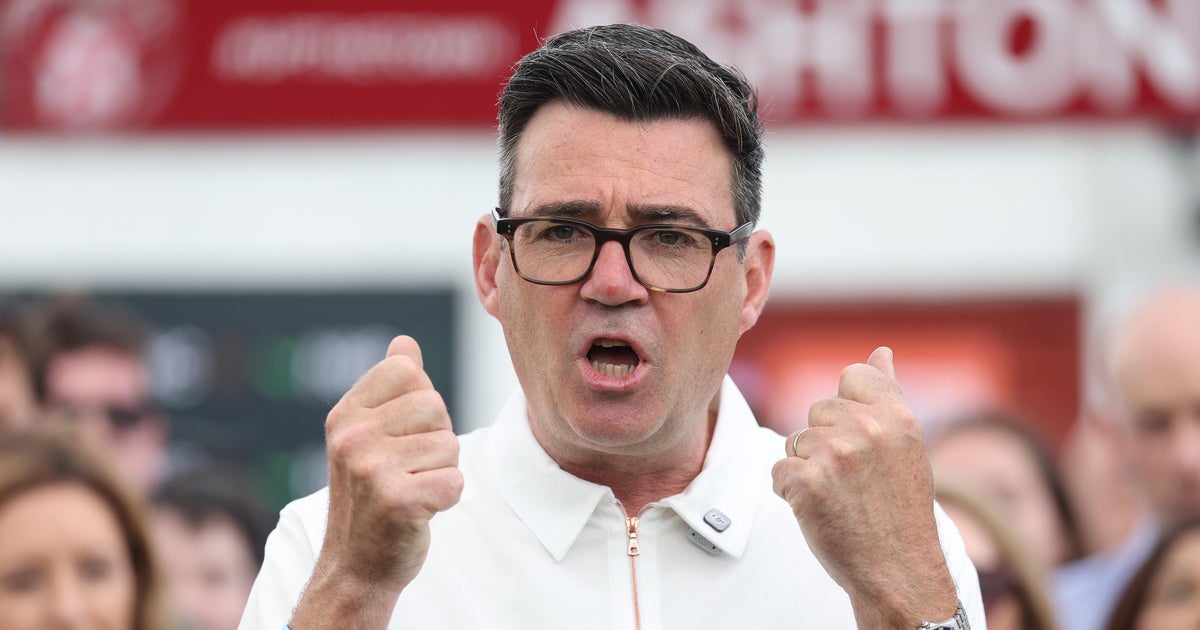
Keir Starmer announced his resignation, setting up an orderly transition that could bring a new UK prime minister by September and possibly trigger a Labour leadership contest. Andy Burnham has emerged as the leading successor after winning a Makerfield by-election and resigning as Manchester mayor, while Reform UK’s Nigel Farage is pushing for a new general election. The article highlights policy uncertainty around immigration, Europe, and Labour’s mandate, but it is primarily a domestic political leadership story with limited direct market impact.
The market impact is less about the headline succession and more about the probability distribution of policy drift. A Burnham-led Labour government would likely be read as a lower-risk, more electorally durable version of the current administration, which matters for sterling, U.K. domestics, and the path of fiscal loosening. The near-term winner is any asset tied to a reduced chance of an immediate snap election and a lower probability of a Reform-led shock; the loser is anything priced for a rapid shift toward tighter immigration controls, because Burnham’s messaging suggests more rhetoric than execution until he has a cleaner mandate.
The second-order effect is that the center-left is trying to outflank populists on identity and regional spending without fully abandoning fiscal restraint. That usually means more selective capital allocation to the North, transport, housing, and local services, but not enough policy whiplash to justify a full re-rating of broad U.K. cyclicals. The real asymmetry is in sentiment: if Burnham is perceived as authentic enough to stabilize post-industrial voters, it reduces tail risk for Labour seats and supports a modest re-rating in U.K. midcaps with domestic revenue exposure, while leaving multinational exporters largely unchanged.
The main risk is that the market overprices continuity while underestimating the need for a mandate. Without an election, any meaningful policy reset would be politically fragile, so Burnham could disappoint both the left and disaffected voters by becoming another manager rather than a transformer. That makes the next 1-3 months the key window: if polling does not improve quickly, the leadership transition becomes a short-lived relief rally and the narrative flips back to governance instability and election risk.
Consensus may be missing that the biggest trade is not on Labour vs Conservative, but on the probability of a credible center-left reset preventing Reform from becoming the market’s base case. If Burnham can credibly compress that risk premium, the upside is modest but durable; if not, the U.K. remains trapped in a low-confidence regime where every policy announcement is discounted as temporary.
AI-powered research, real-time alerts, and portfolio analytics for institutional investors.
Request DemoOverall Sentiment
neutral
Sentiment Score
-0.05
