

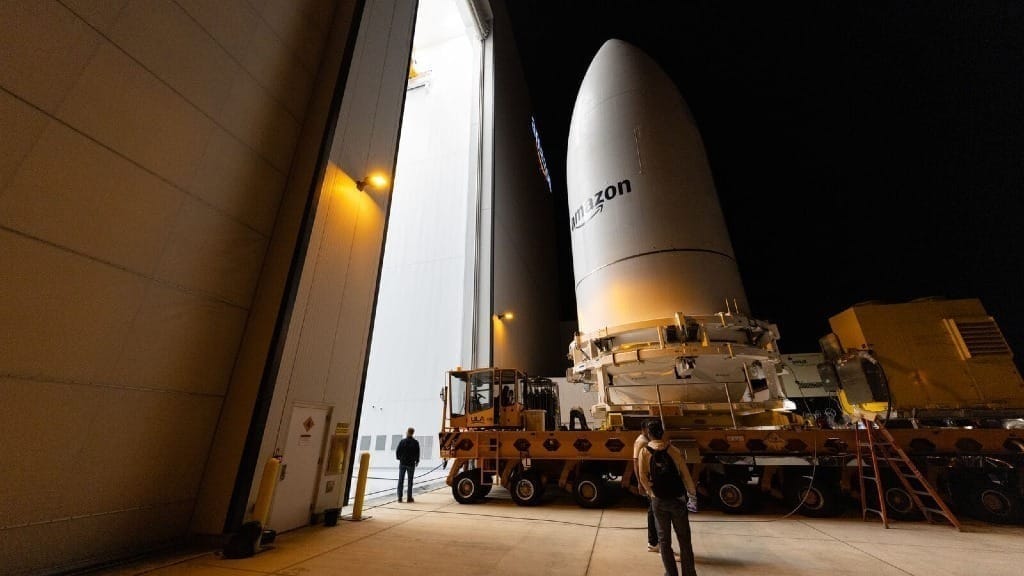
Amazon Leo is set to launch 29 satellites on May 29 at 7:33 p.m. ET, which would lift its deployed constellation to 331 satellites if weather holds. The mission supports Amazon's push to catch up with Starlink, but the main near-term risk is a possible postponement due to a 60% rain chance and scattered thunderstorms. The article is primarily a routine launch update with limited expected market impact.
The near-term market read-through is less about the launch itself and more about execution credibility in a capital-intensive race where cadence matters more than headline milestones. If Amazon can keep weekly or biweekly deployments intact despite weather and range constraints, it supports a path to denser coverage and better unit economics, which is the real gating factor for monetization. The second-order winner is the Florida launch-services and ground-infrastructure ecosystem: as Amazon ramps, it pulls demand through ULA, range services, and terrestrial network vendors even before subscriber revenue meaningfully scales.
For competitors, the key issue is not immediate share loss but the risk that Amazon’s incremental satellite density closes coverage gaps faster than expected, reducing Starlink’s pricing power in enterprise, maritime, and rural broadband over the next 6-18 months. The flip side is that weather-induced slips are a reminder that launch cadence remains a bottleneck; every delay compounds schedule risk and raises the probability that Amazon remains behind on constellation completeness into 2027. That keeps the competitive gap wide enough for SpaceX to defend premium pricing and customer lock-in.
The contrarian view is that the market may be underestimating how little this matters to AMZN equity in the next quarter: satellite deployment is still a long-duration option with limited near-term P&L contribution. The bigger optionality is strategic, not financial — if Amazon proves it can build a credible mesh network, it strengthens cloud, logistics, and defense-adjacent relationships, but the path to cash flow is years away. In that framing, launch news is more of a progress check than a valuation catalyst unless cadence accelerates materially or customer wins follow quickly.
AI-powered research, real-time alerts, and portfolio analytics for institutional investors.
Request TrialOverall Sentiment
neutral
Sentiment Score
0.12
Ticker Sentiment
