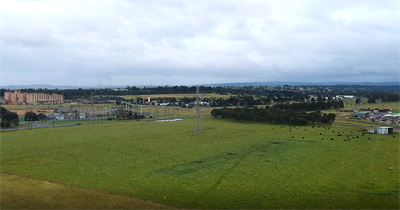
Wärtsilä has booked a Q4 2025 order to deliver a 100 MW / 223 MWh battery energy storage system (Bennetts Creek) for Australian retailer Flow Power, its tenth BESS project in Australia and first with Flow Power. The project, using Wärtsilä’s Quantum hardware and GEMS optimisation software, will sit adjacent to Morwell Terminal Station in Victoria, provide frequency regulation and other ancillary services, and is contracted as an engineered equipment delivery with a separate long-term service agreement; construction starts in 2026 and commercial operation is expected in 2028. The award expands Wärtsilä’s Australian footprint to over 6 GWh and reinforces revenue visibility in the company’s energy storage segment, while supporting grid stability and Australia’s renewable transition.
Market structure: Wärtsilä’s 100 MW / 223 MWh Bennetts Creek order (adds to >6 GWh local footprint) benefits system integrators (WRT1V), BESS software vendors and lithium supply chains by increasing recurring ancillary-service revenue pools (frequency regulation) and legitimising retailer-led firming. Losers are merchant thermal peakers and coal/gas generators in the NEM whose capacity value and part-load utilisation will decline as batteries capture short-duration, high-value frequency and capacity payments; expect 5–15% compression in peak energy margin for thermal peakers within 2–5 years in Victoria/NEM hotspots.
Risk assessment: Key tail risks are regulatory shifts that compress frequency-regulation pricing (AEMO rule changes) or cell-supply shocks that push battery costs >20% above plan, triggering project delays to 2028; probability medium but impact high. Short-term (0–12 months) execution and permitting risk dominates; medium/long-term (1–4 years) model risk is revenue mix — energy arbitrage can fall 20–50% as more storage saturates spread opportunities while ancillary services remain stickier but subject to market rule changes.
Trade implications: Favor integrators with services exposure (WRT1V, FLNC) and upstream lithium exposure (PLS.AX, ALB) while trimming coal-heavy utilities (AGL.AX) and pure merchant storage developers without contracted revenue. Use call-spreads to express upside while hedging execution risk; target positions sized 1–3% NAV with staggered entries over next 90–180 days ahead of 2026 construction starts and 2028 commissioning.
Contrarian angles: Market underprices service-contract annuities embedded in EEQ + LT service agreements (annuity yield potential 5–8% of asset value annually), favoring integrators with balance-sheet/recurring revenue. Conversely, consensus may overstate gross-margin durability — historical inverter and PV-boom parallels show rapid margin erosion once scale and competition hit; avoid pure merchant developers without contracted frequency/capacity revenue.
AI-powered research, real-time alerts, and portfolio analytics for institutional investors.
Request DemoOverall Sentiment
moderately positive
Sentiment Score
0.45
