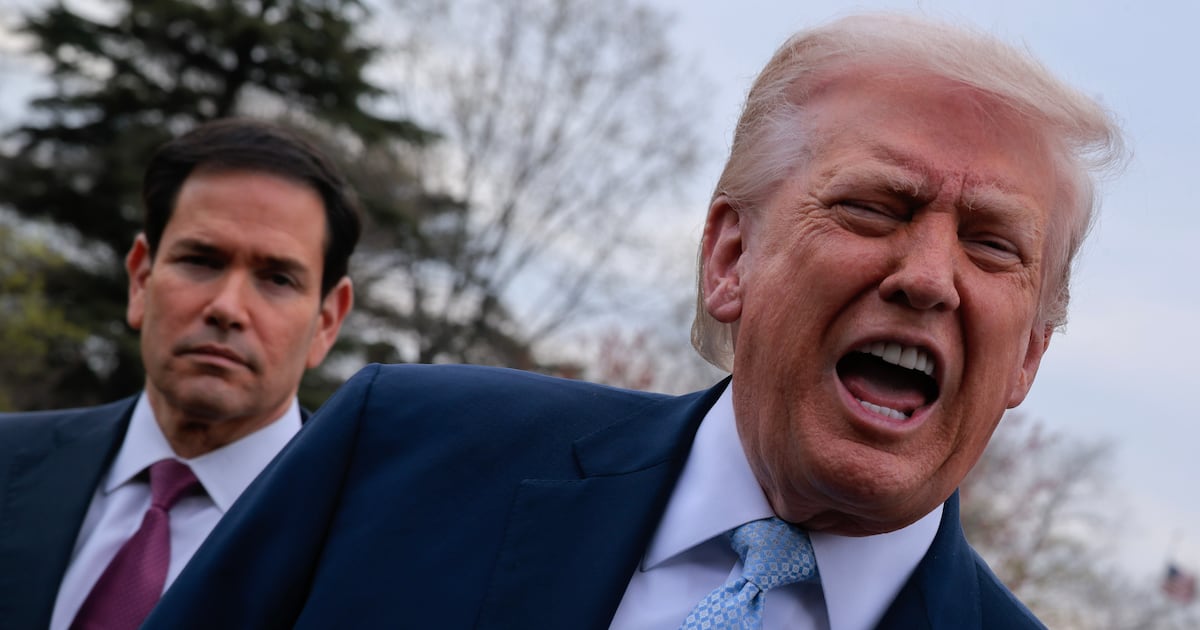
The U.S. State Department reiterated a neutral position on the Falkland Islands after reports that the Trump administration had considered revisiting U.S. support for the U.K.'s claim, prompting a brief diplomatic spat. Rubio characterized the leaked Pentagon memo as "just an email," effectively walking back earlier Pentagon rhetoric that hinted at possible reconsideration. The episode strained U.S.-U.K. relations temporarily but did not produce any concrete policy change.
The immediate market read is not about the Falklands per se; it is about the administration’s willingness to use symbolic foreign-policy shocks as bargaining chips. That raises the premium on “policy headline” volatility across UK-sensitive defense, aerospace, and sovereign-risk proxies, but the effect is likely to fade quickly unless it bleeds into tangible trade, basing, or procurement decisions. In practice, the U.S. walkback reduces the probability of a real diplomatic rupture, yet it also confirms that internal process discipline is weak enough for junior-staff ideas to reach geopolitical signaling channels.
Second-order, the bigger issue is credibility dispersion: allies will discount U.S. statements more aggressively when they are paired with visible internal disagreement. That tends to benefit countries and firms that can operate with optionality outside U.S.-centric alliances, while hurting contractors and multinationals that rely on stable transatlantic policy assumptions. For equities, the read-through is more about the defense-prime multiple than earnings — when policy becomes noisier, revenue visibility compresses and long-duration order books deserve a slightly lower multiple, even if near-term budgets remain intact.
On timing, this is a days-to-weeks volatility event, not a months-long earnings impairment. The key catalyst is whether similar ad hoc messaging repeats around other disputed territories or alliance issues; if it does, the market will begin pricing a higher geopolitical risk premium into sterling assets, UK defense names, and European cyclicals with U.S. exposure. The contrarian view is that the overreaction itself is the signal: the administration appears highly sensitive to allied backlash, so the probability of follow-through is lower than the initial headline implied.
AI-powered research, real-time alerts, and portfolio analytics for institutional investors.
Request DemoOverall Sentiment
neutral
Sentiment Score
-0.05
