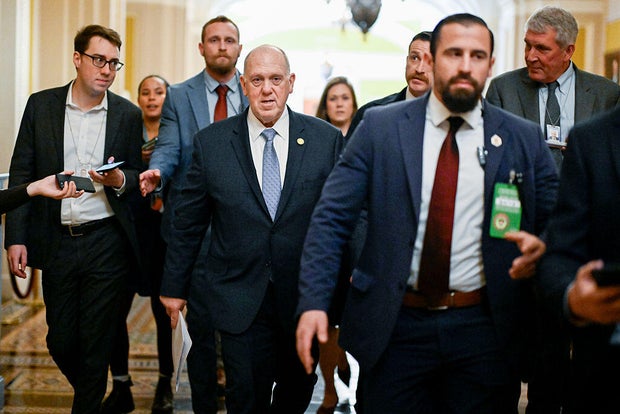
More than a month into the DHS funding lapse, senators met with border czar Tom Homan but negotiations remain stalled with Democrats and the White House far apart. Hundreds of TSA officers have quit amid missed pay, creating airport staffing chaos and near-term operational risk; Senate recess and an imminent confirmation of Markwayne Mullin as DHS secretary increase pressure to resolve the shutdown but near-term policy outcomes remain uncertain.
This is a near-term operational story with asymmetric market exposures: airports and carriers wear the acute pain from unpaid TSA staff and checkpoint bottlenecks, while defense/border contractors sit on an optionality-like claim on eventual remediation funding. A persistent lapse through the two‑week recess materially raises the probability of at least several high-traffic weekends with depressed throughput; even a 5-8% reduction in peak weekly O&D passenger volumes at major hubs would knock a few percentage points off short-cycle airline revenue and accelerate discretionary cancellations.
Legislative dynamics create a binary time structure for risk: a heightened likelihood of stopgap politics through next week (high event risk) and a modestly elevated chance of a negotiated package within 4–8 weeks once leadership and appropriators coordinate around a confirmation. That cadence favors short-dated, event-driven trades into the recess and more convex, multi-month optionality on contractors and equipment suppliers that get re-funded after negotiations conclude.
Second-order winners include companies that supply screening technology, training, and border infrastructure — their backlog discusses become de-risked when DHS funding returns and hiring resumes; conversely, firms with large exposure to passenger volume (airlines, certain airport retail) will see near-term cashflow pressure and higher volatility in inter-month yields. The single largest path to reversal is a narrowly tailored stopgap (clean DHS continuing resolution) that restores pay quickly—this would compress spreads in travel names within days and punish short, undifferentiated bearish positions.
AI-powered research, real-time alerts, and portfolio analytics for institutional investors.
Request DemoOverall Sentiment
mildly negative
Sentiment Score
-0.15
