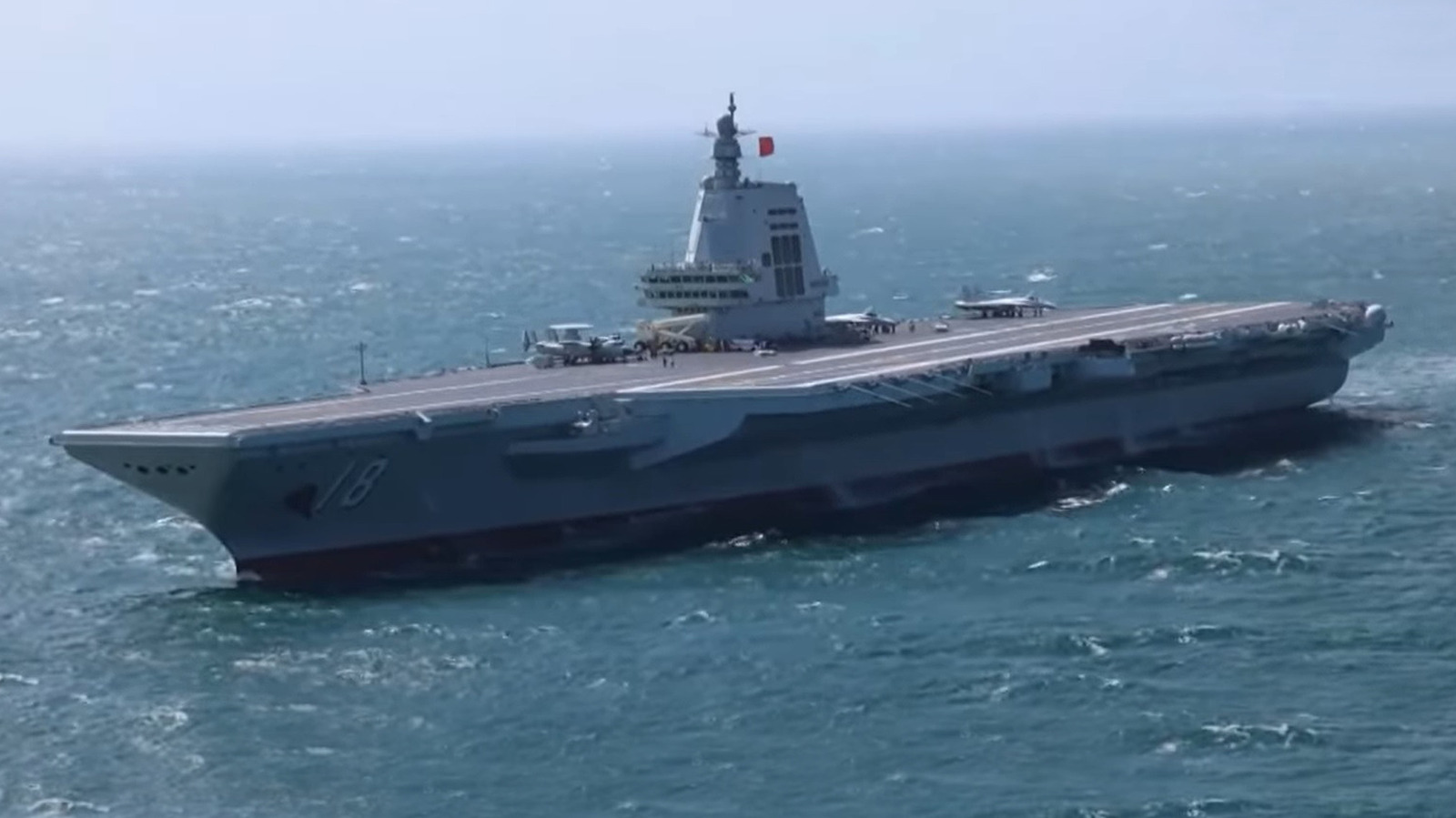
Commissioned on November 5, 2025, the Fujian is China’s third carrier and the world’s largest non-nuclear powered warship, notable for being one of the only carriers (alongside the US Gerald R. Ford) fitted with electromagnetic catapults that allow heavier aircraft payloads. Military analysts warn the carrier’s angled flight-deck geometry and catapult placement create launch-and-recovery bottlenecks that likely prevent simultaneous launch/recovery operations—reducing sortie generation to an estimated ~60% of Nimitz-class capability—constraints engineers attribute in part to space limits imposed by conventional propulsion; China’s next Type 004 is expected to be nuclear-powered and to incorporate lessons from the Fujian.
Market structure: The Fujian's mixed step-forward/step-back design upgrades demand for high-power ship systems, EM power electronics, and specialty steels while leaving operational superiority with US carriers. Winners: US defense primes (Lockheed LMT, General Dynamics GD, Raytheon RTX) and heavy materials (Nucor NUE) that supply turbines, power systems and armor; losers: select Chinese shipyards whose near-term export/operational credibility may suffer and commercial aerospace (BA) if regional tensions slow civil traffic. Expect 3–12% re-rating potential in defense primes within 6–12 months if regional procurement accelerates; steel and copper could see 2–6% bumps on short supply shocks.
Risk assessment: Tail risks include kinetic escalation or wide technology export bans that drive >10% swings in EM-sensitive equities and 50–150bp moves in regional sovereign spreads; a cyber or arms-embargo event could sever specialized supply chains for 6–18 months. Timeline: immediate (days) = headline-driven volatility; short-term (weeks–months) = defense budget repricing and commodity spikes; long-term (years) = China's Type 004 nuclear program narrowing capability gaps and shifting supplier market share. Hidden dependency: EM catapults rely on high-power semiconductors and rare-earth magnets—sanctions or supply shocks here amplify costs and time-to-field.
Trade implications: Direct plays favor 2–3% core long allocations to LMT/GD with 6–12 month horizons, plus 1% tactical exposure to RTX via call spreads to lever sensor/weapon demand. Pair trade: long LMT vs short BA to express defense premium over commercial aerospace; materials tilt via 1–2% positions in NUE and a 1% tactical long XLE/oil futures for a 3–6% energy risk premium. Options: prefer 9–12 month call spreads (limit premium spend to 1–2% portfolio) and short-dated strangles only if realized vol > implied vol +20%.
AI-powered research, real-time alerts, and portfolio analytics for institutional investors.
Request TrialOverall Sentiment
neutral
Sentiment Score
0.08
Contrarian angles: Consensus focuses on a single-design flaw; markets may underprice China's rapid iterative engineering and domestic supply push — expect incremental fixes within 12–36 months that reduce the tactical advantage gap. Overdone reaction risk: a one-off wave into US defense stocks could reverse if US budgets disappoint (trigger: failure to pass >5% YoY defense hike). Hedge with USD strength (UUP) and long-dated protection on equity longs rather than broad shorts of Chinese industrial names; historic parallel: Soviet carrier fixes took years but did not prevent strategic program continuity.
