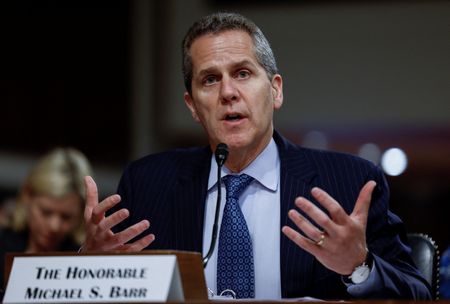
Fed Governor Michael Barr warned that stress in private credit could trigger psychological contagion and eventually a broader credit crunch. He said direct bank exposure looks manageable for now, but overlaps with insurers and weaker investor sentiment could lead to a credit pullback and more financial strain. The comments reinforce a cautious risk-off view of private credit and broader lending conditions.
The market implication is not a direct banking-software shock; it is a gradual repricing of illiquidity across the private-credit stack. When senior regulators publicly flag “psychological contagion,” the first-order move is usually wider spreads in levered loans and a higher equity risk premium for asset managers, insurers, and BDCs that depend on stable mark-to-market assumptions. The second-order effect is tighter financing for lower-quality borrowers, which can hit cyclical capex and M&A activity with a 1-2 quarter lag.
The more interesting read-through is that the pressure point is not banks but the shadow-channel bridges: insurers, fund-of-funds, and levered vehicles that warehouse private credit risk for yield. If defaults stay contained but redemptions rise, the damage comes from forced de-risking and valuation haircuts rather than outright credit losses, which tends to hurt duration-sensitive growth names and highly levered equity exposures more than balance-sheet lenders. That favors cash-generative large caps over smaller companies reliant on private funding markets.
For SMCI and APP, this is a positioning/valuation story rather than a fundamental earnings story today. Both trade with elevated beta and are vulnerable if risk appetite fades, especially if investors begin to de-gross around speculative AI winners; a 10-15% multiple compression can happen fast even without estimate cuts. The contrarian view is that the headline risk may be overread in the near term: if banks remain insulated, the selloff in private credit proxies could create a tradable dislocation rather than a systemic event, with any reversal likely coming from a benign earnings season or clear evidence that defaults are not spreading.
AI-powered research, real-time alerts, and portfolio analytics for institutional investors.
Overall Sentiment
moderately negative
Sentiment Score
-0.35
Ticker Sentiment
