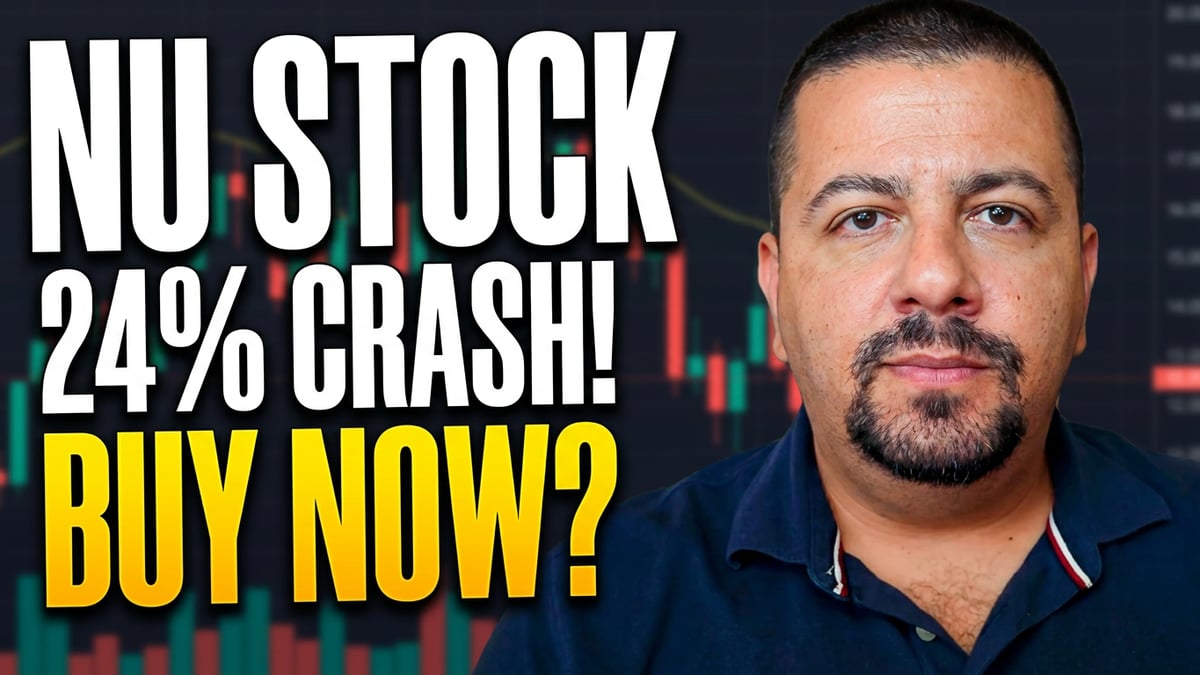
The article says the Latin American company has excellent growth prospects, but near-term headwinds remain. Investors are focused on default rates in the debt portfolio, indicating credit quality is the key near-term risk. The piece is largely qualitative and provides no hard financial figures, so the likely market impact is limited.
The key read-through is that the market is likely pricing a credit-quality story, not a pure growth story. When investors fixate on default rates inside a debt book, the first-order loser is usually the equity multiple: even if operating assets are healthy, a small uptick in expected losses can compress valuation because it raises uncertainty around distributable cash flow and leverage tolerance. The second-order winner is often higher-quality competitors with cleaner balance sheets, since capital tends to rotate toward lenders/operators whose funding costs do not reprice as sharply.
The important timing distinction is that this is a months-long, not days-long, problem unless the default spike is already visible in monthly servicer data. Near-term volatility can stay elevated because guidance language around reserves, write-offs, and loss timing usually matters more than reported earnings; a company can “miss” sentiment long before it misses numbers. If the book is diversified across weaker EM borrowers, the risk is that defaults cluster with a lag after growth slows, which can make the downside self-reinforcing through tighter funding, lower origination, and weaker asset performance.
The contrarian angle is that a manageable rise in defaults may actually be constructive if it confirms underwriting discipline rather than hidden fraud or relaxed standards. In that case, the stock’s underperformance could be overdone versus fundamentals, especially if management can show vintage-level stabilization before the next reporting cycle. The market is often too linear here: it extrapolates a few bad cohorts into a regime shift, when the real inflection point is whether recoveries and net charge-offs remain inside the company’s capital buffer over the next 2-3 quarters.
AI-powered research, real-time alerts, and portfolio analytics for institutional investors.
Overall Sentiment
neutral
Sentiment Score
0.10
