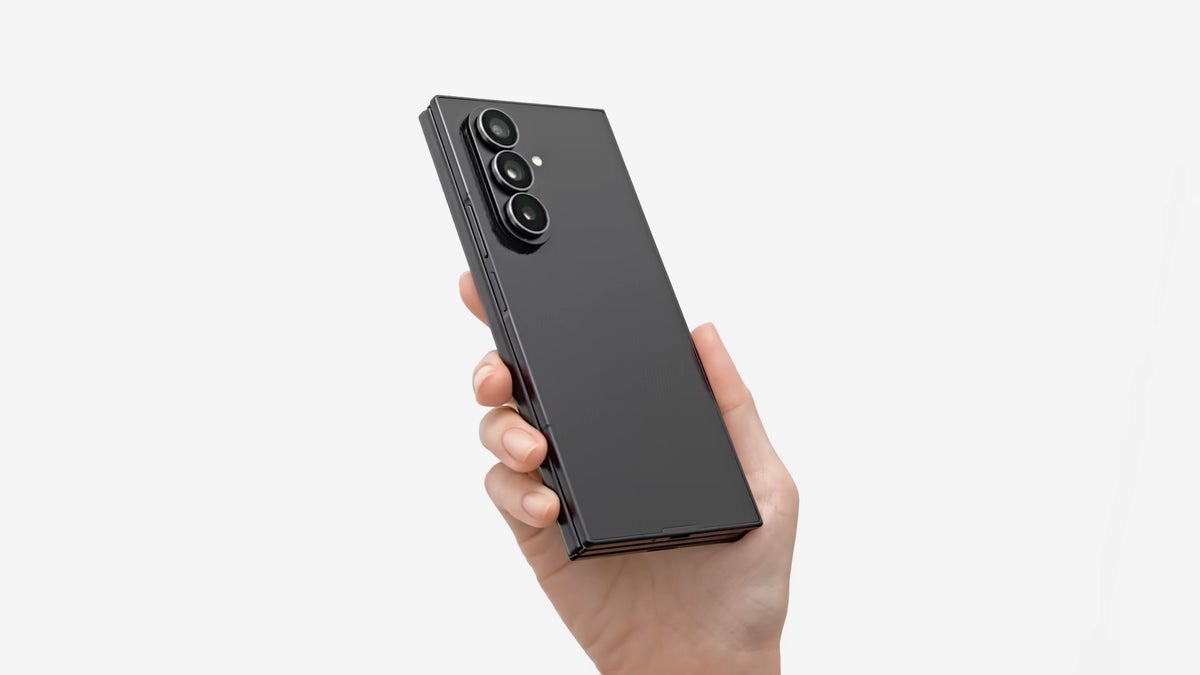
Samsung’s new Galaxy Z TriFold (~$2,900) is facing reports of random display failures, highlighting durability risks for first‑generation foldables. Apple has delayed a foldable iPhone for seven years and is taking a cautious approach (new hinge, wide‑fold design, side Touch ID) to avoid similar product and reputational issues. Demand for novel devices remains strong (TriFold sold out in minutes), but high price points and durability problems raise potential warranty, replacement and reputation costs for OEMs.
A measured, high-bar market entry for a new smartphone form factor compresses near-term headline risk (recalls, warranty accruals, negative reviews) at the cost of delaying unit growth. That tradeoff favors firms with large, sticky installed bases and high-margin recurring revenue: preserving brand trust can be worth a single-cycle hit to hardware shipments because it stabilizes long-term replacement cadence and ARPU.
Deliberate timing also reshuffles supplier economics: suppliers who can demonstrate repeatable yields for complex subassemblies (hinges, ultra-thin glass laminates, multi-fold flex circuits) will capture outsized pricing power during scale-up windows, while commodity suppliers face margin pressure as OEMs demand higher tolerances. Expect the supplier consolidation phase to play out over 2–4 quarters after a successful launch, with lead suppliers negotiating multi-year contracts and smaller vendors either exiting or becoming acquisition targets.
Event catalysts are front-loaded: first public reviews and reliability reports will drive the largest intraday and near-term directional moves; breadth and sustainability of adoption will be decided over 6–18 months as third-party apps and enterprise procurement validate the new UX. Tail risks that would unwind the cautious premium include surprisingly high field failure rates, rapid commoditization by lower-cost OEMs, or a significant software fragmentation that increases churn — any of which could materialize within weeks of broad retail availability.
From a portfolio construction perspective, this is a low-volatility structural win for market leaders with diversified revenue streams but a concentrated operational risk window around launch. That creates asymmetric, time-boxed opportunities to buy optionality while hedging the immediate event risk via defined-cost structures rather than naked directional exposure.
AI-powered research, real-time alerts, and portfolio analytics for institutional investors.
Request DemoOverall Sentiment
mildly negative
Sentiment Score
-0.25
Ticker Sentiment
