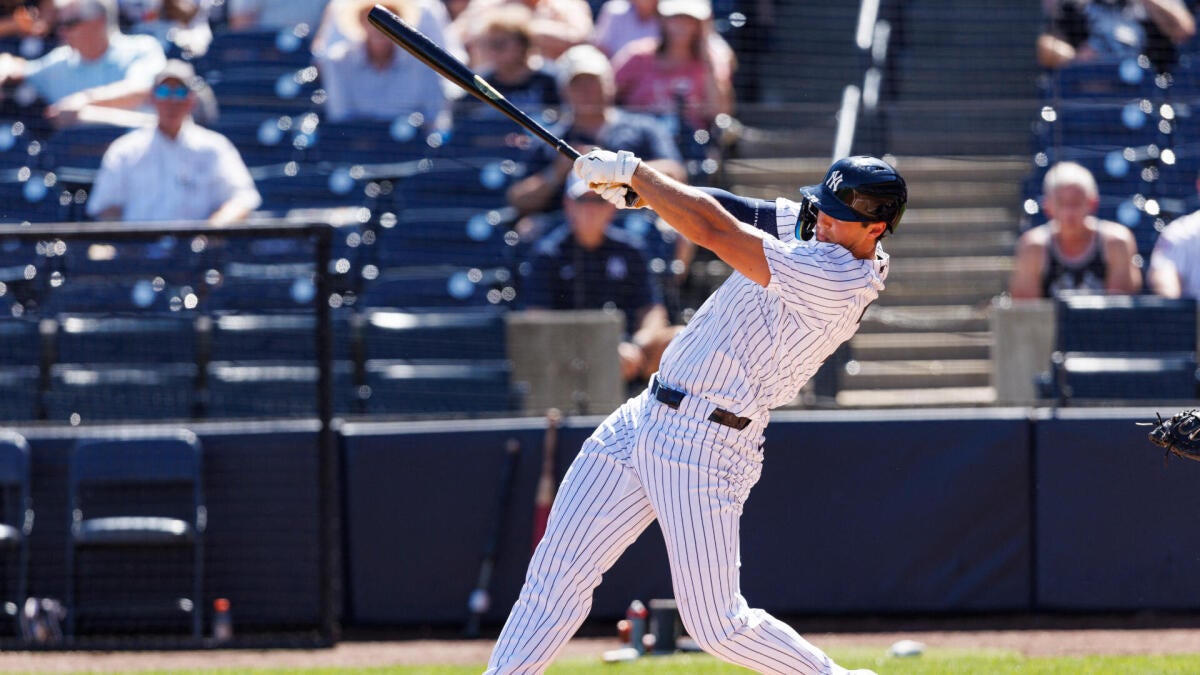
The article is a fantasy baseball waiver-wire roundup centered on Spencer Jones’ MLB debut, highlighting his extreme power upside alongside severe contact and chase-rate risks. It also notes Tarik Skubal’s elbow cleanup surgery timeline may be longer than the reported 4-6 weeks, with the writer expecting a return closer to early July. Additional roster targets include Gregory Soto, Griffin Jax, Trent Grisham, Ryan Jeffers, and Gus Varland, while Andrew Painter is described as droppable in most leagues.
The actionable edge here is less about who is actually good and more about how quickly fantasy managers will react to noisy role changes and sample-size blips. That creates a classic short-horizon opportunity in high-churn assets: marginal closers, speculative call-ups, and hot-streak bats tend to be bid up for 3-7 days, then re-priced once usage stabilizes. In that framework, the only profiles worth paying up for are the ones with either locked leverage usage or a credible path to everyday playing time; everything else is a rental on volatility.
Spencer Jones is the most asymmetric name in the pool, but the market will likely over-allocate to the raw power headline and underweight the contact-quality tax. The second-order effect is that he can be usable even if he is bad in real terms, as long as the Yankees keep him in the lineup and the fantasy category mix rewards a short-lived HR/steal burst. That makes him a better option in roto than points, and a poor medium-term hold if the early plate discipline comes in below replacement level; the correct trade is to treat him like a weekly option, not a seasonal asset.
On the pitching side, the main distortion is role uncertainty versus skills certainty. The converted reliever/rotation experiment has more upside than the market is likely assigning, but velocity decay across extended outings is the key failure mode and should be monitored pitch-to-pitch, not start-to-start. For the closer landscape, the marginal saves environment is so thin that even mediocre ninth-inning control can be roster-worthy, but these are fragile roles and the downside is usually a 1-appearance demotion, not a gradual fade.
The contrarian takeaway is that several perceived buy-lows may still be overpriced if their underlying command or contact suppression has not actually changed. In other words, the consensus may be too eager to chase recent box scores, but still too slow to distinguish between temporary variance and true skill deterioration. The best edge is to attack that gap with small, fast-moving positions and a low threshold to cut bait after one or two usage cycles.
AI-powered research, real-time alerts, and portfolio analytics for institutional investors.
Request DemoOverall Sentiment
neutral
Sentiment Score
0.05
