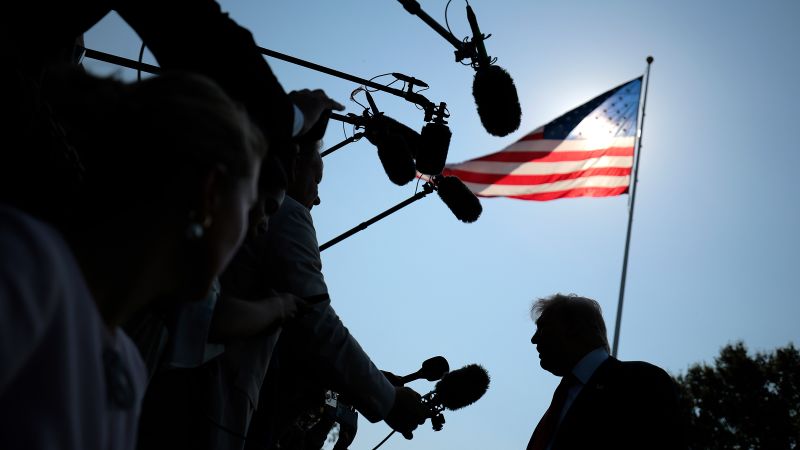
President Trump has significantly altered his stance on the Gaza conflict, shifting from an optimistic outlook on an imminent ceasefire to publicly endorsing Israel's escalation against Hamas, citing the group's lack of good faith in negotiations. This pivot has caused substantial disruption in diplomatic efforts and signals reduced U.S. pressure on Israel, despite a worsening humanitarian crisis and growing international criticism. The move introduces considerable uncertainty for the conflict's resolution and regional stability, even as some officials suggest it's a tactical maneuver to pressure Hamas.
The U.S. administration has executed a significant pivot on the Gaza conflict, shifting from projecting optimism about an imminent ceasefire to publicly endorsing an Israeli military escalation. This change is officially attributed to a breakdown in negotiations, with the U.S. deeming Hamas to be acting in bad faith. However, the situation is clouded by conflicting signals, as regional mediators Egypt and Qatar, along with Israeli officials, indicate that talks have not fully collapsed, suggesting the U.S. withdrawal could be a high-stakes tactical maneuver aimed at pressuring Hamas. This escalation in rhetoric and policy introduces substantial geopolitical uncertainty, elevating the risk of a more protracted and intense regional conflict. The move also coincides with growing diplomatic friction between the U.S./Israel and key European allies, evidenced by sharp criticism from the UK and France’s stated intention to recognize a Palestinian state, signaling potential fractures within the Western alliance and increasing Israel's international isolation.
AI-powered research, real-time alerts, and portfolio analytics for institutional investors.
Request DemoOverall Sentiment
strongly negative
Sentiment Score
-0.75
