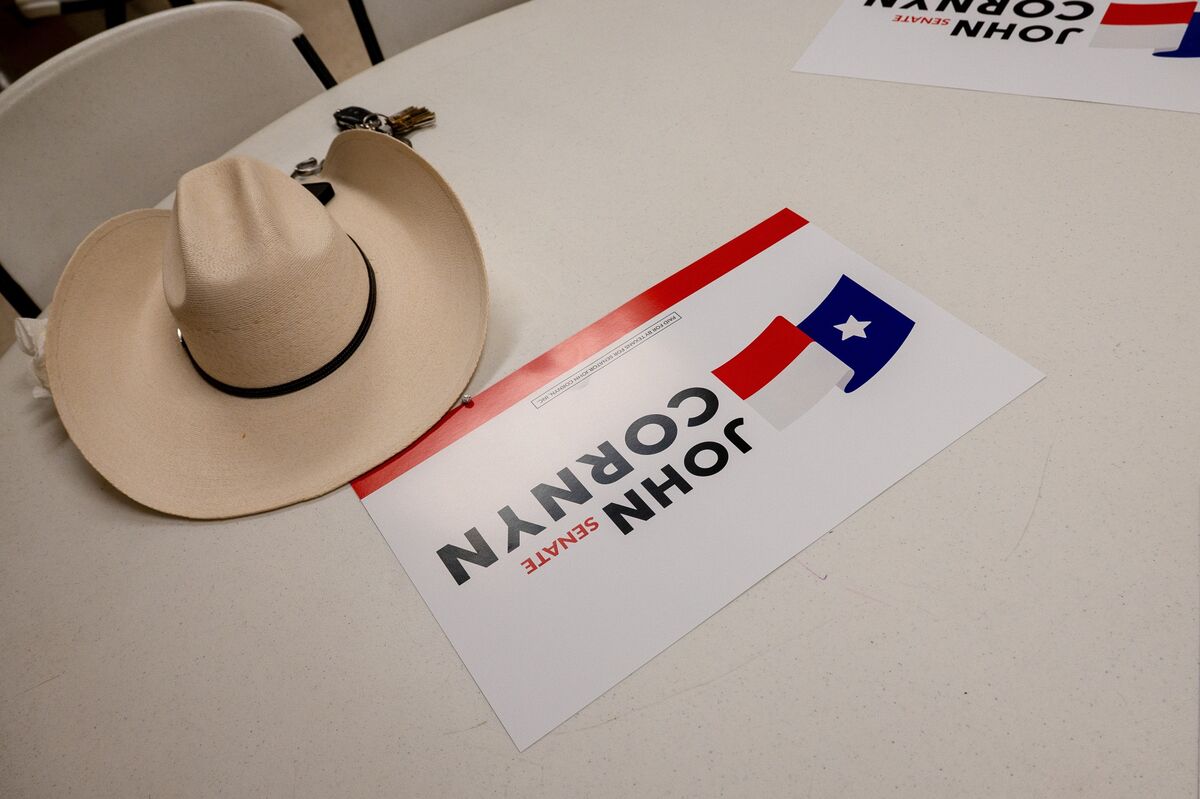
Trump-backed Ken Paxton’s primary win over Senator John Cornyn turns Texas’ Senate race from a likely Republican hold into a fully competitive contest, according to the Cook Political Report. The result weakens GOP control risk and could force the party to spend more heavily in Texas over the coming months. The article is politically significant but implies only limited near-term market impact.
This is less about one Senate seat than about whether Trump’s endorsement has become a binding force or merely a veto over the party base. A successful purge of a senior incumbent reduces intra-party resistance and makes primary challengers more dependent on explicit presidential blessing, which is bullish for Trump’s control of candidate selection but bearish for governance quality and legislative efficiency. The immediate market implication is not directional beta but a higher probability of policy drift, with more volatile negotiation outcomes on fiscal, tax, and regulatory issues over the next 6-12 months. The second-order effect is resource allocation: a fully competitive Texas Senate race forces donors, the NRSC, and affiliated outside groups to divert capital and field infrastructure away from marginal House seats and from defense in other battlegrounds. That raises the odds of a narrower GOP majority or a post-election Senate split, both of which matter for rate-sensitive sectors because they cap the probability of aggressive fiscal extensions and deregulatory surprises. In practical terms, this is mildly negative for small-cap cyclicals and banks that were implicitly leaning on a cleaner pro-growth legislative path. The biggest near-term tail risk is reputational contagion inside the GOP: if Trump-backed candidates keep winning primaries but then underperform in general elections, the market will start pricing in a weaker down-ballot coalition and more policy gridlock. That should show up first in prediction markets, then in option-implied volatility on election-exposed names; the catalyst window is the next 2-4 months as polling and fundraising data harden. A reversal would require either Paxton’s vulnerability to fade quickly or Trump to broaden his endorsement strategy toward electability rather than loyalty. Contrarian view: the consensus may be overestimating how much this changes the legislative path before year-end. Even if the seat becomes genuinely competitive, incumbency, fundraising, and straight-ticket behavior still favor Republicans in Texas, so the odds may shift only modestly rather than flipping outright. The more durable signal is not immediate Senate control but the precedent that Trump can reshape the party without paying a near-term price, which may keep headline risk elevated while leaving underlying market impact limited unless polling deteriorates further.
AI-powered research, real-time alerts, and portfolio analytics for institutional investors.
Request DemoOverall Sentiment
mildly negative
Sentiment Score
-0.20
