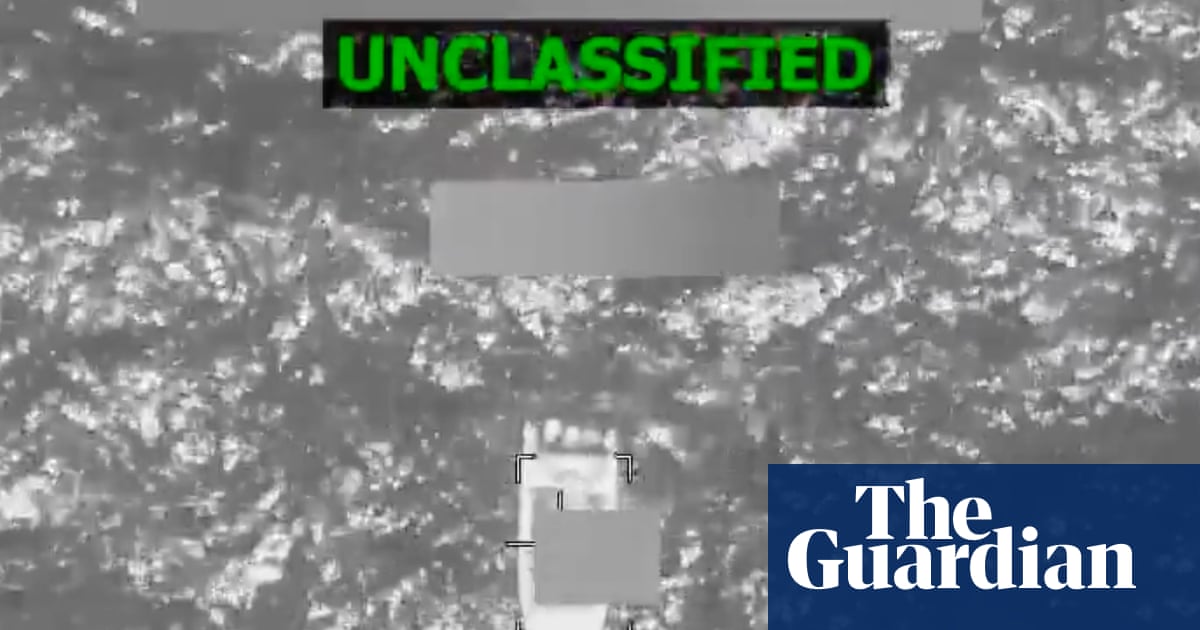
The US military said it killed four more people in a boat strike in the eastern Pacific, bringing the total death toll from these operations to at least 174 since September. The strikes have drawn repeated condemnation from legal experts, human rights advocates, and UN officials as extrajudicial killings that may violate US and international law. The article highlights escalating geopolitical and legal scrutiny around US anti-cartel operations, including pending litigation and congressional concern.
The market implication is not the direct incidence of the strikes but the precedent: if the executive branch normalizes lethal action outside a declared war, the lower-probability tail becomes a broader legal and operational challenge for agencies, contractors, and border/security platforms. That creates a medium-term bid for firms that monetize maritime domain awareness, ISR fusion, and chain-of-custody analytics, because the political need shifts from interdiction to evidentiary defensibility.
The second-order risk is litigation and appropriations friction. Even if the program continues, the more it is framed as extrajudicial, the more congressional oversight, inspector-general review, and allied diplomatic pressure can slow procurement, constrain authorities, or force a shift toward nonlethal enforcement tools over the next 3-12 months. That is bearish for any defense exposure tied to kinetic mission growth, but supportive for vendors selling sensors, data integration, and compliance workflows.
Contrarian: the consensus may be overestimating the permanence of the policy while underestimating the breadth of the commercial response. A headline-driven crackdown often front-loads political theater; the investable part is not the strikes themselves but the budget reallocation into detection, tracking, and legal-risk management. If the administration blinks after a court challenge or allied backlash, the market will likely mean-revert quickly, making this a better relative-value than outright directional trade.
The sharpest near-term catalyst is litigation: any injunction, discovery, or named-victim evidence would reprice the probability of continuation within days to weeks. Absent that, the longer-run catalyst is budget season, when agencies justify more surveillance and C2 spend under the umbrella of counter-narcotics and border security.
AI-powered research, real-time alerts, and portfolio analytics for institutional investors.
Request TrialOverall Sentiment
strongly negative
Sentiment Score
-0.70
