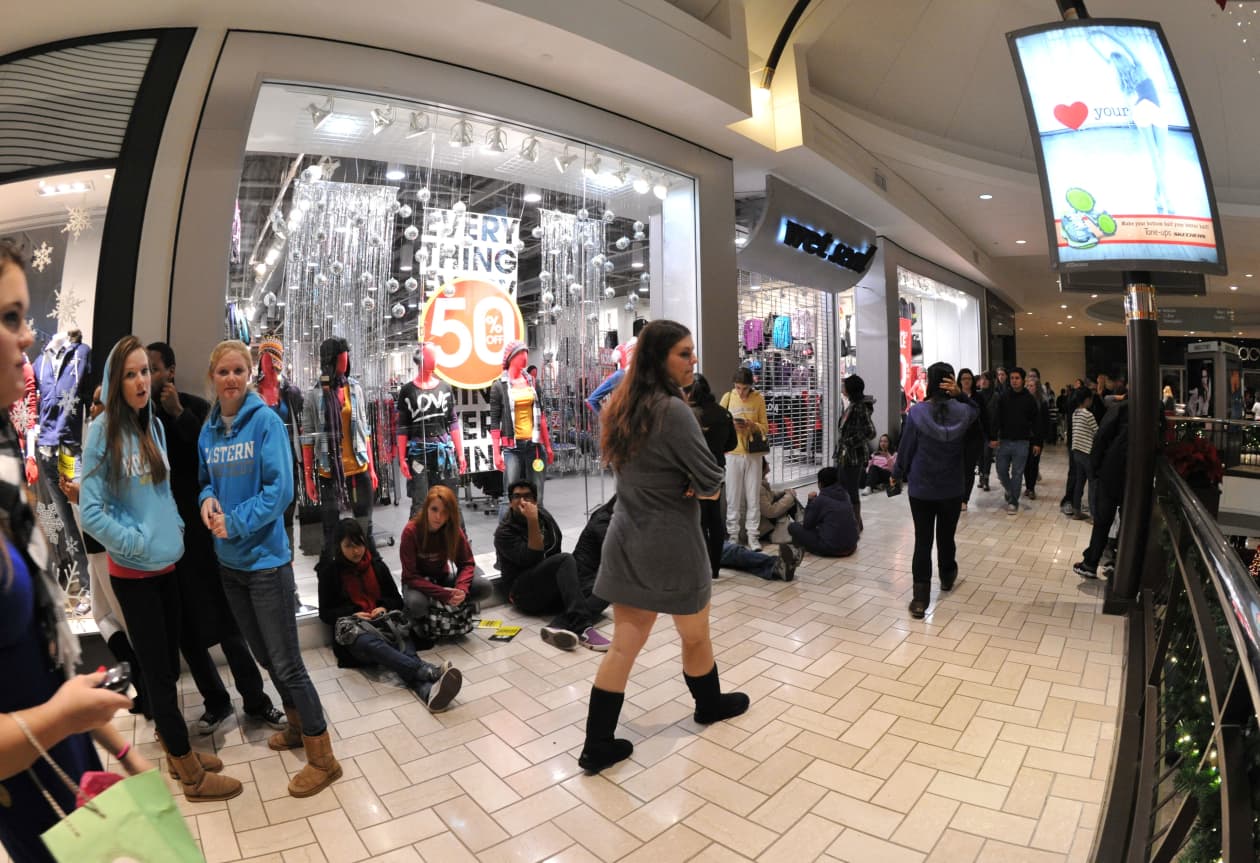
An Oppenheimer study finds that recent tariffs have disrupted the traditional Black Friday discount cycle, with auto-parts retailers raising prices on more items than they are cutting and athleisure seeing little change. Higher input costs from tariffs mean promotions may persist but will likely erode retailer margins, signaling pressure on retail profitability and a need for investors to monitor pricing power and cost pass-through across consumer sectors.
Winners & losers: Tariff-driven cost passthrough favors retailers with structural pricing power and inelastic categories — aftermarket auto parts (ORLY, AZO, AAP) and off-price apparel (ROST, TJX) can raise prices with limited volume loss; mid‑tier/high‑promo players (TGT, KSS, M) and brands reliant on thin promotional margins suffer margin compression. Competitive dynamics will accelerate share gains for off‑price and DIY/aftermarket channels as shoppers trade down or repair vs. replace; expect market‑share shifts of 100–300bps over 12 months for incumbents with superior inventory flexibility. Supply/demand: tariffs create acute SKU supply tightness and pass‑through delays (1–3 month lag), skewing Y/Y retail pricing higher while reducing promotional depth; inventories that cannot be discounted may force markdown cycles if demand softens by >5–7% QoQ. Cross‑asset: sticky retail inflation raises short‑term Treasury yields and equity volatility; commodity beneficiaries include domestic steel/aluminum and USD‑linked input chains; FX: stronger USD mitigates some import costs but tariffs blunt that channel, creating asymmetric pressure on USD‑sensitive exporters.
Risk assessment: Tail risks include tariff escalation or retaliatory measures (low probability, high impact) that could push CPI +50–150bp vs baseline, or a consumer credit shock that drops discretionary spend by >8% in two quarters. Time horizons: immediate (days–weeks) for promotional cadence and Black Friday messaging, short (1–3 months) for Q4 earnings and inventory read, long (3–18 months) for reshoring/cost reshuffle and margin normalization. Hidden dependencies: vendor participation in promotions, freight rate normalization, and inventory valuation accounting (LIFO/FIFO) can mask real margin moves; monitor vendor funding disclosures and inventory days. Catalysts: weekly Retail Sales, CPI releases, Nov–Dec same‑store sales, and any admin tariff announcements in the next 30–90 days.
Trade implications: Direct plays: establish 2–3% long positions in ORLY and ROST (staggered buys over 2 weeks) to capture price pass‑through and share gains into Q4; reduce or hedge 3–4% gross exposure to TGT and other high‑promo retailers. Pair trades: long ROST (off‑price) vs short TGT (mid‑tier) — target a 1.5:1 dollar hedge with horizon 3–6 months; add if TGT gross margin contracts by >80bps QoQ. Options: buy TGT 3‑month 5–7% OTM put spreads (cap premium ~1–2% portfolio notional) to limit downside while expressing downside risk; buy 3–6 month call spreads on AZO/ORLY to leverage durable pricing. Sector rotation: overweight aftermarket auto parts, off‑price apparel, and domestic suppliers; underweight full‑price apparel and mass merchandisers for next 6–12 months. Timing: execute before Thanksgiving promotions (within 10 business days) and reassess after Dec monthly sales and Jan earnings; trim positions if CPI decelerates >30bp sequentially or same‑store sales beat by >3%.
Contrarian angles: Consensus misses vendor behavior — many vendors will temporarily absorb tariffs into Q4 promotions to protect sell‑through, creating transient margin squeezes followed by recovery in H1; this implies short‑term pain but 6–12 month mean reversion. The market may overprice permanent share loss for mid‑tier retailers; if same‑store volumes decline <3% in Q4, shorts will underperform. Historical parallel: 2018 tariff rounds produced one‑quarter margin drawdowns followed by pricing normalization and inventory restocking; downside from tariffs is therefore more front‑loaded than permanent. Unintended consequences: higher retail prices could accelerate growth of aftermarket, repair, and second‑hand marketplaces (EBAY, GMBL adjacent), creating follow‑on winners outside obvious retail tickers.
AI-powered research, real-time alerts, and portfolio analytics for institutional investors.
Request DemoOverall Sentiment
moderately negative
Sentiment Score
-0.30
Ticker Sentiment
